Maritime Partners repowers M/V John Austin
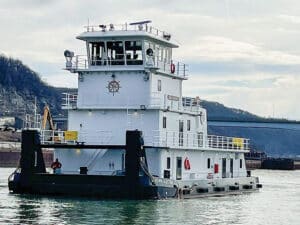
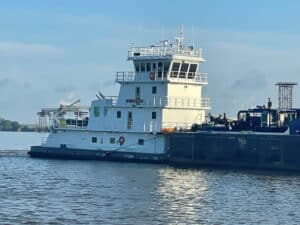
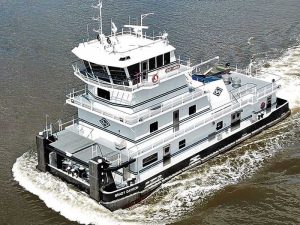
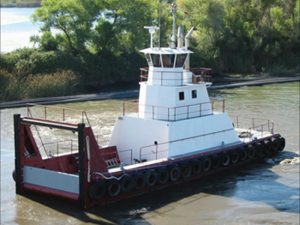
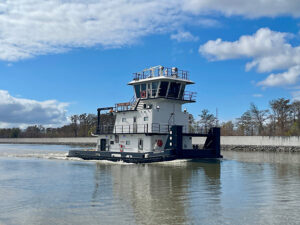
Metairie, La., headquartered Maritime Partners has repowered the twin-screw pushboat M/V John Austin, replacing its Cummins QSK38 (1300 hp @ 1800 rpm) with a Mitsubishi S12R-Y3 engine rated at 1260 hp @
New Orleans, La., headquartered Laborde Marine Management LLC is entering the U.S. inland marine market. It has created a new affiliate, LabMar Inland LLC, that will provide towing and pushboat services. The
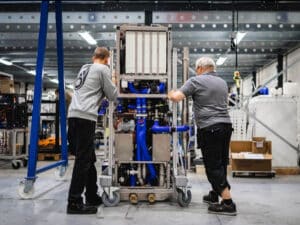
The groundbreaking methanol-to-hydrogen technology to be used in Maritime Partners’ Hydrogen One towboat has completed a successful string test in Gothenburg, Sweden. In the test, all the key components of the vessel’s
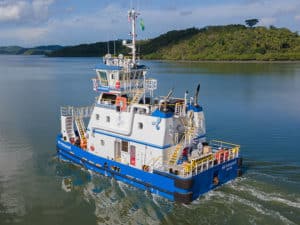
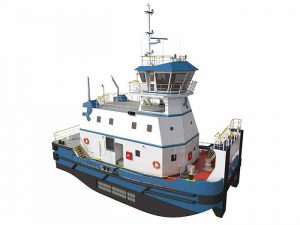
The Belov Engenharia shipyard in Salvador, Brazil, has delivered the HB Poraque. The Robert Allan Ltd. designed RApide 2000-E design vessel is the first of the two innovative battery/diesel electric vessels the
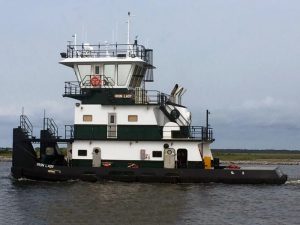
Port Arthur, Texas, based Vessel Repair Shipyard has received a patent (No. 10988210) for the hull of its Pacesetter class push boats. The shipyard notes that the majority of work boats are
A new fleet of innovative diesel/battery electric pushboats for Hidrovias do Brasil S.A. has begun at the Belov Engenharia shipyard, in Salvador, Brazil. The vessel are being built to a design from
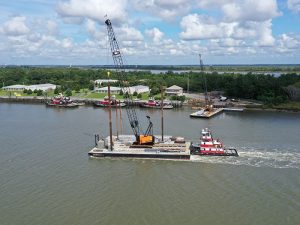
Myrick Marine Contracting Corporation, Savannah, Ga., put a newly acquired floating crane package to work this summer. The 130 foot long by 60 foot wide and 8 foot tall spud barge, named
Master Marine Inc. (MMI), Bayou La Batre, Ala., has delivered the 67- by 28-foot M/V Iron Lady to Cooper Group member Plimsoll Marine. The Iron Lady is the first of four vessels
Coupeveille, Wash., based shipbroker Marcon International had 57 U.S.-flag pushboats listed for sale as of May, but reports no sales thus far this year – reflecting an S&P market that, it says,
LNG is increasingly becoming a maritime industry “fuel of choice,” for the maritime industry, not only for its potential in reducing environmentally harmful emissions, but also for its reduced cost when compared