
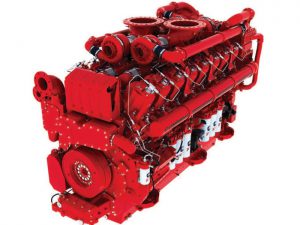
Cummins largest diesel yet makes Asian debut
MARCH 21, 2016 — Cummins Inc. (NYSE: CMI), unveiled its QSK95 at last week’s Asia Pacific Maritime event in Singapore, marking the first time the company’s largest diesel engine has been displayed
MARCH 21, 2016 — Cummins Inc. (NYSE: CMI), unveiled its QSK95 at last week’s Asia Pacific Maritime event in Singapore, marking the first time the company’s largest diesel engine has been displayed
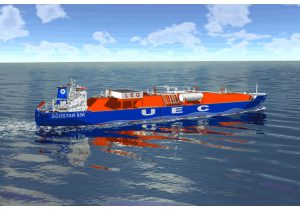
Tucked away in southwestern Finland is Salo, a town of about 50,000, where 40 percent of all the doors for large cruise ships are produced. Antti Marine’s production facility in Salo has produced a quarter of a million doors for 300 cruise ships in just over 20 years. It takes about 10 weeks to produce a typical order of 3,000 doors. They are supplied over a period of six months, as and when the ship’s cabins are built
“We are devoted to lean thinking,” says Commercial Director Markko Takkinen. “The production time of the doors is short, as we do not want them remain in storage here.”
Antti Marine specializes in what it calls ‘“tailored mass production”—necessary because on one cruise ship there may be 150 different types of doors.
Antti Marine is not the only Finnish marine company that benefits from many of the world’s large cruise ship fleet being built in Finland.
Cruise ships also have a lot of toilets and a need for a lot of waste management systems. Finnish headquartered Evac Group has just received its biggest cruise vessel contract ever: total waste management systems for four large cruise ships plus an option to outfit an additional six vessels. The initial four-vessel contract is valued at about EURO 30 million.
Each ship will have an Evac Cleansea wastewater treatment plan, allowing operation in Environmentally Sensitive Sea Areas (ESSAs) and Special Areas (SAs), dry and wet waste treatment systems, a bio sludge treatment unit, plus vacuum collecting systems and some 3,000 vacuum toilets.
Evac also supplies its products to a wide range of users ashore and afloat. So, too, does fire protection specialist Marioff Corporation Oy, but its roots are in the marine market and it last year launched a new generation Hi-Fog 3000 sprinkler series for marine applications that replaces earlier Hi-Fog 1000 and Hi-Fog 2000 sprinkler series.
“With the launch of this new generation of Hi-Fog 3000 sprinklers, we are offering to our marine customers enhanced Hi-Fog systems with faster activation, more efficient suppression and improved passenger and crew safety,” says John Hemgård, Director of Marine Business, Marioff Corporation Oy.
The Hi-Fog 3000 sprinkler series is designed, tested and type approved according to IMO Res.A800(19) as amended in IMO Res.MSC.265(84).
Another Finnish product that really took off after its widespread adoption is ABB’s Azipod. It’s become the propulsor of choice for cruise ships and ABB is currently delivering the complete electrical power plant and propulsion systems for two new 3,300 passenger cruise ships building at Germany’s Meyer Werft. The 20.5 MW Azipod XO propulsion unit for the first of the ships recently left the ABB factory in Helsinki.
ABB has delivered, or has on order, Azipod propulsion units for about 200 vessels
Each Azipod propulsion unit takes about two months for technicians to assemble at ABB’s Vuosaari plant. Across town at ABB’s Helsinki motors, generators and drives factory, the powerful synchronous motors at the system’s core take shape over six months.
COOPERATION AMONG STAKEHOLDERS
The major driver for marine engine designers is bringing engines into compliance with emissions requirements while keeping fuel consumption and maintenance costs under control.
A new pressurized EGR (exhaust gas recovery) economizer from Alfa Laval shows how Scandinavian maritime innovation often results from a cooperation between suppliers, university departments and shipowners. It also illustrates that, for some ships, EGR may be a better means of coming into compliance with new NOx limits than the better known SCR (selective catalytic reduction).
In a project supported by the Danish Energy-Technological Development and Demonstration Program (EUDP) and developed in cooperation with Aalborg University, the EGR economizer has been rigorously tested aboard the containership Maersk Cardiff.
“As a front-runner in the pursuit of green technologies, we were keen to see what the Aalborg EGR-HPE could do,” says Ole Christensen, Senior Machinery Specialist at A.P. Moller-Maersk. “But while we were enthusiastic about the boiler’s potential, we were also somewhat uncertain as how it would handle the physical realities of EGR. The temperatures are twice as high as those of traditional waste heat recovery, and the gas pressures are far greater.”
Those concerns disappeared when the boiler was brought online with the Maersk Cardiff’s two-stroke MAN B&W 6S80ME-C9 engine in November 2014. “Not only did the boiler survive,” says Christensen, “[but also] the results we have seen during testing are very promising.”
“EGR provides Tier III NOx compliance with a very compact footprint, but compliance itself is only part of the full potential,” says John Pedersen, Business Manager, Boilers, Combustion & Heaters at Alfa Laval. “Working closely with MAN Diesel & Turbo to optimize the EGR technology, we saw additional opportunities through our expertise in marine boilers.”
In the EGR process, around 30% of the exhaust gas is directed back into the engine, which reduces the combustion temperature and thus the production of NOx. Since only the remaining 70% of the gas reaches the traditional exhaust gas boiler after the turbocharger, waste heat recovery is reduced by 30% as well.
The Aalborg EGR-HPE is a revolutionary new economizer enclosed in a pressure casing that is placed in-line ahead of the pre-scrubber sprayers in the EGR circuit.
“By moving the break point for waste heat recovery from a medium engine load down to a low load, the Aalborg EGR-HPE enables even slower steaming,” says Pedersen. “That means fuel savings that quickly pay back the economizer, offset the EGR investment and lower CO2 emissions on top of the NOx reduction.”
 Positioned ahead of the pre-scrubber spray jets, the Aalborg EGR-HPE has access to much higher temperatures than traditional exhaust gas boilers. It is integrated with the conventional waste heat recovery after the turbocharger by its steam drum, which is shared with the traditional exhaust gas boiler. With the output of the traditional economizer feeding into the shared drum, the Aalborg EGR-HPE produces extremely high-quality steam with a temperature of just above 400°C, bringing the waste heat recovery system to a much higher level of efficiency.
Using the Aalborg EGR-HPE in an integrated system allows waste heat recovery to occur at lower main engine loads than possible with a traditional waste heat recovery system in Tier III operation. This creates the possibility of even slower steaming.
“The EGR economizer makes waste heat recovery beneficial at far lower engine loads, down to around 30%” says Pedersen. “This means that vessels can steam even slower, with huge fuel savings as a result.”
DUAL FUEL
B&W in MAN-B&W stands for Burmeister & Wain and the Burmeister & Wain shipyard in Copenhagen built the Selandia, the world’s first successful diesel-powered oceangoing ship. That was in 1912.
More than a century later MAN Diesel & Turbo in Copenhagen is still on the cutting edge of diesel innovation.
One beneficiary of this is TOTE Maritime which opted for MAN Diesel & Turbo dual fuel technology for its two new Marlin Class, Jones Act containerships. Both of these ships have been delivered for operation between the U.S. and Puerto Rico, burning LNG as fuel and thereby meeting all U.S. SECA emissions requirement. Each is powered by the world’s first dual-fuel slow-speed engine, an MAN-B&W 8L70ME-GI, built in Korea by licensee Doosan Engine.
The technology in the ME-GI engines wasn’t just pulled out of a hat. It is a natural development of the MAN B&W low speed electronically controlled ME family of engines. The first testing of the GI principles was carried out in 1987 and MAN Diesel
& Turbo introduced its first two-stroke ME-GI dual fuel engine series in 2011, adding the ME-LGI engine series (which can burn liquid fuels such as methanol and ethanol) in 2013.
In theory, any ME engine can be converted into an ME-GI engine, but to be recognized by a classification society as “LNG ready” an ME engine equipped newbuild will have to be designed with provision for such things as the necessary LNG fuel tanks, piping and other ancillaries.
MEDIUM SPEEDS, TOO
LNG fueling has also proved an attraction for many operators of vessels with medium speed diesels who have to operate in emissions control area.
That trend sees Wärtsilä set to deliver the 100th Wärtsilä 34DF dual-fuel marine engine from the factory in early 2016. It is part of an order for three new large escort tugs under construction for Norwegian operator Østensjø Rederi by Spanish shipbuilder Astilleros Gondan. The tugs will operate at Statoil’s Melkøya terminal near Hammerfest in Norway.
“These 100 engines do not include those delivered for land-based energy generation applications,” says Lars Anderson, Vice President, Wärtsilä Marine Solutions.
“Within its power range, the Wärtsilä 34DF has become the workhorse of the marine industry, thanks to its superior reliability and lower operating costs. It is a highly efficient engine that is also making a notable contribution to environmental compliance,”
The Wärtsilä 34DF dual-fuel engine was upgraded in 2013 with a higher MCR (maximum continuous rating) and better efficiency than its earlier version, the first of which was delivered in 2010. The upgraded version has a power output range from 3,000 to 10,000 kW at 500 kW per cylinder.
ELIMINATE THE ENGINE?
Of course, if you can eliminate the engine and switch to battery power, that gets rid of emissions issues entirely. One area where this could be possible is in certain short range ferry operations and we have already noted the E-ferry way project under way in Denmark at Søby Værft AS.
 Wärtsilä, too, is eyeing this niche. In January it launched a concept for a series of zero or low emission shuttle ferries. The concept has been developed in line with new Norwegian environmental regulations for ferries, and Wärtsilä says this regulatory trend is also evident in other countries.
The ferries are designed to run entirely on batteries or in a battery-engine hybrid configuration where the fuel options are liquefied natural gas (LNG) or biofuel.
In plug-in operation, the fuel consumption is reduced by 100 percent compared to conventional installations, and all local emissions are completely eliminated. With the plug-in hybrid configuration, emissions are reduced by up to 50 percent.
The concept features Wärtsilä’s new wireless inductive charging system, which offers major benefits for typical shuttle ferry operations involving 20,000 or more departures a year because of its time and energy savings. The system eliminates physical cable connections, thus reducing wear and tear and enabling charging to begin immediately when the vessel arrives at quay.
Wärtsilä has now signed an agreement with Cavotec SA to jointly develop a combined induction charging and automatic mooring concept. It would incorporate Wärtsilä’s wireless induction power transfer into a vacuum-based automated mooring technology in which remote controlled vacuum pads recessed into, or mounted on the quayside, moor and release vessels in seconds.
FILTER PROMISES TO CUT NOX
The Exilator, an environmental filter for smaller ships, able to reduce both sulfur, carbon monoxide, NOx and noise, has been successfully tested on a Danish Maritime Authority ship. The technology has been testing over a 12-month project phase followed by a three-month practical test of the concept on the Danish Maritime Authority’s ship Poul Løwenørn. The filter’s performance has been documented by the Danish Technological Institute, and the installation and mounting of the filter has been approved by LR.
The filter has been designed for ships with engines of up to 6 MW. Current regulations don’t require the cleaning of exhaust gas from smaller ships if they already sail on marine diesel with a maximum sulfur content of 0.1%. Still, developer Exilator ApS
believes that there is already a market for the filter, as it reduces soot pollution and NOx on the ship itself and also cuts engine noise considerably — particularly attractive in the yachting sector, or expedition vessels sailing in very sensitive nature areas.
According to the test from the Danish Technological Institute, the filter reduces soot particle emissions by 99,1%, carbon monoxide by 98% and NOx by 11%. Though those tests didn’t cover the filter’s noise reduction properties but the company expects a noise reduction up to 35 dB, including low frequency noise.
Financing for development and testing was secured through the Danish Growth Fund and investment & development company CapNova.
The filter works by catalytically incinerated the soot in the exhaust as soon the ship’s engines reach exhaust temperatures above 325 degrees C. Ash is accumulated in the filter, which means that the filters must be cleaned after about 5,000 operational hours, as part of the recycling process.
The filter requires that the ship uses marine gas oil with a maximum sulfur content of 0.1%. According the test, the filter improves the ship’s fuel consumption by around 1%.
The exhaust gas, after passing through the turbo charger, goes to a muffler that removes the deep resonance. Then comes the particle filter, which also serves as an oxidation catalyst, where the soot is captured and burned – and finally the gas is led through a reducing catalyst, which minimizes NOx and NO2, before being emitted into the atmosphere.
Development is now underway in a collaboration with DTU, the Technological Institute and an engine manufacturer aimed at increasing the filter’s NOx reduction from 11% to 40% in phase 1, and to 80% in the subsequent phase 2. When this is achieved, the filter will enable compliance with IMO Tier III NOx limits.
SCRUBBERS
Shipowners face no shortage of options if they decide to use exhaust gas scrubbers to cut sulfur emissions. Recent customers for Alfa Laval’s PureSOx exhaust gas cleaning systems include Buss Shipping, which is retrofitting hybrid PureSOx systems on two 1,025 TEU container feeder ships that operate exclusively in Emission Control Areas (ECAs). Since they frequent the low-alkalinity waters between Rotterdam and St. Petersburg, as well as ports like Hamburg with zero-discharge requirements, a scrubber with closed-loop mode was a necessity.
Each ship will receive a hybrid PureSOx system with multiple inlets, connecting the main engine and two auxiliary engines to one U-design scrubber. In contrast to earlier systems with multiple inlets, the inlets will now lead into a single scrubber jet section – an advance in construction that will make the scrubber even more compact.
“The PureSOx solution was well engineered and allowed a sophisticated integration of the scrubber system into our container feeder ships,” says Christoph Meier, Project Manager, Buss Shipping. “The custom construction let us avoid major modifications inside the vessel, which together with the pre-outfitting gave us a short installation time. All those factors contributed to a competitive price.”
Though there’s no doubt that scrubbers work, they also involve a substantial investment. That led Finland’s family-owned Langh Ship to develop a scrubber of its own, the decision was made a little easier by the fact that another family-owned company has 40 years’ experience in cleaning washing waters.
The resulting product was successfully tested over an extended period on one of Langth’s own ships, the M/S Laura, and received final class approval from GL in August 2014. All of Langh’s five vessels have now been fitted with the scrubber and last year a hybrid version was installed on Bore Shipping’s M/V Bore Song.
“It has lived up to our expectations: minimum sludge handling, very clean outgoing water and in that respect minimum impact on the environment,” said Jörgen Mansnerus, VP, Marine Management at Bore Ltd.
Scrubbers could become less expensive as the result of a pilot project developed by Norwegian University of Science and Technology (NTNU) researchers Carlos Dorao and Maria Fernandino.
Called the Lynx Separator, the technology now being examined for possible use in marine exhaust gas scrubbers was originally developed for use in the natural gas industry and involves using a steel sponge along with centrifugal force to remove the fluid from a gas stream, offering a brand new solution for the gas industry.
In the Lynx Separator, wet gas flows through the separator. A tubular metal sponge spins rapidly so the liquid is separated from the gas and thrown to the side and down, allowing dry gas to stream up to where it’s needed.
The Research Council of Norway’s Innovation Program MAROFF (Maritime activities and offshore operations) has now funded a pilot project to examine the possibility of applying the separator technology to cleaning ships’ exhaust emissions from ships andetheoretical calculations and testing show promising results
BALLAST WATER MANAGEMENT SYSTEMS
Another major focus of compliance concern for shipowners is, of course, ballast water management. Needless to say, most of the major players in the Scandinavian marine equipment sectors have horses in this race. It’s just to soon to pick any winners given the fact that no system has yet gained full U.S. Type Approval.
As this was written, Norway’s Optimarin was claiming to be on the brink of the coveted approval and was pleased when the U.S. Coast Guard told manufacturers of ultraviolet (UV) based BWMS that it will not accept the Most Probable Number (MPN) testing method in its approval process. The MPN methodology evaluates organisms on the basis of “viable/unviable,” with most UV systems depositing “unviable” organisms back into the water – meaning they are still alive but cannot reproduce. The USCG said that the FDA/CMFDA test, which judges life forms as “living/dead,” must be the standard for approval.
Optimarin says the decision is good news.
The Coast Guard has told UV system manufacturers that it will not accept the Most Probable Number (MPN) testing method in its approval process. The MPN methodology evaluates organisms on the basis of “viable/unviable,” with most UV systems depositing “unviable” organisms back into the water – meaning they are still alive but cannot reproduce.
“This is a clear indication to the industry that USCG wants absolute certainty with regard to standards – they do not want living organisms deposited in their territory,” comments Tore Andersen, Optimarin’s CEO. “MPN is acceptable for IMO, but that won’t be any consolation to shipowners with global fleets that want the flexibility of sailing in and out of U.S. waters.”
He says that Optimarin, which has over 20 years of industry experience and installed the world’s first commercial BWT system in 2000, is the only UV manufacturer that is currently within “touching distance” of USCG approval.
Its technology successfully satisied the FDA/CFMDA criteria during testing last year. Further tests in other water salinities are scheduled for spring 2016, after which point approval is expected later this year.
Andersen says the system’s power is the key to its efficacy. “Each of our system lamps has a 35 kW capacity, which is huge for a UV system. That power instantly kills invasive organisms and that’s exactly what USCG wants to see,” he says
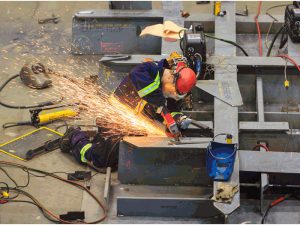
Oil and gas E&P generates billions of dollars worth of business annually for shipyards in the form of newbuilds, conversions, and ongoing repairs and maintenance. With the downturn in oil, however, much of that business has dried up and forced shipyards that depend on the oil patch to rethink their strategy. Many are repositioning themselves to pursue other markets or are undertaking capital investments in their facilities to be more efficient and competitive.
There’s no better example than VARD Holdings, one of the world’s largest shipbuilding groups, whose portfolio is heavily focused on offshore oil and gas. Amid losses of NOK1.29 billion (about $148 million) VARD said last month it would preserve its core expertise and skilled employee base and use its existing shipyard capacity until an eventual recovery in its core market. Among the areas it was pursuing were the offshore wind and aquaculture markets. It will also work more closely with its major shareholder, Fincantieri, to support the cruise vessel and offshore patrol vessel sectors.
NORTH AMERICAN SHIPYARDS INVEST, DIVERSIFY
While operators in the Gulf of Mexico have cold stacked many of their vessels, Galliano, LA-based Edison Chouest Offshore, one of the world’s largest offshore support vessels operators, announced last month that it would invest $68 million in opening a new shipyard in the Port of Gulfport, MS. The shipyard, called TopShip, LLC, will operate at the former Huntington Ingalls Composite Facility, which was acquired by the Port of Gulf Port last March.
The new yard was made possible through an incentive package from the Mississippi Development Authority that would help bring TopShip to the port and create over 1,000 jobs, according to Jonathan Daniels, Executive Director and CEO of the Mississippi State Port Authority—the job creation would prove a significant boost to the local economy.
Lawmakers approved an $11 million package through the Mississippi Major Economic Impact Authority—with $10 million going to discretionary funds and $1 million allocated for workforce training. Additionally, the Port has said it would provide $25 million in Katrina-CDBG funds for infrastructure improvements.
ECO already operates shipyards in the U.S. and one in Brazil: North American Shipbuilding, Larose, LA, LaShip, Houma, LA, Tampa Ship, Tampa FL, Navship in Brazil, and Gulf Ship which is also in Gulfport. Most of ECO’s fleet has been constructed at one of its yards.
Having been born in Mississippi, Gary Chouest, ECO President and CEO expressed his gratitude towards the state for the opportunity to provide quality service to its customers, and help the community thrive.
“We are indeed excited about the opportunities to grow TopShip in a business friendly state, one where we can reach out into the community to recruit various skill sets, developing a quality workforce that will allow TopShip not only to compete locally, but also globally,” said Chouest. “With the help of the state of Mississippi, we will modify our TopShip facility to become one of the safest and most efficient shipyards in the nation, building Chouest pride for our employees.”
Mississippi’s VT Halter Marine, too, has seen how investing in its facilities can help business. Over the last 10 years, VT Halter has invested over $100 million to upgrade its three facilities in Mississippi. This includes expanding beyond the newbuild business with a $13 million investment in a new drydock and repair facility back in 2015, the addition of a blast and paint facility; and the purchase of a 76,000 ft2 climate-controlled warehouse.
The investments have not only allowed growth into the repair business, but also made VT Halter Marine more efficient in its newbuild projects, enabling it to meet the growing demands of the increasingly popular Articulated Tug and Barge (ATB) market. Most recently, VT Halter completed the second of two 250,000 bbl ATB units for Bouchard Transportation (see this month’s CEO Spotlight); and currently is preparing the delivery of the second of two 130 ft, 6,000 hp ABS class ocean towing ATB tugs for Bouchard.
VT Halter Marine is also currently building two 2,400 TEU LNG-powered combination ConRo ships for Crowley Maritime Corporation’s liner services group. El Coquí and Taíno will operate in the Jones Act trade between Florida and Puerto Rico and will offer a 38% reduction in CO2 emissions per container. The ships will be delivered by VT Halter Marine in 2017.
Another yard that has benefited from the use of Liquefied Natural Gas (LNG) as a marine fuel is Conrad Industries. The last few years has seen Conrad Industries, Inc., Morgan City, LA shifting its business approach and diversifying its portfolio—among the shipbuilder’s offerings, it builds tugs, ferries, ocean tank barges, liftboats and specialty barges. In 2015 the yard’s orderbook received a much-needed boost with new construction contracts, including the history-making construction of the first LNG bunker barge for the North American market.
Currently under construction at Conrad’s Orange Shipyard, Orange, TX, the 2,200 m3 capacity bunker barge is being built for WesPac Midstream LLC. Designed by Bristol Harbor Group, Inc., Bristol, RI, and built to ABS class, the barge when delivered later this year will serve TOTE’s Marlin class containerships—Isla Bella and Perla del Caribe, both built at General Dynamics NASSCO. Those LNG-fueled ships are already operating in the Jacksonville to Puerto Rico trade.
It was also certified by GTT to construct the special LNG containment system on the LNG transport bunker barge.
 The shipbuilder has also broadened its offerings further with the expansion of its Deepwater South facility in Amelia, LA. The 52-acre site has enabled Conrad to build large articulated barge units. Currently there are eight tank barges under construction at Deepwater South—ranging from 55,000 bbl to 83,000 bbl capacity.
Conrad says that Deepwater South will undergo a wide range of improvements this year including the addition of a new fabrication and assembly building—which will allow for the uninterrupted construction of hull modules year round; and a new Panel Line Building—expected to begin operations this April. The Panel Line Building will be equipped with an automated welding system, a stiffener fitting gantry to automate the fit-up of stiffeners on the panels, and an 8-headed automated stiffener welder—allowing for the shipyard to process 350 tons of steel per week.
THREE NEW FAB BAYS
C&C Marine and Repair, Belle Chasse, LA, is focusing on increasing efficiencies to maintain its competitive advantage. The yard recently added three new fabrication bays giving C & C an additional 115,000 ft2 for the construction of boats and barges; and a fabrication area of 230,000 ft2.
Over the next few months, the yard plans to order two additional transporters (it currently has two capable of moving 600 tons) with a capacity of 830 tons, bringing the total capacity of its transporters to 1,430 tons. This, says New Construction Manager Matthew J. Dobson, will create new opportunities for the yard, and enable C & C to begin taking orders for the fabrication of new 30,000-barrel barges and allow it to transport larger vessels to land for repair projects and paint jobs.
The yard currently has 29 new construction vessels under contract including three 6,600 hp towboats, one 280 ft PSV, one 270 ft cutter head barge, sixteen tank barges and eight deck barges of various sizes.
EXPANDING INTO LARGER VESSELS
Back in 2014, Metal Shark Boats, Jeanerette, LA, was already a successful builder of aluminum vessels, but it had its sights on the construction of vessels up to 90 ft in length and larger, as well as expansion of its portfolio to include steel. It also signed a technology agreement with Damen that would allow it to build offshore patrol boats up to 165 ft in length.
With the development of the new shipyard in Franklin, LA, Metal Shark, now employs 230 workers between its boat yards, and is among the busiest boatbuilders in the U.S., currently producing a number of 38 ft, 45 ft and 55 ft Defiant class vessels and constructing large orders for the U.S. Coast Guard, U.S. Navy and multiple agencies across the U.S. It also delivered a sophisticated 75 ft multiple purpose port security fire boat to the Port of South Louisiana.
EYE ON THE CARIBBEAN MARKET
For St. Johns Ship Building, diversification of its portfolio and the markets it reaches will propel its next evolution. The small shipyard, which has been under private ownership since 2006, recently delivered the first Elizabeth Anne class of towing vessels to the Vane Brothers Company. The tug is the first in a series of eight the Palatka, FL-based yard is building for the operator. At press time the second vessel was in the water and the third was about to be launched.
St. Johns Ship Building’s yard sits along the St. Johns River—giving it the unique advantage of being on the East Coast with access to both the Gulf of Mexico and the Caribbean—and its because of its location St. Johns has been able to produce such a diverse portfolio. From OSVs to tugs (a new market for the builder), to coast guard vessels and cargo ships, St. Johns’ 100 acre facility and its 150 employees are at the ready to take on any project.
St. Johns Ship Building President Steven Ganoe says that because the yard doesn’t solely rely on the oil and gas market it has been able to keep business steady during the downturn in the oil and gas market.
Ganoe says the shipyard is keeping tabs on the Caribbean market to see how it develops in the wake of the easing of restrictions on Cuba travel—and determine how St. Johns can help meet any growing demand in that specific market. In the meantime, the shipbuilder continues to make improvements to its facility—having recently added an 18,000 ft2 assembly shop and a Messer CNC 80 ft table to help make production more efficient.
REBORN AS WORLD MARINE
Earlier this year it was announced that World Marine LLC—owned by the Teachers’ Retirement System of Alabama and the Employees’ Retirement System of Alabama—had bought all of Signal International’s assets including its full service and heavy fabrication facilities in Mobile, AL and Pascagoula, MS.
According to the Chapter 11 plan of liquidation, World Marine is seeking to become a leader in the ship repair and ship construction market.
World Marine assures that its experienced team—led by Dick Marler—can handle all types of vessels, but the company will place a high focus on new construction, and the repair and conversion of ocean going vessels and offshore drilling rigs—serving the energy, government and commercial marine markets.
World Marine’s construction and repair facilities include three drydocks—a 22,000-ton Panamax class, a 4,200-ton, and a 20,000 MT heavy lift. The company says its future plans include pursuing the emerging LNG market for the construction of bunker barges and transfer vessels.
NEW DRYDOCK AT COLONNA’S
A decade after the American Civil War ended, Colonna’s Shipyard was founded by Charles J. Colonna. Now, 140 years later, the yard continues to operate and develop with the times.
The shipyard currently occupies over 100 acres of land in the Berkley section of Norfolk, VA, and has water access to over 3,000 ft of vessel berthing space and a lift capacity to accommodate vessels up to 850 long.
Colonna’s is also home to the largest Travel lift in the U.S.—with a capacity of 1,000 metric tons.
As part of its future improvement plans, Colonna’s expects to purchase an additional 25 acres across the street from its main entrance, and add a new floating dry dock.
A few months ago, the Governor of Virginia, Terry McAuliffe, announced that the yard would undergo a significant expansion, with Colonna’s investing over $30 million to expand its operations in the City of Norfolk. The expansion would include a new larger drydock, dredging and improvement work to the channel and bulkhead work, and the creation of 51 jobs to the area.
The new floating drydock, which will be named the Charles J., will have a lifting capacity of 11,500 metric tons, an overall length of 595 ft and an inside width of 108 ft. The Charles J. is expected to be fully operational in early 2017 and will accommodate a variety of vessel types including ferries, tugs, barges, containerships, OSVs and several type of government vessels.
Colonna’s CEO Tom Godfrey, said the capital investments would “allow Colonna’s to continue to provide quality services to both commercial and government customers throughout the region.”
 NEW DRYDOCKS, AT BAE, DETYENS, BAY SHIPBUILDING
Meanwhile, South Carolina-based Detyens Shipyards recently took delivery of its new floating drydock. Built by Corn Island Shipyard, Grandview, IN, the 400 ft x 108 ft drydock will enable the yard to provide a more cost-effective service to smaller tonnage vessels.
According to Detyens, in the past, smaller vessels would have to piggy back in the yard’s larger graving dock—now with the addition of the smaller dock, it can provide drydock services to vessels up to 11,000 DWT. The new dock sits along the yard’s F Pier, which recently underwent upgrades that included the addition of shipyard services, additional lighting, and dredging of 30 ft.
On the U.S. West Coast, BAE Systems is investing $100 million to build and install a second, larger drydock at its San Diego shipyard. Currently under construction in China, the 950 ft drydock will have a lifting capacity of 55,000 long tons and is expected to support the expansion of the Navy ships homeported in San Diego, which are expected to increase by 20 from 60 to 80 by 2020, according to BAE’s Director of Communications, Karl Johnson. BAE Systems is among the leading providers of maintenance and modernization services of the U.S. Navy.
Portland, OR, Vigor Industrial has been aggressively growing its business through the acquisition and merger with several other regional shipyards, including Kvichak Marine Industries, Seattle, WA.
In 2014, Vigor’s Portland yard began operating its new $50 million drydock, the Vigorous. It has been consistently booked since, supporting hundreds of jobs and attracting work that could not have previously be performed in the region, according to Vigor’s Athena Maris.
 Vigorous, with a lifting capacity of 80,000 long tons, is 960 ft long with an inside width of 186 ft and has taken on several repair work projects including the repair work on cruise vessels, and most recently, this past summer, on repair the hull of the multipurpose icebreaker on charter for Shell, the MSV Fennica.
The addition of Vigorous at the Portland yard, enabled Vigor to also reinvest in some of its existing assets. Specifically, Vigor was able to upgrade and transfer one of Portland’s drydocks to its Seattle facility. In Seattle, the drydock Vigilant will be used to perform repair work on the recently awarded Structural Enhancement Drydock Availability (SEDA) Projects. There, the U.S. Coast Guard cutters Bertholf and Waesche will both undergo significant structural enhancement work, system upgrades and maintenance.
Beyond that Vigor is placing capital investments efforts on its environmental stewardship—this includes working on a comprehensive storm water management system at its Portland facility and a shallow-water estuary to help increase the survival of young salmon and steelhead trout on their way to the ocean at its Seattle facility.
 On the Great Lakes, Fincantieri Bay Shipbuilding (FBS) parent, Fincantieri Marine Group (FMG), has invested more than $33 million in capital improvements to increase manufacturing capabilities at its facility in Sturgeon Bay, WI. FMG is currently in negotiations to acquire additional property adjacent to the shipyard to further expand its serial production capabilities.
FBS has completed its new Pipe/Outfitting Building & New Welding Center and added a new floating dry dock that has a total lift capacity of 7,000 long tons. The versatile dry dock can be sectioned off, with a 216 ft section and a 432 ft section.
It has completed the expansion of its Fabrication Building and has added a new Beveling Plasma Burning Machine, 200-ton Yard Transporter, IMG Micro Panel Line, and 1000-ton CNC Press.
Back in 2012, FBS added a 45 ft x 47 ft “megadoor” to the south end of its Fabrication Building 311 to allow larger vessels to be built indoors and moved outside for launching and a Manitowoc 300-ton capacity Model 2250 Crawler Crane.
FBS employs 600 to 800 full-time shipyard professionals and expands its workforce to 1,100 to 1,200 using temporary and contract workers during the Winter Fleet repair season.
FBS currently has under construction six tugs and seven barges of ATB design. Accompanying photo shows the ATB tug Barbara Carol Ann Moran and the ocean tank barge Louisiana at the shipyard. As we reported back on February 22, the shipyard has 14 vessels undergoing a wide range of repairs and repowerings for the Great Lakes Winter Fleet.
SAN DIEGO BOATBUILDER GETS BIGGER, GREENER
Vigor, however, isn’t the only shipbuilder looking to help the environment. San Diego based Marine Group Boat Works will soon break ground on a $1.5 million green initiative that will see the yard install a solar panel system compliant with the state of California’s Solar Initiatives.
The addition of solar power comes during one of the company’s most exciting periods, says Marine Group Boat Works’ (MGBW) Leah Yam. MGBW, which has two yards in San Diego and one in San Jose del Cabo, Mexico, recently completed a $2.5 million renovation to its deepwater floating docks system, and will install the final set of docks this spring—making it fully ready for in-water repairs on vessels up to 420 ft in length.
Among MGBW’s most recent repair and retrofit projects is the $19 million refurbishment of the Golden Gate ferry M.S. San Francisco and the conversion of two high-speed aluminum Sub Chapter K San Francisco ferries for the Water Emergency Transportations Authority.
Beyond its repair business, MGBW is also making a dent in the new construction market. Since launching its new construction division in 2008, the shipyard has increased its employee numbers by about 195%, employing 185 workers. Currently, MGBW has five 60 ft aluminum dive boats under construction for the U.S. Navy—the contract calls for the construction of 16; and most recently delivered the first in a series of steel workboats to Japan—two additional boats are on their way, and twelve are on the production schedule, says Yam.
CANADIAN YARDS INVEST FOR NSPS
The end of 2014 saw the completion of Seaspan’s Shipyard Modernization project. Funded entirely by the shipyard, the $155 million project helped transform Seaspan’s Vancouver Shipyards into one of the most modern yards in Canada.
 The two-year project included the addition of four new fabrication buildings—housing a sub assembly shop; panel shop with panel line; block assembly shop; pre-outfitting shop; paint and blast shop; and Canada’s largest (300 tonne) permanent gantry crane.
The expansion was integral to meeting the newbuild project requirements for the Canadian Coast Guard and the Royal Canadian Navy.
Vancouver Shipyards is currently building the first Offshore Fisheries Science Vessel (OFSV) under the National Shipbuilding Procurement Strategy (NSPS) for the Canadian Coast Guard. The 208 ft x 52.5 ft OFSV will help support scientific and ecosystem research critical to the economic viability and health of the region’s marine environment. At press time, 30 of the 37 blocks of the OFSV were under construction.
Seaspan also invested an additional $15 million at its Victoria Shipyards, upgrading its facilities with the addition of a new operation center that, according to Seaspan, would help support testing, trails and commissioning new federal vessels.
At press time, there were nine vessels undergoing refits and drydock work at one of Seaspan’s yards—including the 94 ft Canadian Coast Guard vessel Siyay with is undergoing a nine-month midlife modernization refit.
Keeping the future in mind, Seaspan is also investing in its workforce. Seaspan employs 1,500 employees across its three shipyards—Vancouver Shipyards, Vancouver Drydock, and Victoria Shipyards.
In 2015, the shipbuilder received a Canada Jobs Grant to develop e-learning tools for its expanding workforce—the goal of the funding was/is to help ensure workers have a common understanding of the shipbuilding processes, practices, and protocols.
Seaspan also recently announced that it plans to invest $2 million over the next seven years to help support teaching and research in the University of British Columbia’s naval architecture and marine engineering programs.
At Irving Shipbuilding, Halifax, NS, Canada, the company’s $330 million capital investment plan is already paying dividends. Last September, it marked the start of production of the HMCS Harry DeWolf, the first Arctic Offshore Patrol ship (AOPS) for Canada.
The ship is the first of up to 21 vessels that will renew Canada’s combatant fleet over the next 30 years under the NSPS. Irving Shipbuilding has built more than 80% of Canada’s current combatant ships.
Current direct employment at Marine Fabricators in Dartmouth and the Halifax Shipyard is about 900. Over the next two years, the workforce at both sites is expected to rise to 1,600, with over 1000 directly employed on AOPS production. In addition, total employment at Irving Shipbuilding (all operations) is forecasted to rise to over 2,500 direct employees at peak production of the larger Canadian Surface Combatant vessels that will replace Canada’s current fleet of Halifax Class frigates.
To date, the modernization at Irving Shipbuilding and the AOPS contract have resulted in over $1 billion in spending commitments.
Meanwhile, one of the oldest shipyards in North America, Chantier Davie Canada Inc., Levis, Quebec, has taken its first steps in the Resolve-Class Auxiliary Oiler Replenishment ship project. The project involves the conversion of a containership into an Auxiliary Oiler Replenishment Ship that will be delivered to the Canadian Royal Navy in 2017.
It also recently completed the refit of four of Canada’s heaviest icebreakers, as well as a bulk carrier and is a pioneer in the construction of LNG-fueled ferries.
MARCH 10, 2016 — In response to a string of major incidents, trade association Interferry has produced operational best practice guidance for fire safety on RO/RO ship vehicle decks. The guidance is
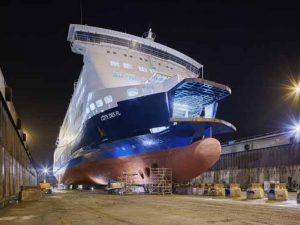
MARCH 9, 2016 — Damen Shiprepair Dunkerque is assisting DFDS Seaways in a major refit and rebranding program, with five vessels successfully completed so far. Two more ferries are currently at the

MARCH 9, 2016 — In MARPOL Special Areas such as the Baltic Sea, ships will soon be required to remove nutrients like nitrogen and phosphorous before returning water to the sea. To
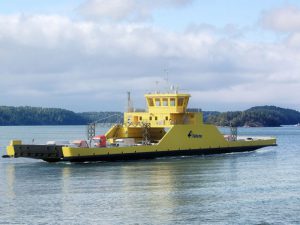
MARCH 7, 2016 — Siemens is to provide the complete electro-technical solution for Finland’s first battery-powered car ferry. The vessel was ordered by Finferries from Polish shipbuilder Crist S.A. last year and
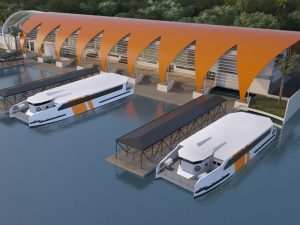
MARCH 2, 2016 — Cape Town, South Africa, shipbuilder Nautic Africa has signed a R347 million ($22 million) agreement with Citrans (Compagnie Ivoirienne des Transports) to build the first 18 ferries in
Shipping is a crucial contributor to the economies of the Nordic countries—Denmark, Finland, Norway, and Sweden—and the industry continues to be a magnet to attract bright young talent. The region’s ship operators maintain an edge over competitors from lower cost areas by investing in newer tonnage that can be operated efficiently and they are ready to take advantage of every benefit than can be reaped from advances in technology. And, in today’s regulatory climate, it doesn’t hurt that the ecologically conscious Nordic countries are an incubator for green technology.
If we take a look at the numbers of ships controlled from Scandinavia countries published by UNCTAD, the statistics can be misleading. While Finland doesn’t make UNCTAD’s cut of the top 35 shipping nations, the Finnish Shipowners Association says its membership consists of 21 companies operating 101 ships.
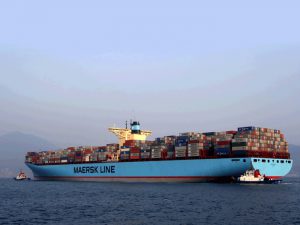
What these numbers don’t show is the number of ships chartered in by the region’s shipowners or their strengths in some key sectors. The obvious example of this is Maersk Group. It is the world’s second largest shipowner in terms of its owned fleet (720 vessels totaling 25.5 million gt) but the largest in terms of number of ships controlled (767 vessels totaling 31.7 million gt).
As of the third quarter of last year, the average age of ships in the Norwegian fleet of foreign-going vessels (under Norwegian and other flags) was 10.9 years. Indicating how Norwegians keep the fleet fresh: In the first nine month of last year, 57 newbuildings totaling 2.09 million dwt were added along with 38 pre-owned vessels totaling 818,000 dwt. Equally significantly, disposals and losses totaled 126 ships and 2,.29 million dwt.
The Danish fleet is also young, in gross tonnage terms, 31.9% is under five years old, 28.7% is 5-9 years old, 23% is 10-14 years old, 12.2% is 15-19 years old and just 4.1% is 20 years old or more.
Keeping fleets young means ordering ships. Breaking down 2015 world newbuilding orders by owner’s country of domicile, we find Norway coming in at number 8, ordering 188 vessels totaling 8.7 million dwt and Denmark in the 11th place placing orders for 131 ships totaling 7.2 million tons.

PARTNERING WITH SUPPLIERS
Wherever ships are built—and whoever is buying them—a large percentage of their value is likely to be equipment produced by companies based in the Nordic region, who benefit from a willingness by the region’s shipowners to partner in trialing of equipment aboard ship in real life, working conditions.
Historically, this loop used to also include shipyards, but with the shift of shipbuilding to Asia, this is less the case today. Last year’s Danish Maritime Days included a workshop on “Lack of yard presence in innovation supply chain — How can we as an industry enable improved technology uptake through earlier involvement with the yards?”
Nobody in the room had an instant answer. But there were anecdotal references to the dangers of sharing information too readily with Asian shipyards that see nothing wrong with putting one shipowner’s bright ideas into competitors’ ships.
What remains of the region’s shipbuilding industry is mostly focused on smaller, specialized tonnage, but it retains much of the infrastructure of earlier days including, the intellectual property found in classification societies, design houses, research institutions, model basins and similar facilities—creating ships on the drawing board, the computer and in models that will eventually come to life in full-scale steel in Asia.
Meantime, of course, some yards remain very much in business and winning orders.
DENMARK: MOVING BEYOND
With shipbuilding migrating to lower cost countries, the shipyard capacity in the region has shrunk considerably. For example, there are only a handful of yards in Denmark.
One of those is Fayard A/S in Munkebo. Located on the Odense fjord, it is a large, primarily ship repair, facility whose slogan is “Speed is all—Quality is everything.” It has four large graving docks, all served by high capacity cranes, and a 700 m working berth.
Dry Dock 3, measuring 315/415 m in length and 90 m in width, is the largest dock and is capable of undertaking simultaneous construction work on a variety of ships. Dry docks 1 and 2, may be smaller in size but are 280/303 m lengths and 44/45 m widths and are used for repair and maintenance work on ships. Dry docks 4, measuring 145 m x 30 m x 8 m, is primarily used for smaller vessels. Docks 1, 2 and 4 have modern dock gates and pumping systems that allow the yard to start working on a vessel with 3-4 hours of arrival. The dock gates open or close in just four minutes.
Karstensens Skibsvaerft A/S in Skagen currently has a labor force of around 250, and can build vessels up to 135 m in length. While most are fishing vessels, the yard has been building three Knud Rasmussen-class of offshore patrol vessels, the third of which is near completion using a hull built at Poland’s CRIST shipyard last April.
Orskov Yard A/S in Frederikshavn converts and repairs all types of vessels in facilities that include two graving docks two floating dry docks with a capacity of up to 215 m x 34 m. The yard employs 230 people and cooperates closely with a wide range of subcontractors to provide all-round, one-stop solutions.
Søby Værft AS in Søby Ærø offers ship repair services using three graving docks with capacities up to 115 m x 24 m x 6 m. It also undertakes newbuildings and one project it is getting set for is the EU-supported E-ferry project, aimed at bringing into service a 4.2 mWh battery capacity electrically powered, ICE class B, single ended, drive-through RO/RO passenger ferry with one continuous main deck for trailers and cars. It will use state-of-the-art electric only systems with an automated high power charging system.
The initial aim is to demonstrate an energy efficient and emission free ferry for passengers and vehicles in an operational viable setup on the Soeby-Fynshav and Soeby-Faaborg connections in the Danish part of the Baltic Sea. The longer term aim is to see 10 more E-ferries in operation in Europe and worldwide every year, reaching a total of 100 or more by 2030— saving 100,000-300,000 tonnes of CO2 annually.
SWEDEN: WHERE DID THE YARDS GO?
The Nordic country with the fewest surviving shipyards is Sweden, where the once gigantic industry has shrunk to the point that it apparently no longer supports a national shipbuilding association—so statistics on it are hard to come by.
Newbuilding is pretty much confined to Saab Kockums naval shipbuilding activities and a handful of small yards involved in smaller tonnage.
Two large repair facilities are still operational. Oresund Dry Docks, in Landskrona on the Øresund Strait beween Denmark and Sweden has facilities that include a 195 m x 35 m graving dock and a 165 m x 28 m floating dock. Damen Oskarshamnsvarvet, on the west coast, has facilities that include an 80 m x 15 m floating dock. Activities at Damen Shiprepair Götaverken in Gothenburg ended in 2014, due to “the depressed situation of the Scandinavian shipping market, the increased number of Baltic repair docks and the appreciation of the Swedish Krona (SEK).
Though Gothenburg no longer has a shipyard, it still has one of Europe’s best known towing tanks, operated by SSPA Sweden AB.
SSPA has the capability to perform most kinds of model testing in its facilities: the towing tank, the large cavitation tunnel and the seakeeping and maneuvering basin – Maritime Dynamics Laboratory, (MDL). Wind tunnel tests can be performed at external test facilities.
All test facilities at SSPA are designed for performing tests with large models, which have many advantages as scale effects are reduced and more reliable measurements can be performed.
NORWAY, HANGING IN THERE
For those interested in the preservation of Norwegian shipbuilding capability, a big question in the months ahead will be whether the Vard Group, a Fincantieri company, can continue to keep five Norwegian shipyards alive based on its previously successful strategy of supplying primarily the offshore oil and gas sector with specialized vessels designed and fitted out in Norway using hulls built in Romania.
In addition to its Norwegian yards, Vard has two yards in Romania, two in Brazil and one in Vietnam. Vard’s biggest recent headaches have included well-documented problems with its Brazilian activities and it has said that these are under review.
Outside of Brazil, Vard’s problems are those shared by all shipbuilders historically dependent on the oil and gas sector—getting enough orders to keep capacity occupied and diversifying into other sectors.
Its most recent order came in November and was for design and construction of what was described only as “one offshore vessel for an undisclosed international customer.” It is being designed by Vard Design in Ålesund, Norway. The hull will be constructed at Vard Braila in Romania and outfitting and delivery is scheduled from Vard Langsten in Norway in 2017.
That order followed contracts worth a total $100 million for the design and construction of two offshore subsea construction vessels for Dubai-based Topaz Energy and Marine. The hulls will be constructed at Vard Tulcea in Romania, with delivery scheduled from Vard Brattvaag in Norway.
In the fisheries sector, Vard last year secured an order from Brevik AS of Norway for a coastal fishing vessel, but, for this vessel, Vard Braila in Romania will undertake all stages of production.
Another fisheries order came from a Canadian client and was for a 79 m stern trawler of Rolls-Royce NVC 374 design. Vard Braila will build the hull and the vessel will be fitted out at Vard Aukra in Norway in the fourth quarter of 2016.
Thus far, Vard has either not been looking at the offshore wind sector or has been keeping very quiet about it. That’s not the case with other Norwegian shipbuilders.
A significant current project currently under way at the Ulstein shipyard is the fitting out of the first of two innovative offshore wind industry Service Operation Vessels (SOV) being built for Germany’s Bernhard Schulte Offshore GmbH that will be Ulstein’s first for the offshore wind industry — and the first to feature its innovative X-Stern which allows a vessel to be positioned with the stern faced towards the weather instead of the bow.
The hull of the first X-Stern SOV hull arrived at Ulstein’s Ulsteinvik shipyard in January and is scheduled for sea trials starting late spring. Starting this summer, the vessel will work at the Gemini wind farm in the Netherlands for Siemens Wind Power Service.
A project underway at Fjellstrand AS is another pointer to the growing attraction of offshore wind service opportunities in a depressed oil and gas market. It is converting a platform supply vessel it delivered only in April of last year into a wind farm support vessel.
Havyard Group established its credentials in the offshore wind sector with the delivery last February of the first of three Havyard 803 SOVs to Denmark’s Esvagt. In addition, Havyard has an order from Esvagt for aa design and equipment package for a Havyard 931 CCV crew change vessel that will be built at Spanish shipyard Astilleros Zamakona.
Late last year, Esvagt ordered a further Havyard SOV, aimed at a new niche for vessels of this kind, smaller wind farms. This Havyard 831 design is described as compact and efficient, but with ample capacity to transport service personnel and equipment. The first Havyard 831is also being built outside Norway, at the Cemre shipyard in Turkey.
Though design and equipment deals are obviously profitable for Havyard, that leaves shipyard capacity to be filled and another sector where it has been successful is the design and construction of large fish carriers. Last November Havyard was able to fill a gap in production of these vessels by using the covered building dock at its Leirvik shipyard for refit and refurbishment of two Faroese fishing trawlers.
Kleven, operates two shipyards—Myklebust Verft and Kleven Verft—and its orderbook includes a deep sea minerals exploration vessel and several fisheries vessel in among the AHTs and OCVs.
A recent contract came from Sølvtrans and is for delivery of a live fish carrier vessel for Myklebust Verft. This is Kleven’s second order from Sølvtrans for this type of vessel, both of which are being built to to Rolls-Royce NVC 387 design.
While ship designs are part of the stock in trade at Ulstein, Vard and Havyard, Kleven’s orderbook is pretty much a portfolio for Norwegian specialist ship design firms. The deep sea minerals vessel, which is on order for De Beers Marine Namibia, is being built to MT 6022 design from Marin Teknikk. This design is well proven in the offshore construction segment, but the De Beers ship will include a wide range of tailor made equipment and features.
A large pelagic midwater trawler/ purse seiner that Kleven is building for Gitte Henning AS in Skagen, Denmark, is based on a design from another well known independent design house, Salt Ship Design, which in October had 16 vessels of its design under construction at Norwegian and foreign shipyards.
“Unlike the current offshore market, fisheries and fish farming are doing very well and these segments represents an increasingly important market for Salt,” it said.
In addition to the independent design houses and shipyard design divisions, Norway is also the home of Rolls-Royce’s and Wärtsilä’s Ship Design divisions, which have absorbed various independents over the years. Having a ship design department makes all sorts of sense for both of them, as a ship design is the envelope for, quite literally, a boatload of equipment and systems.
FINLAND, BACK FROM THE BRINK?
In Finland, thanks largely to government support —including diplomatic efforts— a large part of the shipbuilding industry has emerged from the ashes of what was STX Finland.
Most importantly, with a lot of Finnish Government coaxing, Germany’s Meyer Werft has acquired the Turku shipyard, enabling it to continue as one of the world’s premier cruise ship yards.
Shipbuilding has also returned to the Rauma shipyard after STX announced its closure in 2013, with the site being sold to the local municipality. The shipyard reopened as Rauma Marine Constructions Oy (RMC) the following year and in December 2015 reported that it was to “receive a major infusion of capital for further growth from the government backed Finnish Industry Investment Ltd, and two investment companies, Finda and a fund managed by Taaleritehdas. That news came the day after the Finnish Ministry of Defense issued a Request For Information to kick off a long planned plan to build four new corvette size vessels.
The Rauma shipyard also has considerable expertise in the area of icebreaking vessels — which keeps what is now Arctech Helsinki Shipyard from having a monopoly in that area. When STX Finland ’s troubles threatened the survival of the Helsinki yard, Russia’s United Shipbuilding Company took a 50% stake in and subsequently took total ownership control and the yard’s orderbook primarily includes advanced icebreaking tonnage for Russian projects, though an icebreaker for the Finnish Transportation Authority is currently fitting out.
The other repository of Finnish icebreaking knowhow is ice-going vessel design and engineering specialist Aker Arctic, whose capabilities include ice model testing. Its largest shareholder is Finnish Industry Investment, which is also major stakeholder in the reborn Rauma yard.
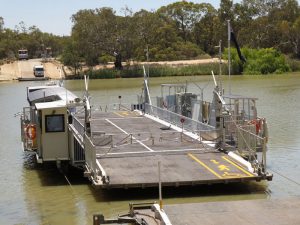
FEBRUARY 10, 2016 — Melbourne, Australia, based BMT Design & Technology Pty Ltd (BMT), a subsidiary of BMT Group Ltd, has recently completed a design project for the South Australian Government’s Department