Op-Ed: How tariff shifts are spreading risk across the import process
Written by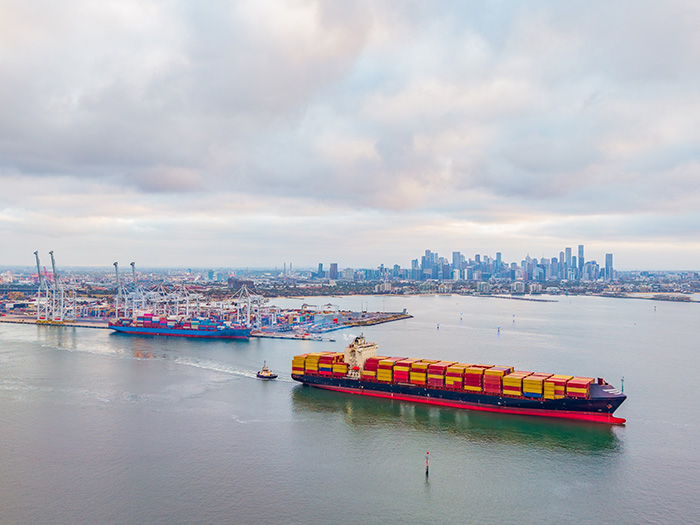
Photo Credit: Shutterstock/Muije Media
By James Reiss, President, International Bond & Marine and Sam Hellebush, President of Ocean Marine, U.S., Intact Insurance Specialty Solutions
Volatility in global trade is nothing new. Rates fluctuate, routes shift, and disruption is part of the operating environment. But what makes this moment different?
Today’s uncertainty is increasingly policy-driven, with tariffs at the center. For importers moving goods through U.S. ports, tariffs no longer behave like a predictable cost. They can change quickly, sometimes while cargo is already in transit, reshaping landed costs and introducing new exposure.
In this environment, tariff risk is no longer confined to a single point in the import process. It now spans the full lifecycle of a shipment, making it harder to keep pricing, compliance, and risk management aligned. As those elements drift, gaps between expected and actual exposure become more frequent and more likely to surface when there’s little room to respond.
How tariffs are expanding and accelerating risk
Tariffs once followed a more defined cadence. That has changed. Recent developments reaffirm the broad authority of the U.S. Trade Representative under Section 301, enabling tariff rates and product coverage to expand without a new investigation.
In practical terms, rates can increase sharply, from 10% to 25%, while the list of affected goods grows with limited lead time. For importers, that creates a moving target.
You might price a shipment weeks or months in advance, only to see the cost picture shift by the time it arrives. Contracts may not account for that change, and margins can tighten quickly. In some cases, the full exposure doesn’t come into focus until after entry, when duty amounts are reassessed or challenged.
On paper, these are policy decisions. In practice, they show up as higher duty bills, clearance delays, or follow-on adjustments tied to classification and valuation. Each of those moments introduces another opportunity for exposure to build.
Tariff risk now moves faster, evolves more frequently, and shows up at multiple points in the import cycle.
Why traditional bonding models no longer hold up
Customs bonds back your obligation to pay duties and fees, but this environment is putting them under real strain. Most continuous bonds rely on historical import activity, typically a percentage of previously paid duties.
That approach starts to break down as duty obligations shift more quickly.
Importers are increasingly dealing with:
- Duty spikes: Sudden tariff increases that push your total duty above existing bond limits
- Supplemental bills: U.S. Customs and Border Protection (CBP) issues additional duties after entry when tariffs or values change
- Classification disputes: Disagreements over product classification that delay final duty amounts
- Extended liquidation timelines: Increased use of liquidation extensions and more intensive CBP review can delay when duty amounts are finalized, prolonging uncertainty after entry
If your bond limit no longer covers the exposure, the impact is immediate. CBP may hold cargo until additional bonding is in place, delaying shipments and disrupting your supply chain. At the same time, you may need to allocate additional capital on short notice, often after goods have already arrived.
Looking backward at past activity doesn’t provide much protection in this environment. You need to account for how quickly tariff exposure can change and plan for that range.
Does your cargo coverage reflect tariff exposure?
Marine cargo insurance still plays a critical role, but many importers misunderstand where its limits are. These policies cover physical loss or damage. They don’t respond to the financial impact of tariff changes or duty reassessments.
As tariffs account for a larger share of total landed cost, that distinction becomes harder to ignore.
Some common gaps include:
- Retroactive duties: Additional tariffs applied after entry that cargo insurance typically does not cover
- Misclassification or undervaluation: Incorrect product details or pricing that create uncovered financial exposure
- Tariff-driven cost increases: Duties you did not include in declared amounts, leaving shipments underinsured
Many of these issues come back to how you set values. If your customs declarations and insured amounts rely on different assumptions, coverage won’t line up when something goes wrong.
Bringing those figures into alignment gives you a more accurate view of what’s actually at risk.
Freight broker liability is expanding alongside operational pressure
Risk is also rising on the logistics side. A recent Supreme Court ruling expands the potential for negligent carrier-hiring claims under state law, placing greater scrutiny on freight brokers.
Carrier selection now carries real consequences. The choices you make, such as who you move freight with, how you vet them, and what records you keep, can all come under review if an issue arises.
Tariff volatility adds another layer. Teams are often forced into faster operational and financial decisions to manage rising costs. Those decisions don’t reduce the need for disciplined carrier selection, vetting, and documentation, and in many cases, they increase the scrutiny those choices face.
If you rely on brokers, disciplined vetting and clear documentation matter more than ever. Insurers and courts are scrutinizing carrier decisions more closely, especially when claims involve performance or safety issues.
How these risks are converging in practice
These risks often overlap and build on each other.
For example, a tariff increase hits while a shipment is in transit, raising the expected duty bill. By the time the goods arrive, the total exposure exceeds your existing bond limit, triggering a hold while additional coverage is secured. At the same time, the higher duty value isn’t reflected in your declared cargo value, leaving the shipment underinsured.
To offset rising costs, teams often make adjustments under tighter timelines, whether that means absorbing higher duties, revising pricing assumptions, or accelerating booking and execution decisions. Those changes can create pressure on standard vetting and documentation processes, even when underlying risk hasn’t diminished.
You don’t always see the full picture in real time. The connection tends to become clear later, during an audit, a delayed entry, or a claim review, when each issue is assessed together rather than in isolation.
Looking at each area on its own makes these overlaps easy to miss. The bigger risk lies in how they combine under pressure.
Keeping pace with tariff-driven risk
Much of the strain shows up in small ways first, as day-to-day decisions begin to drift out of alignment.
You don’t need a major disruption to feel the impact. A classification change, an unexpected duty increase, or a post-entry adjustment can reveal gaps that weren’t obvious during planning.
Take a step back now to review how you secure duties, value cargo, and document logistics decisions. Aligning these elements makes it easier to absorb change without delaying shipments or taking on avoidable costs.
About Intact Insurance Specialty Solutions: Intact Insurance Specialty Solutions and Intact Ocean Marine are the marketing brands for the insurance company subsidiaries of Intact Insurance Group USA LLC, a member of Intact Financial Corporation (TSX: IFC), the largest provider of property and casualty insurance in Canada, a leading provider of global specialty insurance, and, with RSA, a leader in the U.K. and Ireland. The insurance company subsidiaries of Intact Insurance Group USA LLC include Atlantic Specialty Insurance Company, a New York insurer, Homeland Insurance Company of New York, a New York insurer, Homeland Insurance Company of Delaware, a Delaware insurer, OBI America Insurance Company, a Pennsylvania insurer, and OBI National Insurance Company, a Pennsylvania insurer. Each of these insurers maintains its principal place of business at 605 Highway 169 N, Plymouth, MN 55441. International Bond & Marine (IB&M) is a U.S. based independent insurance broker owned by Intact Insurance. For more information about IB&M, visit intlbondmarine.com. For information about Intact Insurance Specialty Solutions products and services available in Canada, visit intactspecialty.ca, and for information about Intact Financial Corporation, visit intactfc.com.
This article is provided for general informational purposes only and does not constitute and is not intended to take the place of legal or risk management advice. Readers should consult their own legal counsel or other representatives for such advice. Any and all third-party websites or sources referred to herein are for informational purposes only and are not affiliated with or endorsed by Intact Insurance Group USA LLC (“Intact”). Intact hereby disclaims any and all liability arising out of the information contained herein.