

Ten-year old Panamax box ship sold for scrap
SEPTEMBER 21, 2016 — This will interest those who think that a return to a healthier container market will require ever-younger ships to be demolished: It’s starting to happen. According to the
SEPTEMBER 21, 2016 — This will interest those who think that a return to a healthier container market will require ever-younger ships to be demolished: It’s starting to happen. According to the

SEPTEMBER 20, 2016 — Yonhap news agency reports that South Korea is seeking diplomatic help to sort out the mess left by the collapse of Hanjin Shipping. Hanjin’s court-sanction self-restructuring plan has
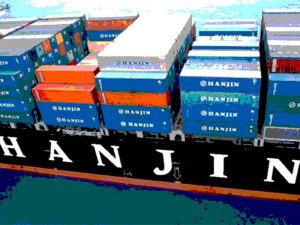
SEPTEMBER 19, 2016 — A South Korean judge today ordered all Hanjin Shipping chartered vessels that have completed unloading their cargo to cancel their charter agreements and return to their owners. Sixty
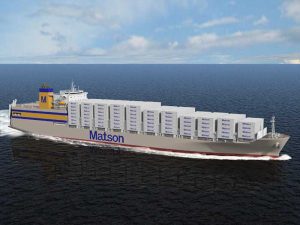
SEPTEMBER 15, 2016 — Jones Act operator Matson, Inc. (NYSE: MATX) yesterday reported the issuance of $200 million in privately placed 15-year final maturity senior unsecured notes. The notes will have a
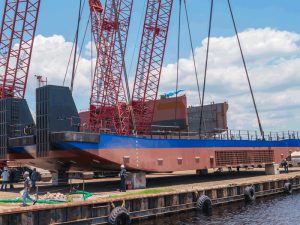
Independent commodity trader Trafigura Group, through its subsidiary Impala, is investing $1 billion in creating the infrastructure for a new multimodal supply chain in Colombia that can transport crude, naphtha, break-bulk cargo, containers, and oversized cargo up and down the country’s main waterway, the Magdalena River.
Impala Colombia currently operates a terminal in the seaport of Barranquilla, where the Caribbean Sea meets the Magdalena River. Some 630 kilometers south of Barranquilla on the Magdalena River, Impala is investing some $450 million in developing a new state-of-the-art inland river port in Barrancabermeja. The inland river port will have an oil terminal with six tanks that can store 120,000 bbls each and a general cargo and container terminal. The port will serve as an intermodal connection between river transport and truck transport. Impala’s fleet of barges will ship product to and from major crude oil production sites as well as major cities such as Bogotá or Medellin.
In addition, Barrancabermeja will also serve as a seaport with bills of lading possible to connect directly with international ports such as Rotterdam or Shanghai.
Part of Impala’s investment includes a fleet of new towboats and barges. Impala’s growing Colombian fleet includes at least 15 new towboats and 68 liquid barges and 45 dry cargo barges. The tank barges are double hulled, with vapor recovery systems for environmental responsibility and safety and can carry up to 10,000 barrels of oil.
This past summer, Eastern Shipbuilding, Panama City, FL, launched the Impala Soledad and Impala Puerto Salgar, the first two in a series of four inland river towboats for IWL River Inc., an affiliate of Impala Terminals Colombia.
Designed by CT Marine, the towboats are are being built to ABS Class Inland River Service. Eastern Shipbuilding expects to finish delivering the boats in 2017.
Impala Soledad and Impala Puerto Salgar along with the other sister vessels in the series, the Impala Mompox and Impala Catagallo, will each be 134 feet long, 42 feet wide, with a depth of 9 feet and minimal operational draft of 6 feet.
Each towboat will be triple screwed, with three Caterpillar 3512C main diesel engines, certified to IMO Tier II. Each will produce 1,280 hp at 1,600 rev/min for a total of 3,840 hp. Karl Senner, Kenner, LA, supplied the three Reinjtes WAF665 reduction gears.
The towboat’s auxiliary power is supplied by two Caterpillar C6.6 125 kW, 220-volt, 3-phase main generators.
The Panama flag vessel will be classed ABS +A1, Towing Vessel, River Service, +AMS, ABCU.
CT Marine also designed the towboats to have a retractable pilothouse. When fully raised, the pilothouse will have a 37 foot 6 inch eyelevel above the waterline. Towboats designed with retractable pilot houses can pass under low fixed bridges along their route. The deckhouse is confined to a single level and only the pilothouse is extended atop a hydraulic ram. When raised, the pilothouse provides excellent visibility for the master to see over top his tow.
NEW TOWBOAT FOR FMT
Another new towboat built with a retractable pilothouse was Florida Marine Transporters’ M/V Marty Cullinan. Built by Horizon Shipbuilding, Bayou La Batre, AL, the M/V Marty Cullinan has an ABS Load Line Certificate to operate in the waters between Chicago to Burns Harbor for fair weather voyages.
The 387 gt towboat is outfitted for service in areas with restricted overhead clearances and draft limitations. With the pilothouse fully retracted, the maximum air draft is 17 ft 8 in.
The 120 ft x 35 ft x 11 ft 6 in vessel is of all steel construction and powered by two Caterpillar 3512 engines, each rated at 2,011 hp at 1,600 rev/min with Twin Disc gears. The boat is outfitted with two 175 kV Tier 3 John Deer 6090 460 V gensets.
Sleeping accommodations and facilities are provided for eight persons and sound dampening systems have been implemented throughout the main deck house.
The towboat was built in 14 months. Project Manager Terry Freeman, who managed the construction of the vessel, said, “Our team exceeded all expectations with regard to the timely production and quality work on this build especially given the new design, ABS requirements and technical expertise required for the retractable pilot house.”
Jeff Brumfield, Senior Manager of Boat Construction and Engineering for FMT said, “We are thoroughly pleased with the boat, and when I talk to the Marty Cullinan crew they are quick to note that she is smooth and very quiet. The sound dampening package has exceeded our expectations.”
“We have worked hard to build one of the best boats on the river and we consider ourselves fortunate to have teamed with FMT and John J. Gilbert to do this,” said Travis Short, President of Horizon Shipbuilding. “Horizon has been building FMT boats for almost a decade and in that time we have been able to assemble a team of master craftsmen that produce a superior product. All the praise goes to those men and women in the yard, taking care to do the job right the first time while working safe, working hard and working together.”
Horizon has two more 120 ft FMT towboats, one standard and the other with a retractable pilothouse, in production with deliveries scheduled for this fall and the spring of 2017.
“LADY” KEEPS ON KEEPING ON
The M/V Lady Loren doesn’t have a retractable pilothouse, but does have a raised one that provides an eyelevel of 35 feet above the waterline. Back in 2008, LA Carriers built the pusher tug Lady Loren at Lockport Fabrication. At the launch, LA Carriers President Russell Plaisance explained that the boat was the result of five years of planning and a lifetime of maritime experience in the Gulf of Mexico. The 82 ft x 28 ft Lady Loren was the seventh boat in the LA Carriers fleet.
For Plaisance at the time, a key element of his business was diversification. “We do $10 million to $11 million [in gross revenue] per year including some business with the oil industry,” he said, “but we do a little of everything else as well. We barge pipe and we once even towed baseball dirt from Houston to Tampa Bay for spring training. This new boat has a contract to tow corn syrup from Memphis to Tampa Bay.”
Now eight years later, the corn syrup contract has dried up—the plant has been converted to other products. But LA Carriers’ diversity has kept the company healthy even during the current slump in the oil industry.
The Lady Loren, with both towing and pushing capabilities, is currently engaged moving a pair of hopper barges on a run between New Orleans and Tampa.
The Lady Loren is a triple-screw tug powered by three Cummins QSK19-M3 diesels rated at 660 hp each to give a total of 1,980 hp. The engines turn three 63 by 67-inch propellers in kort nozzles.
“The engines had 36,000 hours on them so I decided to rebuild the middle engine,” says Plaisance. “Without removing the engine, my crew, together with Cummins mechanics replaced the shaft bearings, pistons and rods, heads and injectors. When we looked at the wear on the parts that came out of the engine we realized that they could easily have given us another 4,000 hours with no risk of down time.”
As a result, he feels confident in leaving the rebuild of the two outside engines for another year by which time they will have a remarkable 40,000 hours each. Crediting Cummins quality, Plaisance also has a very proactive service and maintenance program on the engines. Oil is changed regularly, and injectors adjusted every 10,000 hours.
LA Carriers has changed some of the fleet in the eight years since the Lady Loren was first launched and they have several different engine makes among its seven boats. Plaisance is unreserved in his praise for the Cummins engines. “In future, if I have to replace an engine in one of my other tugs, it will be with Cummins,” he says.
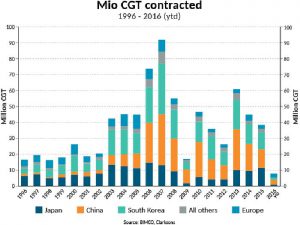
SEPTEMBER 14, 2016 — BIMCO says that shipyards are falling victim to deteriorating conditions in the dry bulk, container and offshore markets, with 2016 looking to set the record for the lowest
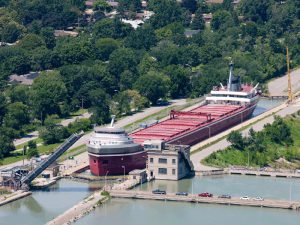
The Great Lakes – St. Lawrence Seaway is one of the largest trade corridors in the world, spanning over 2,300 miles from the Gulf of St. Lawrence to Lake Superior. The system—primarily used for the shipping of traditional and new cargoes, such as mining products, steel, iron ore, dry bulk and grain—has an economic output of nearly $5 trillion, it sustains over 220,000 jobs in both Canada and the U.S.; produces $34 billion in business revenues and $3.6 billion in transportation cost savings; and provides competitive shipping and direct access to America’s heartland.
But anyone reading the latest trade reports coming out of the region would not be at fault for thinking the market is in a downturn. Sluggish traffic and a slide in iron ore cargoes for the steel industry and limestone shipments for the construction market grabbed the headlines in the local papers last month.
For the month of July, shipments of iron ore on the Great Lakes and St. Lawrence Seaway decreased by 15 percent when compared to July 2015 numbers. According to the Lake Carrier’s Association, which represents 14 American companies operating 56 U.S.-flag vessels on the Great Lakes, shipments were also down by more than 18% compared to the five-year average.
The Association went on to say that shipments from U.S. ports totaled 4.95 million tons in July, a decrease of nearly 14 percent compared to a year ago. Loadings at Canadian terminals dipped 23 percent to 643,000 tons. Year-to-date, the iron ore trade stands at 26.8 million tons, a decrease of 3 percent compared to the same period in 2015. Moreover, year-over-year, loadings at U.S. ports are down by 113,000 tons, while loadings from Canadian ports in the St. Lawrence Seaway are down 743,000 tons (21 percent).
Limestone didn’t fair any better. Shipments on the Great Lakes totaled 3,348,040 tons in July—a decrease of 18 percent compared to a year ago, and July loadings were down 14 percent below the month’s five-year average.
“We are about half-way through the 2016 navigation season and our overall cargo tonnage numbers are down by 11 percent,” says Betty Sutton, Administrator of the Saint Lawrence Seaway Development Corporation.
According to the Saint Lawrence Seaway Development Corporation, year-to-date cargo shipment from March 21, 2016 to July 31, 2016 were down 11 percent over the same period in 2015. The dry bulk category was down 13.4 percent (however, stone and potash were up), iron ore was down 28 percent and coal was down almost 13 percent.
The news isn’t all doom and gloom for commodities, however. “The lack of iron ore and coal has definitely been a contributing factor for this decrease; however traffic continues to be well above the five-year average, keeping our ports and their workforce busy,” says Sutton.
They don’t call the system the “Opportunity Belt” for nothing.
Ports in Minnesota and Ohio are in high demand through the push of agricultural products, such as corn and wheat. Meanwhile, ports in Chicago, Indiana and Wisconsin are benefiting from the movement of steel products and machinery, explains Sutton. Between March and July of this year, steel slabs, which would be categorized under general cargo, were up 214 percent over the same period in 2015, while other general cargo was up 74 percent.
The Port of Cleveland, for instance, has “seen steady growth” in month-to-month tonnage numbers during the 2016 season, says David S. Gutheil, Vice President, Maritime and Logistics. The rise in tonnage, goes hand-in-hand with the success of the Port’s Cleveland-Europe Express liner service. The service, launched by the port in 2014 with vessel partner the Spliethoff Group, directly moves cargo between the Great Lakes and Europe, offering customers savings on inland transits and shorter transit times between the U.S. and Europe.
Gutheil adds, that the Port is seeing “steady volumes of imported steel from Europe,” and an “increased interest in the project cargo market” from customers with a vested interest in moving cargo through the St. Lawrence Seaway.
To that end, the Port of Cleveland has invested in, and recently completed, the “construction of a new 21,000 square foot warehouse. This new facility,” explains Gutheil, was “partially funded through a grant secured through the Ohio Department of Development Logistics program, will be used for trans-load opportunities and increases our inside storage capacity to 320,000 square feet.”
The new warehouse is part of the Port’s ongoing infrastructure investment plan. Earlier this year, the Port commissioned two Liebherr 280 mobile harbor cranes. The cranes are expected to significantly increase the Port’s speed and efficiency.
Beyond the shipping of commodities, ports in the region are also seeing an uptick in tourism—leading to a proliferation in expansions and infrastructure investments.
Resurgence in cruise shipping
“In a time when the world’s industrial giants and cruise ships are all landing in the ports of the St. Lawrence, we have to utilize the strategic location of the Port of Québec to make it the marine destination of choice,” says Mario Girard, President and CEO of the Port of Québec. The deepwater port of the Port of Québec, which sits at the end of the St. Lawrence-Great Lakes trade route, is seeking to rebuild and enhance a number of areas around the port in the hopes of increasing both foot and vessel traffic. But the area likely to get the most buzz will be the expansion of the port’s cruise terminal.
With a resurgence in the cruise market in the Great Lakes region, ports such as the Port of Québec are looking to capitalize on the market, making large infrastructure investments to help meet growing vessel and passenger demand.
Over the last decade, the Port of Québec has seen cruise ship visitor numbers increase—from 55,000 in 2000 to 180,000 in 2014. Operating at full capacity, the Port of Québec will oversee a redesign and expansion of the Ross Gandreault Cruise Terminal and the installation of a mobile terminal at wharf 30 in the Estuary sector.
The hope is that the expansion, which will double the accommodation capacity at the Ross Gaudreault terminal and make way for larger ships, will enable the growth of the cruise market sector to continue, with the port capable of accommodating 400,000 passengers a year by 2025.
The $89.5 million project, called “Québec, A Destination of Choice of the St. Lawrence” will be completed over the next decade.
Meanwhile, over at Port Saint John, the second largest port by tonnage in Canada, cruise activity is expected to increase by 20% this year, with 64 ships calling at the port, bringing in 144,000 passengers and 57,700 crew members to the region, before the season’s end October 28th 2016. Cruise activity at the port represents a $25 million annual boost to New Brunswick’s economy.
Beyond the cruise sector, Port Saint John’s expansion is being driven by a steady increase in containerized cargo. Catering to a diverse cargo base, which includes dry and liquid bulk, break bulk, containers and cruise ships, the traditionally smaller container port is modernizing its facilities to maintain and support increases in both trade and business.
The port’s $205 million, seven-year, West Side Modernization Project—funded by the port, the Canadian federal government and the government of New Brunswick in three equal parts ($68.3 million each)—will see the upgrading and consolidation of the Rodney and Navy Island terminals, enabling the accommodation of larger vessels; and the installation of new operating systems and technology to help enhance cargo-handling capabilities.
Port Saint John says the project, which is slated for completion in seven years, builds on Canada’s commitment to drive economic growth in Atlantic Canada through trade and investment.
Linking the past and future
The Port of Montreal is in the midst of its latest modernization project. The port, which supports 16,000 jobs, generates $2.1 billion in economic spin-offs annually, and in 2015 handled 32 million tonnes of cargo and welcomed 91,000 cruise passengers and crew, will revamp its aging Alexandra Pier and Iberville Passenger Terminal. While the restoration is taking place, passengers will be welcomed at alternative cruise ship terminals, berths 34-35 and 36-37, located east of the Jacques-Cartier Bridge.
The goal is to have a majority of the project done in time to celebrate the 375th anniversary of the City of Montreal’s founding next year. The restoration project is intended to help integrate the pier and terminal into the urban fabric of Old Montreal, provide better access to the St. Lawrence river, and improve conditions to help meet growing cruise ship passenger demand.
“The Port of Montreal is a real treasure for the city, and remains one of our main economic assets,” says Montreal Mayor Denis Coderre. “The restored facilities of Alexandra Pier and Iberville Passenger Terminal will let us extend a magnificent welcome to the tourists and visitors who will come celebrate Montreal’s 375th anniversary with us in 2017.”
The total cost of the project is estimated at $78 million—with the Government of Quebec providing $20 million in funds through the Maritime Strategy – Tourism Component, and the City of Montreal providing an additional $15 million.
The project will include the reconstruction of the ground floor of the passenger terminal, construction of a new observation tower (its completion is expected in 2019), the lowering of the pier and installation of a public place, implementation of a port center, an upgrade to the parking area on the side of the secondary terminal, the addition of a green rooftop terrace, and the introduction of a main access entrance to the pier, further integrating the terminal into the surrounding area.
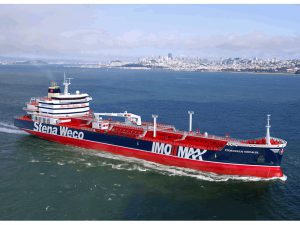
As we pointed out in our Annual Yearbook & Maritime Review back in June, shipyards are struggling amid the downturn in the market, with newbuilding orders at their lowest levels since the 1980s. As further evidence, during the first half of 2016, orders for new ships worldwide dropped 65 percent as compared with the first half of last year, according to VesselsValue.
The leading ship valuation provider says that 689 newbuilds were ordered in the first half of 2015 as compared with a mere 239 this year.
As we mark the midway part of this year, VesselsValue also points out that $28.4 billion worth of vessels have been delivered this year, with another $43.8 billion worth still on the orderbooks and due for delivery in 2016. VesselsValue says that there a total of 2,518 vessels to be built in 2016, with 1,613 as yet undelivered by mid-year. Almost a third of the undelivered vessels are bulkers.
LPG tanker deliveries are on track for the year, with 50% of the 2016 orderbook having been delivered (worth $3.0 billion). However there is still 80% of the Offshore Support Vessel (OSV) orderbook still undelivered, valued at $5.5 billion. Overall, only 93 of the 500 OSVs on order were delivered to the fleet this year. VesselsValue Valuation Analysts say many of the undelivered vessels in underperforming markets are candidates for slippage: the vessel’s delivery date may be pushed back into the next few years.
The tanker outlook
Updating its Mid-Year Tanker Market Outlook, McQuilling Services says that 49 uncoated tankers were delivered at the end of July, representing “36% of our full-year expectations and supporting our original thoughts of a second half skew of tanker deliveries.” McQuilling Services sees the supply outlook over the next five years as a “tale of two halves.” It says the present year along with 2017 are projected to increase the DPP fleet as a whole by 3.6% and 5.7% on an average inventory basis. In total, we project 62 coated Aframaxes (LR2) and 46 coated Panamaxes (LR1) to join the fleet over 2016 and 2017, of which 27 have delivered as of August.
McQuilling Services says, “We anticipate that LR2 inventory will expand 10.7% and 9.9% in 2016 and 2017, respectively amid high deliveries and minimal deletions, while the MR product segment is to average only 1.0% growth through 2020. Overall, Clean Petroleum Products (CPP) growth will average 3.5% in 2016 before trending lower over the forecast period. The net fleet growth of the chemical fleet (IMO 2) is projected to expand by 13.5% in 2016, reducing to 3.4% in 2018 and below 2.0% in 2019 and 2020.
“We project spot rates for Dirty Petroleum Products (DPP) voyages to exhibit weakness in 2017 amid accelerating supply growth. TD3 freight rates will average WS 57 in 2017 before increasing to WS 71 by 2020. Floating storage economics may help stabilize the recent downturn in the market. Correspondingly, we anticipate VLCC TCE levels to average $33,800/day in 2017. Suezmax rates on TD20 are projected to average WS 66 in 2017, returning owners $15,300/day during the year. Aframax rates are likely to be elevated in the East with TD8 returning owners $19,600/day in 2017, following $22,300/day in 2016.”
According to McQuilling, CPP rates are likely to remain stable in 2017 due to increasing demand and decelerating supply. TC1 rates will average WS 108 in 2017, returning owners $19,200/day, while the LR1 trading the same voyage will generate earnings of $13,800/day. Gradually increasing freight rates through 2020 are projected. For MR owners, it is projected that vessels positioned in Asia will earn more than those in the West amid expanding refinery capacity in the East and slowing demand in the West. The TC2/TC14 triangulation will return owners $11,806/day in 2017.
Asset prices for secondhand DPP tankers will see losses continue into 2017 amid a weakening rate environment, while CPP values may see a slight uptick amid a more stable earnings outlook. Declining shipyard capacity and higher commodity prices may lead to a slight increase in newbuilding values next year.
Cruise market booming
The cruise ship market is booming, with orders for more than 60 cruise vessels valued at over $44 billion, including two 100-passenger coastal cruise ships being built at Nichols Brothers Boat Builders, Whidbey Island, WA, and two overnight cruise ships at Chesapeake Shipbuilding in Salisbury, MD. Chesapeake delivered the 185-passenger America to its sister company American Cruise Line in the first quarter of this year.
Matson orders two CONROs
In the U.S., orders for the first half of 2016 for new oceangoing ships for Jones Act trade have slowed, with shipyards working off their existing backlogs. The second half of the year started off with a bang as Matson Navigation awarded a $511 million contract to General Dynamics NASSCO, San Diego, CA, last month for two new LNG-Ready Container Roll-on/Roll-Off (CONRO) vessels that will have a capacity of 3,500 TEU. The two CONROs would be the 30th and 31st LNG-powered or LNG-Ready ships built, in operation, under construction or conversion for Jones Act service.
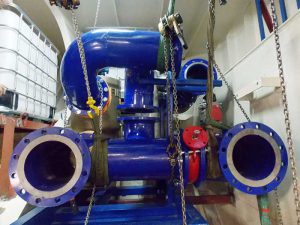
SEPTEMBER 13, 2016 — Chesterfield, U.K., headquartered Cathelco reports that its Evolution ballast water treatment (BWT) system has begun shipboard testing for U.S. Coast Guard Type Approval. The system has been installed
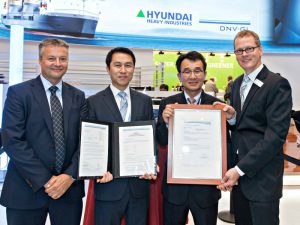
SEPTEMBER 10, 2016—At SMM 2016 this past week in Hamburg, Germany, Korean shipbuilder Hyundai Heavy Industries (HHI) announced it received the second approval in principle (AIP) from DNV GL for SkyBench, an