
Op-Ed: Biofuels move from theory to practice at sea
Written by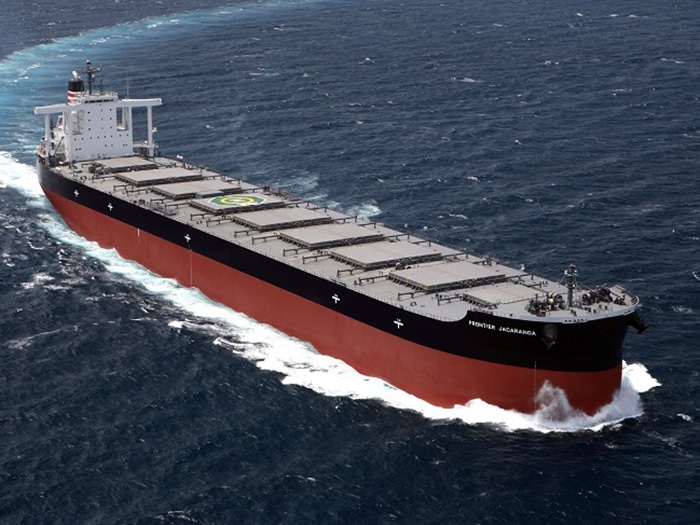
Photo Credit: NYK Line
By Siddhesh Prabhu, Surveyor, IRClass
For many shipowners, the conversation around decarbonization is no longer about long-term ambition alone. It is increasingly about what can be done now, within existing operational and commercial constraints, to improve emissions performance without waiting for new fuels, new infrastructure, or major machinery upgrades.
From a survey-led perspective, that is one reason biofuels are attracting such strong interest. They are being viewed not as a perfect end-state solution, but as one of the most accessible near-term options available to owners looking to improve carbon intensity performance while continuing to operate within familiar technical frameworks.
A major driver is the immediate operational pressure created by MARPOL Annex VI Regulation 28 and the Carbon Intensity Indicator (CII) regime. Because CII ratings increasingly affect commercial competitiveness, shipowners are under pressure to find practical measures that can deliver measurable improvement. Biofuels have therefore emerged as a comparatively accessible “drop-in” pathway, allowing operators to pursue better ratings without extensive machinery modification.
This interest is also being reinforced by wider market and regulatory signals. Proposed incentive schemes linked to vessel ratings are encouraging owners to consider fuels that support medium-term IMO decarbonization goals. At the same time, cargo owners and charterers are increasingly asking for lower-carbon voyages. Against the backdrop of the IMO’s indicative checkpoints of 20–30% GHG reduction by 2030 and 70–80% by 2040, biofuels are being recognized as a strategically useful bridging fuel for the years ahead.
That said, biofuels are still often discussed through the lens of misconception.
One common misunderstanding is that their use onboard introduces entirely new and unfamiliar handling challenges. In reality, FAME-based biofuels are classified as hazardous under Category X of the IBC Code, but the safety protocols and crew training already used for chemical cargoes are generally sufficient to mitigate these risks when applied properly.
Another area of confusion has been fuel testing and emissions compliance. The introduction of bio-residual fuel standards in ISO 8217:2024 has helped support the use of higher shares of Fatty Acid Methyl Esters in certain grades, including blends reaching up to 100% FAME in defined cases. There has also been uncertainty around NOx treatment, since the NOx Technical Code 2008 does not specify factors for all biofuels in a way that allows direct comparison with standard residual and distillate fuels. However, IMO work in this area, including onboard trials and related guidance, has helped clarify how weighted factors should be assessed for vessels using biofuels.
In practical terms, this means the pathway is clearer than many assume. Based on current IMO guidance, blends up to 30% biofuel can be treated as conventional fuels under the NOx Technical Code without additional assessment. Blends above that level, up to B100, may also be used in engines certified under MARPOL Annex VI Regulation 13, provided no changes are made to critical engine components or settings referenced in the engine’s Technical File.
From what is currently being seen in the field, early adoption is strongest among vessels already under pressure to act. This is especially true for ships subject to corrective action under the CII framework, including those rated D for three consecutive years or rated E. These operators need compliance-ready options that can show measurable carbon intensity improvement, and biofuels offer a practical route.
Adoption is also most viable where supply is reliable. At present, availability remains one of the main limiting factors. Current trends show biofuel blends such as B25, typically consisting of 25% biofuel derived from used cooking oil with 75% marine gas oil or marine heavy oil, being supplied at key bunkering hubs, including Fujairah and Singapore in the Asia-Pacific region. Price also remains a consideration, with biofuels currently commanding a premium of roughly US$100 to US$200 over standard marine-grade fuels worldwide. For this reason, uptake is likely to be strongest on routes with dependable supply and among operators whose charter commitments make engine retrofits or fuel-system modifications impractical.
Although biofuels are often described as drop-in fuels, that should not be taken to mean completely frictionless adoption. After the first few bunkerings, several operational pain points can begin to emerge.
One is cold-flow performance. FAME blends can exhibit wax formation at lower temperatures, which can affect storage, purification, and transfer systems. Another is microbial degradation. Because biofuel blends are more vulnerable to contamination where water is present, they are generally supplied with an expiration period of six months. Lubricity is also an operational consideration when these fuels are used in internal combustion engines. In practice, this may require higher cylinder lubrication rates, closer monitoring of engine parameters, and adjustments to maintenance planning for injectors, pumps, and fuel lines.
These are manageable issues, but they underline an important point: successful adoption depends not only on fuel availability, but on preparation, monitoring, and disciplined onboard management.
That is why procurement and verification matter so much. Before ordering any biofuel blend, operators should request the Proof of Sustainability. This is one of the most important documents in the process because it supports traceability, demonstrates compliance with relevant EU and IMO sustainability criteria, and helps confirm that the emissions factors being relied upon are credible.
Operators should also ask suppliers for a certified biofuel specification from an accredited laboratory, details of the blend ratio and feedstock origin, storage stability data, and certificates confirming conformity with recognized standards such as ISO or ASTM. These checks are essential not only for compliance purposes, but for reducing the risk of quality-related operational problems later.
In terms of fuel quality, several parameters deserve close attention. Pour point and acid number are particularly important, but they should be considered alongside water content, oxidation stability, and sediment formation. These factors can have a direct influence on onboard performance and should be monitored carefully from procurement through to use.
Interestingly, disputes linked to biofuel use have so far remained limited from IRClass’s perspective. The reason may be that biofuels are currently being treated largely as drop-in fuels that can be managed within existing statutory and operational procedures. In other words, much of the established framework for conventional fuel compliance still applies. Likewise, there is no fundamentally different sampling and testing regime required simply because a vessel is using biofuels.
Even so, prudent operators should not become complacent. A good approach to onboard assurance includes regular monitoring, and IRClass recommends weekly onboard checks for water content and fuel density as a sensible safety measure.
Taken together, these experiences suggest that biofuels are beginning to move from policy discussion into practical marine use. Their appeal lies in their immediacy. For owners facing CII pressure, charterer expectations, and medium-term decarbonization targets, they offer a workable route to carbon reduction without the delay and complexity associated with more fundamental fuel transitions.
But their successful use depends on understanding that “drop-in” does not mean “hands-off.” Biofuels may fit into existing systems more easily than some alternatives, but they still require discipline in sourcing, verification, handling, and engine management. The shipowners who benefit most are likely to be those who treat biofuel adoption not as a simple fuel switch, but as a managed operational change supported by strong technical oversight.
Categories: Engines & Fuel, News, Op-Eds
![ME-LGIA ammonia engine TAT will be the final one at the RCC in Copenhagen before its location is moved outside the city in late-2027. [Photo: Everllence]](https://www.marinelog.com/wp-content/uploads/2026/06/everllence_fat_thumbnail41f9bf402cda41359043ac75c2242b9c-300x225.jpg)