ATSB: Safety management system issues seen in RO/RO loss of steering
Written by Nick Blenkey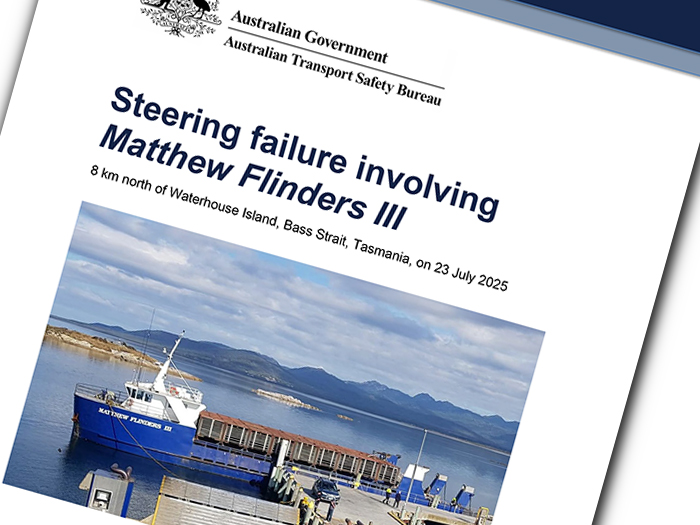
Image: ATSB
The Australian Transport Safety Bureau (ATSB) has recommended a ship operator take further steps to improve its safety management system, after a mixed cargo and passenger vessel lost steering in the Bass Strait last year.
On the evening of July 23, 2025, Matthew Flinders III, a 1995-built, 44.6 meter RO/RO cargo vessel operated by Bass Strait Freight, was en route from Bridport, in north-east Tasmania, to Lady Barron, on Flinders Island, when it lost steering.
As the ship rolled heavily in moderate swell, the crew was unable to immediately diagnose the steering failure. They s disconnected the steering gear from the rudder crossbar, centered the rudder manually, and made use of the main engines to regain some limited steering capacity, and keep the ship clear of the coast. They then started making their way back to Bridport.
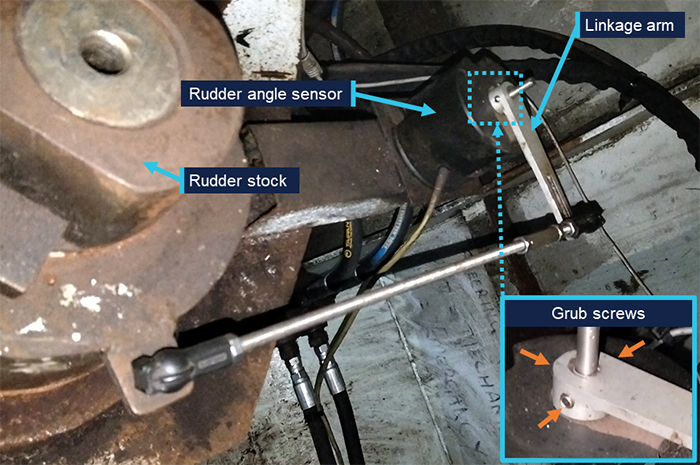
Approximately eight hours later, the ship’s engineer identified a loose linkage arm associated with the steering control system and re‑tightened it. Steering was then restored and the ship reverted to its original voyage, arriving at Lady Barron without further incident.
The ATSB investigation found the loose linkage arm caused a loss of rudder feedback to the autopilot system. This meant neither the autopilot nor the follow‑up manual steering modes were available.
However, the ship was fitted with a non‑follow‑up, or “toggle steering,” backup control system that was not dependent on the failed feedback sensor.
“The toggle steering system was available throughout the occurrence, and was engaged by the engineer, but the master was unfamiliar with the toggle steering controls on the bridge, and was unable to regain steering,” ATSB Chief Commissioner Angus Mitchell explained.
The ATSB found the operator’s induction training for new personnel did not adequately address the use of the backup control system, and that the ship’s safety management system did not include clear instructions on its use.
“Shipping companies are reminded of the importance of the availability of clear and simple instructions and procedures as part of their safety management systems,” Mitchell said. “This is especially important on ships with non‑standard design features, or unusual operational characteristics, and for operators who may have a high turnover of casual crew.”
Bass Strait Freight has improved its familiarization and induction process to ensure its deck officers and engineers have a thorough understanding of the ship’s steering system.
The company has also developed and posted a simple procedure for switching between steering modes on the bridge, and in the engine room.
However, the ATSB has issued a safety recommendation that Bass Strait Freight take further action to improve its emergency steering procedures.
“The ATSB acknowledges the operator’s intention to improve its safety management system procedures but would like to see further details and an anticipated timeframe as to how that will be implemented,” Mitchell concluded.
- Read the final report HERE
Categories: News, Safety and Security