Search Results for: container

  • News

Eight technologies that will transform shipping

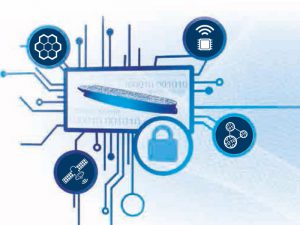
“The marine world in 2030 will be a connected and digital one, bringing closer integration between people, software and hardware in a way that could transform the way we operate,” says LR’s Marine Marketing Director, Luis Benito. “We know technology is changing our world and there is a great deal of overlap between technologies and how they combine will be important.”

LR was the lead partner on the commercial shipping parts of the report and focused on eight technologies that will transform commercial shipping:

  • advanced materials,
  • big data analytics,
  • robotics,
  • sensors,
  • propulsion and powering,
  • communications,
  • shipbuilding,
  • smart ships

LR says that these eight will have a profound impact on ship system design and operation in the next 15 years. With faster technological advances, there will be a move towards delegating authority from the human operator to the machine. Machines will perform many more of the tasks which are considered dull, dirty and dangerous to achieve a higher level of safety and efficiency.There are varying degrees by which a human can delegate responsibility to a machine, depending on the nature of the task and goal they wish to accomplish, and depending on the levels of automation and autonomy built into a ship.

The report identifies two groups of technology drivers – those that will transform the ship design and build space – leading to advancement in shipbuilding, propulsion and powering and the development of smart ships; and the technologies that drive safety, commercial and operational performance – advanced materials, big data analytics, communications, sensors and robotics.

Looking at the impact of these drivers on different ship types, the report presents “Technomax” scenarios for bulk carriers, tankers, containerships and gas carriers. These scenarios are not concept ships but give an indication of the potential maximum technology uptake relevant to the four ship market sectors.

Tom Boardley, LR’s Marine Director commented: “Shipping is likely to evolve quickly now. That evolution is likely to be uneven but while 2030 is not far away, we think that shipping is likely to have changed significantly.”
MORE


  • News

Evergreen gears up for projected increase in intra-Asia trade

All twenty newbuildings are planned to be deployed in the intra-Asia trade. Evergreen believes that under the Regional Comprehensive Economic Partnership (RCEP) that is now being negotiated, the ASEAN countries, Australia, China, India, Japan, South Korea and New Zealand will remove trade barriers,  boosting regional cargo growth.

The first ship in CBC series is set to be delivered during the second half of 2017 with the completion of the CSBC series due by the first half of 2018. The first ship from Imabari Shipbuilding is planned to be delivered during the first half of 2018 with the completion of the series due by the first half of 2019.

Evergreen’s B-type vessels will be 211 meters in length, 32.8 meters wide, and have a design draft of 10 meters with a capacity of around 2,800 TEU. The ships are designed to load 13 rows of containers on deck, which is within the span of existing gantry cranes in the major ports on the intra-Asian trade.

The hull design of the vessels is wider in comparison to ships of a similar capacity, enabling the ships to navigate in the shallower ports encountered in the intra-Asia trade and to enhance their cargo carrying capability. The ships can cruise at a speed up to 21.8 knots, enhancing their on-time performance and competitiveness.

Vessels operating on regional trades, such as intra-Asia, often sail in coastal areas. To reduce their impact on port communities and eco-systems, Evergreen has imposed stringent eco-friendly criteria on their operation. The B-type vessels will be equipped with a range of environmental protection devices.They will have electronically-controlled fuel injection engines, meeting IMO Tier II standards for NOx emissions and Energy Efficiency Design Index (EEDI) requirements.

The agreement for B-type vessels is the third project in which Imabari will participate in Evergreen Line’s fleet renewal program. Evergreen has signed agreements with Shoei Kisen Kaisha, the ship owning arm of Imabari Shipbuilding Group, to charter five 14,000 TEU containerships to be delivered in 2017 and eleven 18,000 TEU containerships to be delivered in 2018 and 2019.

  • News

Evergreen gears up for projected increase in intra-Asia trade

All twenty newbuildings are planned to be deployed in the intra-Asia trade. Evergreen believes that under the Regional Comprehensive Economic Partnership (RCEP) that is now being negotiated, the ASEAN countries, Australia, China, India, Japan, South Korea and New Zealand will remove trade barriers,  boosting regional cargo growth.

The first ship in CBC series is set to be delivered during the second half of 2017 with the completion of the CSBC series due by the first half of 2018. The first ship from Imabari Shipbuilding is planned to be delivered during the first half of 2018 with the completion of the series due by the first half of 2019.

Evergreen’s B-type vessels will be 211 meters in length, 32.8 meters wide, and have a design draft of 10 meters with a capacity of around 2,800 TEU. The ships are designed to load 13 rows of containers on deck, which is within the span of existing gantry cranes in the major ports on the intra-Asian trade.

The hull design of the vessels is wider in comparison to ships of a similar capacity, enabling the ships to navigate in the shallower ports encountered in the intra-Asia trade and to enhance their cargo carrying capability. The ships can cruise at a speed up to 21.8 knots, enhancing their on-time performance and competitiveness.

Vessels operating on regional trades, such as intra-Asia, often sail in coastal areas. To reduce their impact on port communities and eco-systems, Evergreen has imposed stringent eco-friendly criteria on their operation. The B-type vessels will be equipped with a range of environmental protection devices.They will have electronically-controlled fuel injection engines, meeting IMO Tier II standards for NOx emissions and Energy Efficiency Design Index (EEDI) requirements.

The agreement for B-type vessels is the third project in which Imabari will participate in Evergreen Line’s fleet renewal program. Evergreen has signed agreements with Shoei Kisen Kaisha, the ship owning arm of Imabari Shipbuilding Group, to charter five 14,000 TEU containerships to be delivered in 2017 and eleven 18,000 TEU containerships to be delivered in 2018 and 2019.

  • News

COSCO in $1.51 billion newbuild spree

SEPTEMBER 10, 2015 — In an aggressive expansion of its capacity, Chinese container shipping giant COSCO yesterday announced it had entered shipbuilding contracts with domestic shipbuilders worth a total $1.51 billion for

  • News

MOL fits a box ship with a windshield

SEPTEMBER 3, 2015 — Japan’s Mitsui O.S.K. Lines, Ltd. (MOL) has started demonstration tests of a new windshield for containerships that, it says, has the potential to reduce wind resistance, save fuel,

  • News

LR finds cargo stowing answers for box giants

AUGUST 28, 2015 — Classification society Lloyd’s Register (LR), which is classing the world’s largest-ever containerships, has produced a series of proposals and guidelines on the safest, most cost-effective methods of stowing