shipyard

  • News

DNV GL uses drone for surveys without scaffolding

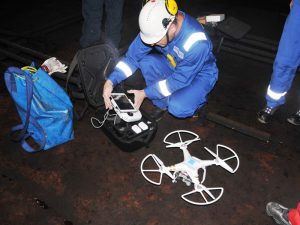
“We have been looking at ways we could help our customers by accelerating the survey process,” says Cezary Galinski, Manager of the DNV GL – Maritime classification flying squad based in Gdansk. “Camera equipped drones are now much more widely available and affordable, and by using them for a first screening we can identify areas that require closer inspection quickly and without extensive staging, which can be both costly and time-consuming.”

Using drones to visually check the condition of remote structural components has the potential to significantly reduce survey times and staging costs, while at the same time improving safety for the surveyors.

The tests used a camera-equipped drone to visually evaluate structural components through video streamed to a tablet. One surveyor operated the drone, while a second checked the video feed in real time. The stream was also recorded for review and documentation purposes.

Equipped with a powerful headlight, the drone was able to produce a video of sufficient quality for initial inspection purposes. In the event any damage is detected, a traditional close-up survey may still be required.

“We used a modified off-the-shelf drone for our tests,” says Mr. Galinski. “Because there are currently no drones formally certified as explosion-proof commercially available, we performed a risk assessment. Of course, before the drone operation started, we also ensured that the cargo tank was gas-free and certified for safe entry.”

“Our next step is to work with a more advanced tailor-made drone in early 2016,” says Mr. Galinski. “We are also developing a special guideline for performing drone-based surveys. This could open the way to remote or even autonomous inspections being carried out as part of our survey scheme in the near future.”

DNV GL has a longstanding R&D program working on developing advanced inspection technologies, including the IRIS system which can automatically associate photos onboard a ship with a 3D model of the vessel’s structure.

“Using a drone in combination with a system like IRIS could be very beneficial to our customers,” says Dr. Pierre C. Sames, Director of Group Technology and Research. “We have already demonstrated the ability to place images within a 3D model and furthermore to assess the individual findings. These are the first steps towards an automated survey process which might include using a drone to make the initial survey, taking the images generated and then running them through an algorithm to determine the hull condition.”

drone 700

GulfMark and Simek agree PSV delivery delay


According to the filing, “on December 14, 2015, a subsidiary of GulfMark Offshore, Inc. (“GulfMark”) entered into an agreement with Simek AS to delay the delivery of its North Sea vessel under construction in Norway from 2016 to 2017. Under the original agreement, GulfMark’s subsidiary paid 20% of the construction price within three months of contract inception, and was to pay the remaining 80%, or approximately $33 million, in February 2016 upon delivery. Under the new agreement, GulfMark’s subsidiary will take delivery of the vessel in January 2017 and will pay approximately $2 million in the fourth quarter of 2015, approximately $5 million in the first quarter of 2016, approximately $4 million in the second quarter of 2016 and approximately $22 million in the first quarter of 2017 upon delivery of the vessel.”

  • News

Triyards tanker trio to be Wartsila equipped

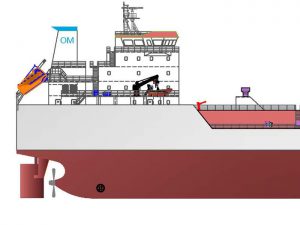
The 153 m long ships are being built for Swiss-Canadian Maritime Ltd and will be managed by Switzerland based ABC Maritime A.G. They are set to be delivered by the shipbuilder in 2017 and will operate between Rotterdam in the Netherlands and Montreal, Canada.

The contract covers Wärtsilä largest scope of supply thus far for delivery to a shipyard in Vietnam. It was signed in November and includes options for three more vessels.

Wärtsilä’s capability to provide a total solution package and to be responsible for the engineering and integration of the solutions provided were key factors in winning the contract.

For each vessel, Wärtsilä will supply a controllable pitch propeller (CPP), a tunnel gearbox, a shaft alternator, two tunnel thrusters, three Auxpac generating sets, a Wärtsilä Propulsion Condition Monitoring System (PCMS), as well as all related auxiliaries for the various systems.

The Wärtsilä equipment is scheduled to be delivered to the yards during 2016.

In addition, the ships will be powered by a 6-cylinder Wärtsilä X40-B two-stroke main engine designed by Winterthur Gas & Diesel, a joint venture between Wärtsilä and China State Shipbuilding Corporation (CSSC). The engine contract was agreed separately between Triyards Marine Services Pte. Ltd. and Chinese two-stroke engine builder, Yuchai Marine Power Co., Ltd. (YCMP).

“Wärtsilä is a global leader and their propulsion and power generation systems are among the best in the world. We are therefore confident that the technology of their systems will enhance the capabilities and performance of the chemical tankers we are building,” says Chan Eng Yew, Chief Executive Officer of Triyards Holdings Limited.

“These are the first chemical tankers that the yards have been contracted to build, and Wärtsilä’s support and know-how for the engineering and systems integration is of considerable importance. We are delighted to be working once again in Vietnam and are extremely pleased to be cooperating with Triyards in this important project,” says Hans Laheij, Sales Director, Wärtsilä Marine Solutions.

Triyards 700

Ingalls Shipbuilding launches DDG 114


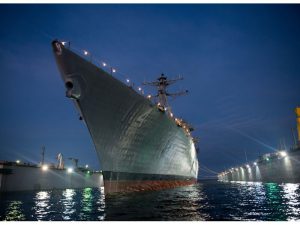
The ship was translated from the land level facility to the drydock which was slowly flooded until the ship was afloat.

“This is an exciting milestone and represents a significant amount of effort by our Navy and industry team to get the ship to this point” said Capt. Mark Vandroff, DDG 51 class program manager, Program Executive Office (PEO) Ships. “We’re looking forward to completing outfitting efforts, undergoing test and trials and delivering another highly-capable asset to our Fleet.”

“The last week of translating this quality ship across land and then launching it from our drydock is no small task, and our shipbuilders accomplished it in a very efficient manner,” said George Nungesser, Ingalls’ DDG 51 program manager. “All crafts and personnel making up this DDG shipbuilding crew have performed very well, and we were able to launch DDG 114 ahead of schedule. It’s a nice milestone to accomplish as we end the year.”

Ingalls has built and delivered 28 Arleigh Burke-class destroyers. There are currently four more under construction at Ingalls, including Ralph Johnson, which is scheduled to be christened in the spring of 2016.

John Finn (DDG 113) was christened in May and is expected to undergo sea trials in 2016. Paul Ignatius (DDG 117) celebrated her keel-authentication milestone in October and is expected to launch in the first half of 2017. Delbert D. Black (DDG 119) started construction in July and is scheduled for keel laying in the second quarter of 2016.

DDG 114 is named to honor Pfc. Ralph Henry Johnson, who was awarded the Medal of Honor for his heroic actions that saved others during the Vietnam War. Johnson shouted a warning to his fellow Marines and hurled himself on an explosive device, saving the life of one Marine and preventing the enemy from penetrating his sector of the patrol’s perimeter. Johnson died instantly. The Charleston, S.C., native had only been in Vietnam for two months and a few days when he was killed at the age of 20.

The highly capable Arleigh Burke-class destroyers are capable of simultaneously fighting air, surface and subsurface battles.

,/p>

  • News

Brodosplit cuts steel for LNG fueled containerships

“By building these ships we enter a market niche that will enable sustainable business operation, bigger engagement of capacities and acquisition of references for the building of ships that will be in higher demand in the near future,” says Tomislav Debeljak, CEO of Brodosplit and owner of Brodosplit Shipping Company.

“DNV GL experts were involved from the design phase and worked very closely with Brodosplit to realize this project. We are very pleased with the cooperation and look forward to continuing our work together in the future,” says Ivo Siljic, Senior Lead Surveyor at DNV GL – Maritime.

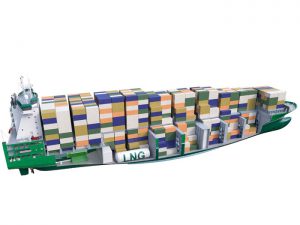
With an individual deadweight of 24,000 dwt, the vessels will be over 184 meters long and 27.5 meters wide. They will have a capacity of 2,000 TEUand reach speeds of up to 18 knots.

The containerships feature two-stroke dual fuel (LNG/MGO) engines built under license from MAN by Brodosplit’s diesel engine factory, which will also build the ships’ LNG tanks.

  • News

Transpetro cancels two LPG newbuilds at Vard Promar

It reported today that it has been notified that Petrobras Transportes S.A. (Transpetro) has terminated the contracts for two liquefied petroleum gas (LPG) carriers on order at 50.5% owned indirect subsidiary Vard Promar.

The vessels in question are the last two of a series of eight LPG carriers originally contracted at the Brazilian shipyard in June 2010, for delivery from Vard Promar between 2014 and 2016. The combined contract value for the series of eight vessels was $536 million.

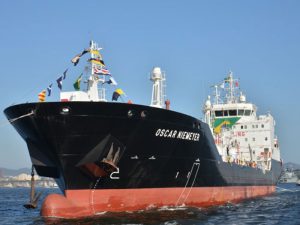
The first of the eight vessels, the 8,000 cu.m Oscar Niemayer, was delivered this past July.

Singapore listed Vard, which is 55.63% controlled by Fincantieri, says that the construction of the two vessels that have now been canceled is “at a very early stage.”

Vard is currently reviewing its overall exposure to the Brazilian market, and it says that the termination of the contracts – if effective – is “expected to reduce the company’s overall exposure. At the same time, the company intends to claim compensation from Transpetro for damages in relation to the terminated contracts.”

Vard says the impact of the termination is not expected to have a material effect on the earnings per share of the Group for the financial year ending December 31, 2015.

  • News

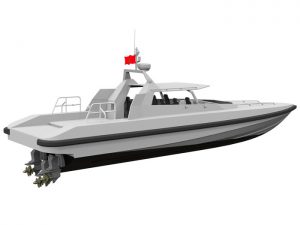
Morocco orders five 60 knot Damen Interceptors

They will be used to combat illegal activities such as terrorism and smuggling in Moroccan waters.

Designed for ultra-fast operations, the Interceptor 1503 can reach speeds of up to 60 knots, thanks to combining an outstanding propulsion system —powered by three MDS (Marine Diesel Sweden) VG-32 diesels — with cutting edge lightweight composite materials.

Each diesel drives a separate stern drive. The hull is constructed from fiber reinforced plastic in an epoxy resin matrix – renowned for its resistance to impact and fatigue as well as its lightweight properties.

Well suited for tracking down and taking appropriate action on illegal activities, the highly maneuverable Interceptors also have additional space in the cockpit for search and rescue survivors.

As international security concerns have heightened, Damen has seen growing interest in its range of Interceptor vessels. In response, it is continuing to invest in a substantial Research and Development program to design and build safe, strong and ultra-fast composite vessels.

Although the Interceptor has been in Damen’s portfolio for some time, the five vessels in this latest ordervwill be the first in a new series of reengineered vessels.

All five Interceptor 1503 vessels will be constructed at Damen’s state-of-the-art shipyard specializing in composite vessel construction in Antalaya, Turkey.

The first vessel will be delivered in June 2016, followed thereafter by one vessel every six weeks

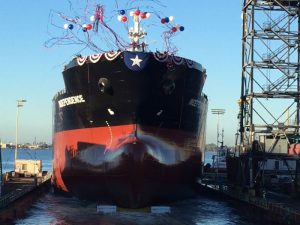
NASSCO launches first SEA-Vista ECO tanker

SEA-Vista is a partnership between SEACOR Holdings Inc. and private equity firm Avista Capital Partners. Its ships will be operated by SEACOR subsidiary Seabulk Tankers, Inc.

The Independence is a 610-foot, 50,000 deadweight-ton, and LNG-conversion-ready Jones Act product tanker with a 330,000 barrel cargo capacity. Construction on the ship began in November 2014.

As part of the ceremony, the ship’s sponsor, Mrs. Allison Moran, CEO of RaceTrac Petroleum, christened the ship with a traditional champagne bottle break over the ship’s hull. Mrs. Jayne Rathburn, former CEO/owner of US Joiner, pulled the trigger to release the ship into the San Diego Bay.

“General Dynamics NASSCO shipbuilders are revolutionizing the future of American shipping with the concept and construction of innovative, cost-saving, and environmentally-sound vessels,” said Kevin Graney, vice president and general manager for General Dynamics NASSCO. “When delivered, these ECO Class, Jones Act-qualified tankers will be among the most fuel-efficient and environmentally-friendly tankers anywhere in the world.”

“We are pleased to complete this important milestone for the first in a series of three fuel-efficient, ECO Jones Act product tankers that will be delivering into the SEA-Vista fleet and operated by Seabulk Tankers, Inc,” said Daniel J. Thorogood, president and chief operating officer for Seabulk Tankers, Inc.

For its commercial work, NASSCO partners with South Korea’s Daewoo Shipbuilding & Marine Engineering (DSME), for access to state-of-the-art ship design and shipbuilding technologies.


Chesapeake Shipbuilding adds to leadership team

With more than 20 years of engineering and maritime experience, Mr. McGee will oversee vessel design from preliminary conceptual design to complete Coast Guard and regulatory approvals.

Chesapeake Shipbuilding currently has on staff five naval architects and two engineers.

“McGee’s experience in various positions with the U.S. Coast Guard, including Hull Division Chief at the Marine Safety Center and former Officer in Charge, Marine Inspection, is a valuable asset we look forward to having on our team,” said Charles A. Robertson, President and CEO. “His rock solid reputation in the maritime industry will be critical for the retention and expansion of our customer base.”

Mr. McGee holds a bachelor’s degree in naval architecture and marine engineering from the U.S. Coast Guard Academy and a master’s of science in both naval architecture and marine engineering as well as aerospace engineering from the University of Michigan.

Chesapeake Shipbuilding designs and builds steel and aluminum commercial vessels primarily between 100 and 400 feet. The shipyard has upgraded its production capacity significantly in recent years, by acquiring additional land, building two new hull fabrication buildings and investing in additional automated equipment.