Bollinger in $8.5 million False Claims Act settlement

The False Claims Act suit alleges that Bollinger misrepresented the longitudinal strength of patrol boats it delivered to the Coast Guard that resulted in the boats buckling and failing once they were put into service. Bollinger Shipyards is located in Lockport, Louisiana.

“Those who expect to do business with the government must do so fairly and honestly,” said Principal Deputy Assistant Attorney General Benjamin Mizer, head of the Justice Department’s Civil Division. “We expect the utmost integrity and reliability from the contractors that design and build equipment that is essential to public safety and our national defense.”

In 2002, the U.S. Coast Guard contracted to lengthen the Coast Guard’s existing fleet of 110-foot patrol boats to 123 feet and to make other modifications. Bollinger was the subcontractor that performed the 123-foot patrol boat design and conversion work. An essential element of the conversion was that the modified boats have sufficient longitudinal strength to meet the performance requirements set forth in the contract.

The United States alleged Bollinger provided the Coast Guard with engineering calculations that falsely represented the longitudinal strength of the boats and was two times greater than their actual longitudinal strength. The United States alleged Bollinger ran the calculations three times and only provided the Coast Guard with the highest and most inaccurate, of the three calculations. The United States further alleged Bollinger also failed to follow the quality control procedures that were mandated by the contract that would have ensured against such engineering miscalculations.

The case was handled jointly by the Civil Division’s Commercial Litigation Branch and the U.S. Attorney’s Office of the Eastern District of Louisiana.The claims resolved by the settlement are allegations only, and there has been no determination of liability.
Nichols to build two coastal cruise ships for Lindblad

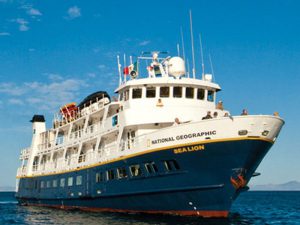
Today, Lindblad Expeditions Holdings, Inc. (NASDAQ: LIND) reported that it has signed definitive agreements with Nichols Brothers Boat Builders for the new build of two U.S. flagged coastal vessels.  The 100 guest ships will be built at the Nichols Brothers shipyard on Whidbey Island, WA. The first completed ship is scheduled to be delivered in the second quarter of 2017 and the second vessel is scheduled to be delivered in the second quarter of 2018.

Lindblad had previously signed a non-binding letter of intent with Nichols Brothers for these new builds and paid a $4 million non-refundable slot fee during the third quarter of this year to reserve the shipyard’s capacity, which will be charged against the second vessel’s cost.  

The definitive agreements provide for Nichols Brothers to construct the two new build vessels at a purchase price of $48.0 million and $46.8 million, respectively, payable monthly based on the value of the work performed (offset by the $4.0 million slot fee previously paid).  

Jensen Maritime is serving as the naval architect on the project with interior design work provided byTillberg Design International. Building of the vessels will commence this year.

“These new ships mark an exciting step in the long-term growth of the company, and enables us to capitalize on the substantial demand for our expeditions. With our significant resources we can continue to deliver on our promise of expedition travel at its best, and can now expand our unique offerings in the Americas where we have very strong demand,” said Sven Lindblad, President and CEO of Lindblad. “We are pleased to be working with Nichols Brothers in Washington State on this project given their long history in shipbuilding, including having built our current U.S. flagged ships, the National Geographic Sea Lion and National Geographic Sea Bird.”

“This is an important milestone in the company’s history as we enter the 50th Anniversary of the birth of expedition travel begun by my father, Lars-Eric Lindblad, with the first laymen expedition to Antarctica in 1966,” Mr. Lindblad added.

Some key features of the new vessels:   


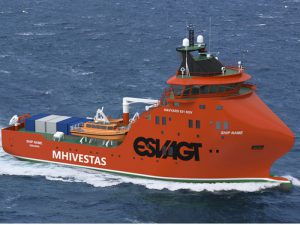
Esvagt orders new design wind farm service vessel

Situated 50 km off the Belgian coast the Nobelwind project, together with the existing Belwind 1 project, will require a purpose built service operation vessel (SOV) to support the technicians working in the wind park.

Norway’s Havyard Design & Solutions has been commissioned to design the vessel and supply an equipment to the shipbuilder, Turkey’s Cemre Shipyard. which is set to deliver the vessel in the second half of 2017.

The vessel’s Havyard 831 SOV design is based on a ship and service concept, developed by Esvagt in synergy with MHI Vestas & Havyard Design, that draws on several years of experience in servicing wind farms further offshore.

For the past five years, Esvagt has provided the base for MHI Vestas Offshore Wind technicians servicing the 165 MW Belwind 1 project, and the new contract continues that partnership.

The new purpose build SOV will be 58.5 m in length, with a beam of 16.6 m and will be able to support up to 22 technicians in single cabins. It will be equipped with Esvagt’s unique safe transfer boats (Esvagt STB) to transfer technicians, tools and spare parts to the turbines.
“The market for big service vessels for offshore windfarms is a relatively new one, and, in cooperation with Esvagt, we have entered this market at an early stage,” says Gisle Vinjevoll Thrane, Senior VP Sales, Havyard Design & Solutions. “The windmills used to be serviced by small, fast-moving boats that transported personnel and equipment daily to and from the shore. More and more wind farms are now serviced by bigger ships where the service personnel work and live on board for prolonged periods and access the windmills by means of a gangway installed on the mother ship or small boats launched from the mother ship. This is a safer and more profitable way of servicing the wind farms, particularly those far offshore.”

“The Havyard 831 SOV was developed to fill a new niche in this market, namely smaller wind farms,” says Mr. Thrane. “The new design is smaller than the ships built so far. It is compact and efficient, but at the same time has ample capacity to transport service personnel and equipment. This design will make it profitable to service even smaller wind farms, and we see a potential to deliver many designs to this segment.”

The Havyard 831 SOV has a spacious and comfortable interior with sufficient capacity to accommodate wind farm service personnel in addition to the ship’s own crew. It has also been designed with good storage capacity for equipment and tools below deck and for containers on deck.

The ship is equipped with three small boats that can be launched to transport service personnel to the windmills.

The diesel-electric propulsion system ensures economical and environmentally friendly operation, both in transit and when the ship is in position at the wind farms. The hull has been designed to ensure low fuel consumption and to move in a way that ensures maximum comfort for the crew and service personnel on board.

The ship has sufficient fuel capacity etc. for at least 30 days’ operation between port calls.

Havyard has a long relationship with Cemre Shipyard. The Turkish yard has delivered the hulls for more than 30 of the newbuilds Havyard has delivered since 2005. In recent years, the shipyard has also delivered completed newbuilds for Norwegian and other customers, including cargo vessels, fishing vessels and seismic support vessels.Havyard says that the close cooperation built with Cemre through the hull deliveries will continue and develop now that the yard is to build its first Havyard design vessel.


BAE San Francisco gets $16.5 million Navy contract

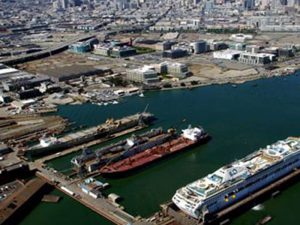
Work by the shipyard will include clean and gas free tanks, voids, cofferdams and spaces, deck non-skid renewal, ballast tank preservation, cylinder head and liner overhaul, main engine overhaul, heating, ventilating, and air conditioning support, degaussing system repairs, annual lifeboat certification, galley ventilation system cleaning, docking and undocking, propeller system maintenance and boss cap replacement, bow thruster maintenance, overhauling sea valves, and underwater hull cleaning and painting.

The contract includes options which, if exercised, would bring the total contract value to $16,566,073.

Work will be performed in San Francisco and is expected to be completed by April 1, 2016.

Fiscal 2016 maintenance and repair funds in the amount of $16,501,090 will be obligated in 2016.

The contract was competitively procured, with proposals solicited via the Federal Business Opportunities website and two offers received.

The Navy’s Military Sealift Command is the contracting activity (N32205-16-C-4308).

GD NASSCO delivers first ECO tanker to APT

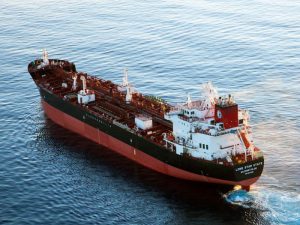
The Jones Act tanker is the first of a five-tanker contract between NASSCO and APT, covering design and construction of five 50,000 deadweight-ton, LNG-conversion-ready product tankers with a 330,000 barrel cargo capacity.

In addition to being LNG conversion ready, the 610 ft long ECO class tankers are a new “ECO” design, offering significantly improved fuel efficiency and the latest environmental protection features including a Ballast Water Treatment System.

Helping achieve the fuel savings are a G-series MAN Diesel & Turbo ME slow-speed main engine and an optimized hull form.

“The delivery of this new vessel symbolizes the future of American shipping: innovative, cost-effective, and green. The Lone Star State, along with the four others we are currently building for APT, will be among the most fuel-efficient and environmentally-friendly tankers—anywhere in the world,” said Fred Harris, president of General Dynamics NASSCO. “These tankers are 33 percent more fuel efficient than the previous five tankers built by NASSCO for APT. We are proud to be leading the charge in building these next generation of tankers.”

Between 2007-2010, NASSCO built five similar State Class product tankers for APT.”We are very excited to be taking delivery of the Lone Star State. This state-of-the-art tanker is a welcome addition to our growing fleet and will provide safe, reliable and efficient transportation service to our customers for many years to come,” said Robert Kurz, vice president of Kinder Morgan Terminals and president of American Petroleum Tankers. “We thank NASSCO for their tremendous support in achieving this important milestone.”

The ships have designed by DSEC, a subsidiary of Daewoo Shipbuilding & Marine Engineering (DSME) of Busan, South Korea. The design incorporates improved fuel efficiency concepts through several features, including a G-series MAN Diesel & Turbo ME slow-speed main engine and an optimized hull form. The tankers will also have the ability to accommodate future installation of an LNG fuel-gas system.

Shell cuts steel for LNG bunker vessel

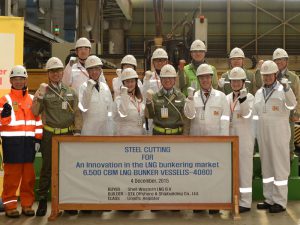
The steel cutting ceremony took place at the shipyard December 4, with representatives from Shell and the shipbuilder in attendance.The new LNG bunker vessel will be based at the port of Rotterdam in the Netherlands, and will load from the new LNG break bulk terminal currently under construction by the Gas Access to Europe terminal. Once ready, it will deliver to LNG-fueled vessels in northwest Europe. The vessel is also seagoing and, therefore, able to bunker customers at other locations.

Shell says the vessel will be “pioneering in design.” It will have a capacity to carry 6,500 cu. m of LNG fuel and will be highly efficient and maneuverable. Featuring an innovative transfer system and sub cooler unit, it will be able to load from large or small terminals and able to bunker a wide variety of customer vessels.

Finland’s Containerships Ltd Oy will be the launch customer for the vessel’s services, after signing an LNG supply agreement with Shell on November 24.

As we reported earlier, Containerships Ltd Oy is to charter the two 1,400 TEU LNG fueled containerships currently being built for Nordic Hamburg Group at China’s Yangzhou Guoyu Shipyard .

The vessels will receive LNG fuel from Shell at the port of Rotterdam, after the LNG bunker vessel becomes operational in mid-2017.”This is a significant landmark in bringing this innovative LNG bunker vessel with cutting-edge technology to reality,” said Dr Grahaeme Henderson, Vice President of Shell Shipping & Maritime.

“I am delighted to be working with STX on this project and Shell is proud to be leading in the development of LNG fuel in shipping.””The supply agreement between Shell and Containerships is another example of the marine LNG fuel supply chain coming together,” says Lauran Wetemans, Shell’s General Manager Downstream LNG. “Working together with customers like Containerships is critical to encourage the use of LNG as a fuel in the marine sector, and we’re committed to helping make the transition to LNG.”

LNG bunker vessel

ShellLNGBunkervessel


Nichols Brothers delivers ATB tug for Kirby Offshore

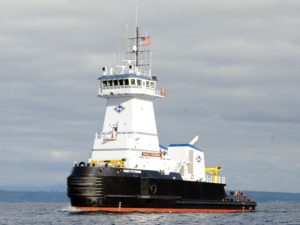
DECEMBER 4, 2015—Nichols Brothers Boat Builders, Freeland, WA, recently completed the 10,000 hp ATB tug M/V Nancy Peterkin, for Kirby Offshore Marine (Kirby), Houston, TX. Designed by Guarino & Cox, New Orleans,

Rolls-Royce wins China AHTS equipment order

The contract is to equip nine SPA80A Anchor Handling Tug Supply vessels to be designed and built by Sinopacific Shipbuilding Group and owned and operated by the Abu Dhabi National Oil Company (ADNOC) and its wholly-owned subsidiary, ESNAAD.

The vessels will be built at Sinopacific’s Zhejiang Shipyard and the first vessel is due for delivery in 2017.

Each ship will have a bollard pull of 80 metric tonnes will be equipped with Bergen diesel engines, main and tunnel thrusters, electrical power system and a deck machinery package from Rolls-Royce.

“The visit of Rolls-Royce senior executives to Sinopacific in 2013 reinforced the relationship between our two companies as did the provision of  Rolls-Royce integrated equipment packages for Sinopacific’s in-house designed SPA150 AHTS series. This was a first for Rolls-Royce in the Chinese market,” said SinJiang Qiang, Chief Executive Officer of Sinopacific. “The Rolls-Royce Chinese team has provided us with great support by staying close, enhancing communications and giving us confidence for future cooperation. Sinopacific aims to work closely with our strategic partners, such as Rolls-Royce, presenting the best products and services for our ship owners while strengthening our leadership in the most demanding markets.”

“This is a significant contract. It demonstrates our market leading capabilities in a wide range of offshore marine products, and our ability to combine them in a way that creates real value for our customers,” said Richard Wang, Rolls-Royce, Senior Vice President Commercial – Marine.  “We look forward to working with and continuing a profitable and long-lasting relationship with Sinopacific.”

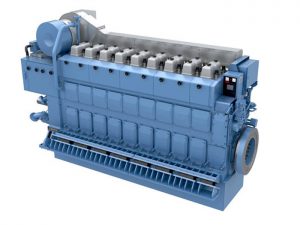
Harley Marine opts for tug-specific Cat package

They will power two new harbor tugs currently under construction at Diversified Marine Inc.’s Portland, OR, shipyard.

“Much of Harley Marine’s fleet is powered by Cat engines, and with the construction of these two new vessels, they’re adding our tug-specific propulsion solution as well,” said Emil Cerdier, sales manager for Cat Propulsion. “Getting a complete package from one supplier simplifies the design,installation, and service support, allowing Harley to rely on the Cat dealer network as a single point of contact for the entire powertrain system.”

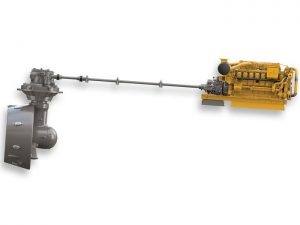
Each Harley Marine harbor tug will feature a pair of 3516 engines, each delivering 2575 hp(1920 kW) @ 1600 rpm and two MTA 524-T thrusters with a 95.5″ inch (2,400mm) propeller diameter.

The MTA 524-T is a new version of a proven design, specifically optimized for the operation profile of a tug. Based on the standard MTA design, the “Tug” rated drives include features to maximize bollard pull, simplify installation and maintenance, and increase maneuverability.

The Harley Marine units will be delivered with custom-made fixed-pitch propellers and a PTO-powered steering and lubrication system.
Cat Propulsion’s complete package for tugs includes engines, high-speed shafting, clutches, and controls. The display consoles for the control system willalso control engine and thruster functionality.

“Our MTA-T units bring the twin advantages of performance excellence and economy to the tug market,” Mr. Cerdier said. “Customers like Harley Marine will benefit both in terms of bollard pull and from the reliability of a consolidated control-engine-thruster package with component parts optimized to work together.”

Cat dealer Peterson Power led the efforts on the project, helping refine the spec and eventually supporting the installation and service of the systems.

As part of the total Cat Solution, Cat Financial is providing complete vessel financing throughout the construction and term of both tugs.

The Cat engines and thrusters are expected to deliver in mid-2016, with vessel deliveries in early 2017.

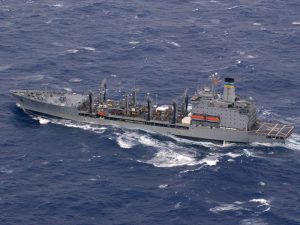
Vigor awarded $8.9 million for T-AO 202 drydocking

Work by the shipyard will include general services for ship, clean and gas free tanks void and cofferdams and spaces, number seven port and starboard cargo tanks preservation, number two center cargo tank preservation, number ten center cargo tank preservation, close survey inspection, main deck overhead preservation, main house preservation, main engine exhaust insulation replacement, lifeboat repair and maintenance, reefer container installation and underwater hull preservation.

The contract includes options which, if exercised, would bring the total contract value to $9,788,394.

Work will be performed in Portland and is expected to be completed by March 2, 2016. If options are exercised, work will continue through March 12, 2016. Fiscal 2016 maintenance and repair contract funds in the amount of $8,931,411 are being obligated at the time of award. Contract funds will not expire at the end of the current fiscal year.

This contract was competitively procured, with proposals solicited via the Federal Business Opportunities website, with two offers received.

LOAD MORE