Search Results for: container

  • News

Electric & Hybrid: Call me Ishmael, no longer

Call me Ishmael. Melville’s famous opening line in his novel Moby Dick refers to an outcast and could once have been the motto of the hybrid and electric marine industry. There were a number of projects where hybrid and full electric drivetrains were prototyped and they worked well…for a while. The limitation was always the battery technology, where lead acid batteries were just not suited to this type of application. As a result, these projects and technologies were “interesting” with “lots of potential” but not a serious technology for the mainstream marine industry.

The advent of lithium ion batteries has fundamentally changed the value proposition for the hybrid and electric drivetrain. These batteries are smart, durable and have a lifetime that will ensure the customer is able to achieve their targeted Return on Investment (ROI). As a result, the hybrid and electric drivetrain has come of age.

To date, Corvus Energy has deployed over 30 MWh of its Lithium Polymer battery-based Energy Storage Systems (ESS) on over 45 projects. These vessels include large and small ferries, offshore supply vessels (OSVs), tugboats, research vessels, luxury superyachts and port cranes. Only two of these applications are for full electric ferries, the remainder are all hybrid vessels, but a common element is that both types of drivetrains make the vessel more efficient, as well as more environmentally sustainable.

Of course an ESS cannot create energy, but only stores it. The ESS therefore enables the vessel to use the cheapest energy available and shift it in time to the point where it is most cost effective. For a full electric this means the ESS is charged from shore using low cost energy and eliminates completely energy generated by costlier, on-board generators. For hybrids, it moves energy from the efficient portion of the generator’s load curve and replaces energy that would have been generated on the less efficient portion of the generator’s load curve.

Full Electric Drivetrains
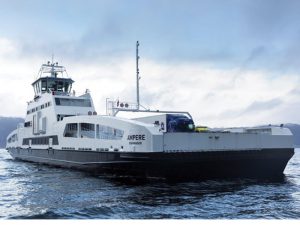
At one time the round trip efficiency of an ESS was at 70% or less and the energy density was also not very high. This meant an ESS required a LOT of space on a vessel and did not actually store that much energy. The round trip efficiency on the Corvus ESS is now over 95% and the energy density is high enough that a space the size of a 20-foot container can store 650 kWh. This means that an ESS can now deliver enough power and energy to make a full electric drivetrain cost effective. Even with these improvements, full electric drivetrains still work best for applications where the duty cycle is relatively short such as a ferry with a route that is less than an hour between charging points. The 120-car Ampere ferry in Norway, for example, has a route which crosses Sognefjord between Lavik and Oppedal in 20 minutes and then recharges for 8 minutes from a shore-based charging station which uses the grid and another, smaller Corvus ESS to deliver a large amount of power into the vessel’s ESS in a short period of time. The shore-based charging station then recharges from the grid for about 48 minutes until the ferry returns.

The ferry operator, Norled, has other, diesel-fueled vessels on this route and based on a comparison has estimated that the Ampere is saving over 1 million liters of expensive, ultra-low sulfur diesel fuel per year. It is also saving 90% of the maintenance cost of the diesel engines and 100% of the cost of the NOx emissions, which are taxed in Norway. Norled is now looking at expanding the operating hours of the Ampere each day and is examining other routes it operates to determine if they could benefit from a fully electric ferry.

Hybrid Drivetrains
A hybrid drivetrain consists of a either a diesel or LNG engine as the prime generator for the vessel and supplements this engine with an ESS. The ESS is able to charge with energy produced when the engine generator is operating in its most efficient range and then, when the engine generator would be operating in its inefficient range, the engine is shut off and energy is extracted from the ESS to operate the vessel.

A harbor tug is a good application for a hybrid drivetrain. It will typically spend up to 25% of its time sitting and waiting for a call to push a ship. While in this mode, the vessel needs to maintain its position and run its hotel load. The engine is too large to idle and provide power just to the hotel load and so the engine drives its thrusters in opposite directions, thereby keeping the vessel in position but “boiling water” and wasting fuel. With a hybrid system, the engine is turned off and the ESS is used to periodically operate the thrusters to keep the vessel in position, and also serving the hotel load. When the ESS gets to the minimum state-of-charge, the engine is started to charge the batteries, serve the hotel load and run the thrusters. Depending on the hybrid drivetrain configuration, the ESS can also be used to supplement the engine when the tug is pushing or pulling a vessel to get it into position. When the batteries are charged the engine is turned off. An ESS on a tug can save up to 25% on fuel and emissions, as well as reducing maintenance on the engine(s).

An ESS is also very effective to replace the operation of a second engine that is running in spinning reserve to provide emergency power in the event the prime mover generator fails during a critical operation. On the Scandlines ferries in Denmark and Germany they only operate one generator during crossing and use their ESS for spinning reserve. Scandlines have identified 13% reduction in fuel and emissions and a 45% reduction in generator maintenance.

Likewise, Offshore Supply Vessels (OSVs) in the North Sea can use an ESS for spinning reserve during Dynamic Positioning (DP) operation, where the vessels have to be kept stationary when servicing floating oil and gas platforms. DNV-GL has now approved ESS for DP operations. Eliminating the operation of an additional generator used in spinning reserve has the potential to save fuel, emissions, maintenance and even the capital cost of the additional generator.


Key Benefits
The key benefits from an ESS include:

  • Reduced generator hours/generators running in efficient range
    • Reduced fuel consumption
    • Reduced emissions
    • Reduced maintenance
  • Improved capital management
    • Reduced number of generators
    • Reduced size of generators
    • Generator life extension – operation in efficient range provides longer lifetime
  • Emergency backup
    • Spinning reserve
    • Emergency and auxiliary backup
  • Passenger/crew comfort
    • Reduced noise
    • Reduced vibration
    • Reduced fumes
  • Reduced emissions
    • GHG’s
    • Reference air emissions – NOx , SOx , PM
  • Improved performance
    • Better ramping on LNG engines
    • Instant response to throttle
    • Better transient load management

The Future is Now
No longer the elusive white whale, cost effective and proven hybrid electric propulsion has arrived and is here to stay with early adopters now reaping the benefits. An ESS helps owners make their vessels more efficient by helping them manage the operating and capital costs of their vessels, while also making these vessels more reliable and environmentally sustainable. No longer outcasts like Ishmael, the electric and hybrid marine industry has proven the value proposition for electric drivetrains and energy storage. Corvus Energy’s ESS is a key piece of these innovative hybridization projects for commercial vessels, which are fundamentally changing these marine markets. Where once there was only a potential for these benefits, Corvus Energy has the ESS technology, people and experience to make them real.


  • News

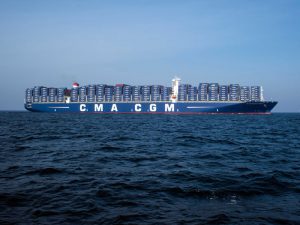
First 18,000 TEU box ship is on its way to U.S.A.

The vessel will later call at the Port of Oakland on December, 31.

CMA CGM  Group Chairman and CEO Jacques R.Saadé made the decision to deploy an 18,000-TEU capacity vessel to the U.S.

CMA CGM will be the first carrier to call at a U.S. port with vessels of this size. It says it reflects its faith in the long-term growth potential of the U.S. economy and its commitment to increasing its U.S. market share.

A pioneer in deploying large-capacity vessels to the U.S., the CMA CGM Group has been working closely with the Ports of Los Angeles and Oakland to ensure there is sufficient infrastructure to support an 18,000 TEU vessel.  It says it looks forward to working with other ports throughout the U.S. as they begin similar assessments of their infrastructure.

CMA CGM  offers 23 shipping lines connecting the U.S. to the rest of the world and employs more than 800 people in the U.S. through its subsidiary CMA CGM (America) LLC.

The U.K. flagged CMA CGM Benjamin Franklin will be deployed on the Pearl River Express, a service connecting the main China ports, including Xiamen, Nansha and Yantian, with the U.S. West Coast ports.

The 399.2 m x 54 m vessel was delivered December 4 by shipbuilder Shanghai Jiangnan Changxing Heavy Industry Co., Ltd.

Esvagt orders new design wind farm service vessel

Situated 50 km off the Belgian coast the Nobelwind project, together with the existing Belwind 1 project, will require a purpose built service operation vessel (SOV) to support the technicians working in the wind park.

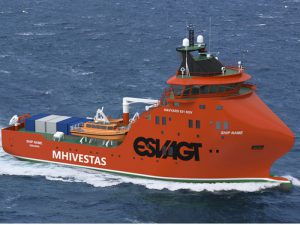
Norway’s Havyard Design & Solutions has been commissioned to design the vessel and supply an equipment to the shipbuilder, Turkey’s Cemre Shipyard. which is set to deliver the vessel in the second half of 2017.

The vessel’s Havyard 831 SOV design is based on a ship and service concept, developed by Esvagt in synergy with MHI Vestas & Havyard Design, that draws on several years of experience in servicing wind farms further offshore.

For the past five years, Esvagt has provided the base for MHI Vestas Offshore Wind technicians servicing the 165 MW Belwind 1 project, and the new contract continues that partnership.

The new purpose build SOV will be 58.5 m in length, with a beam of 16.6 m and will be able to support up to 22 technicians in single cabins. It will be equipped with Esvagt’s unique safe transfer boats (Esvagt STB) to transfer technicians, tools and spare parts to the turbines.
“The market for big service vessels for offshore windfarms is a relatively new one, and, in cooperation with Esvagt, we have entered this market at an early stage,” says Gisle Vinjevoll Thrane, Senior VP Sales, Havyard Design & Solutions. “The windmills used to be serviced by small, fast-moving boats that transported personnel and equipment daily to and from the shore. More and more wind farms are now serviced by bigger ships where the service personnel work and live on board for prolonged periods and access the windmills by means of a gangway installed on the mother ship or small boats launched from the mother ship. This is a safer and more profitable way of servicing the wind farms, particularly those far offshore.”

“The Havyard 831 SOV was developed to fill a new niche in this market, namely smaller wind farms,” says Mr. Thrane. “The new design is smaller than the ships built so far. It is compact and efficient, but at the same time has ample capacity to transport service personnel and equipment. This design will make it profitable to service even smaller wind farms, and we see a potential to deliver many designs to this segment.”

The Havyard 831 SOV has a spacious and comfortable interior with sufficient capacity to accommodate wind farm service personnel in addition to the ship’s own crew. It has also been designed with good storage capacity for equipment and tools below deck and for containers on deck.

The ship is equipped with three small boats that can be launched to transport service personnel to the windmills.

The diesel-electric propulsion system ensures economical and environmentally friendly operation, both in transit and when the ship is in position at the wind farms. The hull has been designed to ensure low fuel consumption and to move in a way that ensures maximum comfort for the crew and service personnel on board.

The ship has sufficient fuel capacity etc. for at least 30 days’ operation between port calls.

Havyard has a long relationship with Cemre Shipyard. The Turkish yard has delivered the hulls for more than 30 of the newbuilds Havyard has delivered since 2005. In recent years, the shipyard has also delivered completed newbuilds for Norwegian and other customers, including cargo vessels, fishing vessels and seismic support vessels.Havyard says that the close cooperation built with Cemre through the hull deliveries will continue and develop now that the yard is to build its first Havyard design vessel.


  • News

ClassNK moves to spur marine industry use of Big Data

Rapid advances in the development of information and communication technologies now make it possible to collect large volumes of data on a diverse range of items related to ship operations. However, the approach to data capture is still very fragmented with similar data being sent to several vendors and analysis still being carried out almost entirely on a ship-by-ship basis.

To make larger gains, an effective platform capable of centralizing and managing such diverse data is essential. However, creating and maintaining this kind of platform is costly, time-consuming and unrealistic for many organizations.

Special care also needs to be given to the handling of data to ensure confidentiality of information; hence it is also necessary to establish a secure yet effective platform from an impartial perspective.

As an independent, non-profit organization with over a century of experience in ship classification, ClassNK has drawn on its extensive technical knowledge and expertise to develop Ship Data Center Co., Ltd.

The Data Center consists of a secured shipping operations database which will serve as an information hub to independently manage the utilization of big data in the maritime industry. Through the center’s integrated data, the industry can maximize the benefits of big data with a minimum cost and burden.Trials of the Data Center will commence on a container vessel in February 2016 in cooperation with a Japanese shipping company. Various information including data from the ship’s voyage data recorder and data logger will be gathered from the vessel.

Full operation of the Data Center is scheduled from April 2016.

ClassNK sees opportunities for future application of the Data Center as “infinite.”In addition to optimizing ship operations and improving condition-based monitoring of machinery, the Data Center could also be used to help the industry overcome current and emerging challenges.

For example, the entry into force of the Monitoring, Reporting and Verification (MRV) regulation by the EU requires shipowners and operators to annually monitor, report and verify fuel consumption for vessels 5,000 gt or over which call at any EU port. Data collection will be required from January 1, 2018. The Data Center plans to offer shipowners and operators a secure and neutral database in which to store and manage these vast amounts of fuel consumption data.

ClassNK says that establishment of Ship Data Center Co., Ltd. reinforces its position as part of indispensable infrastructure of the industry and demonstrates its commitment to creating a safer, greener and more efficient global maritime industry.

  • News

Shell cuts steel for LNG bunker vessel

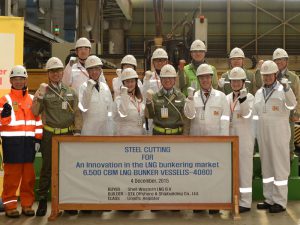
The steel cutting ceremony took place at the shipyard December 4, with representatives from Shell and the shipbuilder in attendance.The new LNG bunker vessel will be based at the port of Rotterdam in the Netherlands, and will load from the new LNG break bulk terminal currently under construction by the Gas Access to Europe terminal. Once ready, it will deliver to LNG-fueled vessels in northwest Europe. The vessel is also seagoing and, therefore, able to bunker customers at other locations.

Shell says the vessel will be “pioneering in design.” It will have a capacity to carry 6,500 cu. m of LNG fuel and will be highly efficient and maneuverable. Featuring an innovative transfer system and sub cooler unit, it will be able to load from large or small terminals and able to bunker a wide variety of customer vessels.

Finland’s Containerships Ltd Oy will be the launch customer for the vessel’s services, after signing an LNG supply agreement with Shell on November 24.

As we reported earlier, Containerships Ltd Oy is to charter the two 1,400 TEU LNG fueled containerships currently being built for Nordic Hamburg Group at China’s Yangzhou Guoyu Shipyard .

The vessels will receive LNG fuel from Shell at the port of Rotterdam, after the LNG bunker vessel becomes operational in mid-2017.”This is a significant landmark in bringing this innovative LNG bunker vessel with cutting-edge technology to reality,” said Dr Grahaeme Henderson, Vice President of Shell Shipping & Maritime.

“I am delighted to be working with STX on this project and Shell is proud to be leading in the development of LNG fuel in shipping.””The supply agreement between Shell and Containerships is another example of the marine LNG fuel supply chain coming together,” says Lauran Wetemans, Shell’s General Manager Downstream LNG. “Working together with customers like Containerships is critical to encourage the use of LNG as a fuel in the marine sector, and we’re committed to helping make the transition to LNG.”

LNG bunker vessel

ShellLNGBunkervessel


  • News

CMA CGM to acquire NOL in $2.4 billion deal

The deal is subject to approval by antitrust authorities.

CMA CGM will make Singapore its Asian regional headquarters and will continue operations under the historic APL branding/ 

Rodolphe Saadé, Vice-Chairman of CMA CGM, said: “This transaction will represent a significant milestone in the development of CMA CGM. Leveraging the complementary strengths of both companies, CMA CGM will further reinforce its position as a leader in global shipping with combined revenue of $22 billion and 563 vessels. By bringing together the know-how of both teams, the enlarged group will be even better positioned to provide premium services to its customers across all markets. At a time when the shipping industry is facing strong headwinds, scale is more critical than ever to capitalize on synergies and capture growth opportunities wherever they arise. I firmly believe CMA CGM will enable NOL to address the industry’s new challenges. We recognize the strategic importance of Singapore as a key hub for the maritime industry and we are committed to reinforcing its regional leadership.”

Ng Yat Chung, CEO of NOL, said: “The combined market presence delivered by the transaction would achieve the scale needed to enhance competitiveness for NOL’s operations and offer a clear and sustainable long term direction for the combined entity. The transaction would enable NOL to grow as part of a larger entity with the resources of the world’s third largest container shipping line.”

Tan Chong Lee, Head Portfolio Management at Temasek, said: “We are supportive of this transaction as it presents NOL with an opportunity to join a leading player with an extensive global presence and solid operational track record. The combination of NOL and CMA CGM will create a leading shipping company that delivers reliable and efficient service to its customers. Their complementary strengths will yield mutually beneficial results. We also note and welcome the commitment of CMA CGM to enhance Singapore’s position as a key maritime hub and grow Singapore’s container throughput volumes.”

Created in 1978 by Jacques Saadé, CMA CGM is the world’s third largest container shipping firm, with 469 vessels and a global market share of 8.8%. In 2014, the Group handled over 12 million TEUs and generated $16.74 billion in revenues. A founding member of the Ocean Three Alliance with UASC and CSCL, CMA CGM is present across 160 countries, with 22,000 employees in 655 offices, and has a fleet capacity of 1,781 thousand TEUs.

NOL is a leading shipping company operating under the American President Lines (APL) brand. In 2014, the company’s revenues reached $7.04 billion. Currently, NOL has more than 7,400 employees in 180 offices across more than 80 countries and operates 94 vessels, representing 618 thousand TEUs in fleet capacity.
The acquisition will see CMA CGM emerge with a capacity of 2,399 thousand TEUs and combined fleet of 563 vessels, a market share of approximately 11.5% (vs 8.8% for CMA CGM and 2.7% for NOL) and a combined turnover of $22 billion.

CMA CGM has a leading position on the Asia-Europe, Asia-Mediterranean, Africa and Latin America routes, whilst APL is strong along the Transpacific, Intra-Asia and Indian subcontinent shipping routes. The enlarged entity will strengthen its position on strategic shipping routes, especially in key markets such as United States, Intra-Asia and Japan, and will boast a balanced trade portfolio. Following the transaction, the combined group would hold market shares from 7% to 19% on the routes on which it operates.

CMA CGM says it is looking forward to welcoming APL into CMA CGM’s world and intends to retain and develop the APL brand. With a historic presence in the U.S., APL will add to CMA CGM’s operations in this region.

  • News

ABS teams with SDARI on next generation feeder vessel

ABS Senior Vice President and Chief Technology Officer Howard Fireman and SDARI President Jintao Hu signed the agreement yesterday in Shanghai, China. Dr. Christina Wang, Vice President of ABS Operational and Environmental Performance (OEP), Dr. Franck Violette, Director of ABS OEP China, and Gangyi Wang, Vice President of SDARI also attended the signing ceremony.

“Changing environmental regulations, unpredictable energy prices and volatile freight rates have made it imperative for ship designers to continuously improve the operational and environmental performance of their next generation designs,” Mr. Fireman said. “ABS is working with industry as designs change and new concepts are introduced.”

The objective of this project is to develop the next-generation feeder design with a focus on operational efficiency and flexibility.

The project will bring together innovative design and technology solutions with a novel concept that incorporates technology-readiness features to enable cost-effective implementation of present and future regulations by applying extensive life-cycle cost analyses. This innovative feeder container carrier design will meet future market and trade needs that are being driven by the increase in ultra-large container carriers and the growth of specific regional markets.

“SDARI has always promoted ship innovation and technology development. At this crucial moment when China is transforming from shipbuilding nation to a shipbuilding power, the collaboration that we have strengthened with ABS in container carriers positions us to generate new concepts based on market demand and to launch cutting-edge products,” says Jintao Hu, “I believe the development of this new generation of feeder container carriers will further strengthen the partnership between SDARI and ABS, promoting the transformation and upgrading of Chinese shipbuilding industry.”

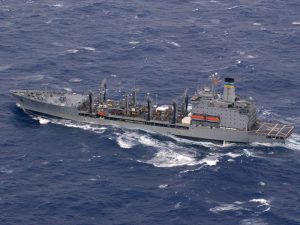
Vigor awarded $8.9 million for T-AO 202 drydocking

Work by the shipyard will include general services for ship, clean and gas free tanks void and cofferdams and spaces, number seven port and starboard cargo tanks preservation, number two center cargo tank preservation, number ten center cargo tank preservation, close survey inspection, main deck overhead preservation, main house preservation, main engine exhaust insulation replacement, lifeboat repair and maintenance, reefer container installation and underwater hull preservation.

The contract includes options which, if exercised, would bring the total contract value to $9,788,394.

Work will be performed in Portland and is expected to be completed by March 2, 2016. If options are exercised, work will continue through March 12, 2016. Fiscal 2016 maintenance and repair contract funds in the amount of $8,931,411 are being obligated at the time of award. Contract funds will not expire at the end of the current fiscal year.

This contract was competitively procured, with proposals solicited via the Federal Business Opportunities website, with two offers received.

  • The Navy’s Military Sealift Command, Norfolk, VA, is the contracting activity (N32205-16-C-4011).

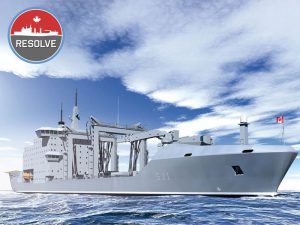
Canada to go ahead with box ship to oiler conversion at Davie

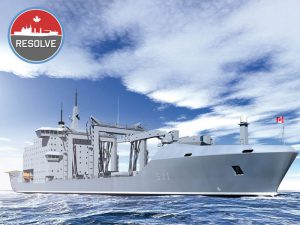
The project will see the Quebec shipbuilder continue with the conversion of a containership into an interim fleet oiler for the Royal Canadian Navy. Until now, Davie has been working on the basis of an letter of intent from the previous government.

Timely continuation of the project was put in doubt when rival Irving Shipbuilding wrote letters to members of the incoming cabinet asking that its alternative solution be considered. That move provoked a lot of unhappiness among the rest of the Canadian shipbuilding community.

Today, though, Minister of Public Services and Procurement Judy M. Foote and Minister of National Defence Harjit Singh Sajjan issued the following statement:

The Government of Canada was recently briefed on the interim auxiliary oil replenishment file. We know that this process commenced as a result of an expression of interest by Chantier Davie Canada Inc. We also know that the previous government made a decision to proceed with this proposal through a sole-source rather than a competitive process. The previous government also modified the long-standing procurement rules governing contracts for interim defence requirements.

We have taken time to assess all these facts and have also taken the following into consideration:The process is at an advanced stage. If we restarted this initiative by launching a competition, we would lose precious time in providing the Navy with a critical refuelling and naval support capability.

The ship has been purchased by Chantier Davie Canada Inc. and is in the shipyard undergoing conversion.

According to public reports, several hundred employees have already been hired.

Due to the structure of the agreement entered into by the previous government, we will be required to pay up to $89 million in expenses should we not proceed with this initiative.

After amassing the facts and carefully deliberating, The Government of Canada determined that proceeding with Project Resolve is the most viable course of action to provide the Navy’s at-sea oil replenishment capability until the Joint Support Ships, to be built by Seaspan’s Vancouver Shipyards, are operational. The Government of Canada is committed to ensuring that competitions for major military procurements stand up to the highest standards of openness and transparency.

Furthermore, The Government of Canada will undertake a review of the process for sole-source contracts for military procurements, including looking at current regulations and policies and those regulations amended by the previous government.
vailability of RCN ships has increased in the immediate term with the completion of the first modernized frigates and now that the Victoria-class submarines have achieved a steady state level of readiness, and will further increase in the short-term with interim AOR capability and in the medium-to-longer term with the Joint Support Ships, Arctic/Offshore Patrol Ships, and Canadian Surface Combatants that will be delivered as part of Government shipbuilding.

Davie box ship to oiler conversion gets go ahead

The project will see the Quebec shipbuilder continue with the conversion of a containership into an interim fleet oiler for the Royal Canadian Navy. Until now, Davie has been working on the basis of an letter of intent from the previous government.

Timely continuation of the project was put in doubt when rival Irving Shipbuilding wrote letters to members of the incoming cabinet asking that its alternative solution be considered. That move provoked a lot of unhappiness among the rest of the Canadian shipbuilding community.

Today, though, Minister of Public Services and Procurement Judy M. Foote and Minister of National Defence Harjit Singh Sajjan issued the following statement:

The Government of Canada was recently briefed on the interim auxiliary oil replenishment file. We know that this process commenced as a result of an expression of interest by Chantier Davie Canada Inc. We also know that the previous government made a decision to proceed with this proposal through a sole-source rather than a competitive process. The previous government also modified the long-standing procurement rules governing contracts for interim defence requirements.

We have taken time to assess all these facts and have also taken the following into consideration:The process is at an advanced stage. If we restarted this initiative by launching a competition, we would lose precious time in providing the Navy with a critical refuelling and naval support capability.

The ship has been purchased by Chantier Davie Canada Inc. and is in the shipyard undergoing conversion.

According to public reports, several hundred employees have already been hired.

Due to the structure of the agreement entered into by the previous government, we will be required to pay up to $89 million in expenses should we not proceed with this initiative.

After amassing the facts and carefully deliberating, The Government of Canada determined that proceeding with Project Resolve is the most viable course of action to provide the Navy’s at-sea oil replenishment capability until the Joint Support Ships, to be built by Seaspan’s Vancouver Shipyards, are operational. The Government of Canada is committed to ensuring that competitions for major military procurements stand up to the highest standards of openness and transparency.

Furthermore, The Government of Canada will undertake a review of the process for sole-source contracts for military procurements, including looking at current regulations and policies and those regulations amended by the previous government.
vailability of RCN ships has increased in the immediate term with the completion of the first modernized frigates and now that the Victoria-class submarines have achieved a steady state level of readiness, and will further increase in the short-term with interim AOR capability and in the medium-to-longer term with the Joint Support Ships, Arctic/Offshore Patrol Ships, and Canadian Surface Combatants that will be delivered as part of Government shipbuilding.