WinGD ammonia-fueled two stroke completes TAT and FAT testing
Written by Marine Log Staff
Photo: WinGD
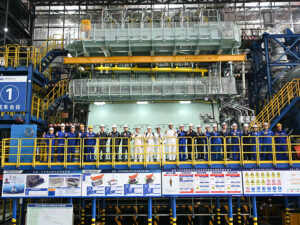
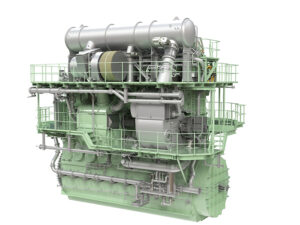
Swiss-headquartered engine developer WinGD has achieved a major milestone with the completion of both Type Approval Testing (TAT) and Factory Acceptance Testing (FAT) of a 52-centimeter bore ammonia-fueled X52DF-A-1.0 two-stroke engine. The engine is to be installed on a 46,000 cubic meter LPG/ammonia carrier on order for EXMAR.
The X-DF-A engine features high-pressure ammonia injection supplemented by a low, targeted pilot fuel dose of around five percent at full load. The engine delivers load handling, dynamic response and fuel efficiency on par with WinGD’s equivalent diesel-fueled X-engines in both ammonia and diesel operating modes.
Both test programs were completed in January 2026, at the HD Hyundai Heavy Industries’ Engine & Machinery (HHI-EMD) facility in South Korea, witnessed by classification society Lloyd’s Register (LR), together with representatives from all major classification societies, under the supervision of EXMAR.
The vessels in the series are set to become the first ammonia-fueled gas carriers to enter commercial service, marking a significant milestone for the shipping industry’s decarbonization efforts.
“These successful tests represent a key milestone in EXMAR’s development of ammonia as a marine fuel, a journey that began in 2021,” said Kristof Coppé, director fleet operations & technical business development at EXMAR. “Drawing on more than 40 years of experience in transporting ammonia as cargo, we have been able to bring critical operational insight into both engine design and the test program, with special focus on the safety considerations unique to using ammonia as a fuel.”
“We now move forward with preparations for sea trials, where the ammonia dual fuel engine and all onboard systems will be validated in real-world operation,” he added. “Preparations are well underway, and trials are planned for the coming months.”
“Completing Type Approval Testing and Factory Acceptance Testing with our joint development partner HHI-EMD represents a major technical milestone in the development of ammonia-fueled two-stroke propulsion,” said Sotiris Topaloglou, global head of testing & validation at WinGD. “As first movers, we are addressing a completely new fuel landscape, where safety, control and system integration are paramount. We have developed an engine that has been well proven to be safe and efficient by tackling, one by one, all the technical challenges we faced.
“Demonstrating the world’s first TAT for an ammonia-fuelled two-stroke engine with strong results demonstrates that ammonia propulsion can meet the highest standards of reliability, performance and safety expected by the industry for commercial marine application.”
WinGD says that, throughout a rigorous multi-year development and testing process, excellent performance has been demonstrated. Emissions data from the X‑DF‑A engine has seen NOx emissions during ammonia operation well below those generated during diesel use. Excellent results have also been recorded for emissions of N2O, with a negligible contribution to the overall greenhouse gas emissions footprint.
Confidence in ammonia as a future marine fuel continues to grow, with WinGD securing an early orderbook of around 30 X-DF-A engines across multiple vessel segments, including gas and bulk carriers, tankers and container vessels. This momentum reflects growing confidence across the maritime value chain as engine technology, ship design and operational frameworks progress in parallel. The successful completion of testing also demonstrates the manufacturing and testing expertise behind the program.
Categories: Engines & Fuel, News, Technology
![ME-LGIA ammonia engine TAT will be the final one at the RCC in Copenhagen before its location is moved outside the city in late-2027. [Photo: Everllence]](https://www.marinelog.com/wp-content/uploads/2026/06/everllence_fat_thumbnail41f9bf402cda41359043ac75c2242b9c-300x225.jpg)