
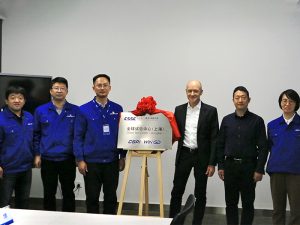
WinGD opens new Global Test Center in Shanghai
With R&D coming into sharp focus as part of the strategy to help ships reach IMO’s 2050 decarbonization target, Swiss-based marine engine developer WinGD has opened a new Global Test Center in
With R&D coming into sharp focus as part of the strategy to help ships reach IMO’s 2050 decarbonization target, Swiss-based marine engine developer WinGD has opened a new Global Test Center in

Winterthur, Switzerland, headquartered engine designer WinGD says that its engines will be able to run on methanol and ammonia from 2024 and 2025 respectively. The company’s multi-fuel solutions will be based on

Engine developer WinGD has developed a range of solutions that use digital vessel optimization and battery-hybrid energy systems to improve the energy efficiency and future fuel flexibility of its two-stroke engines. “Our

Engine developer WinGD is making its debut in the hybrid sector. Four newbuild car carriers ordered by Japan’s NYK Line will feature an integrated hybrid power solution that will help dramatically cut
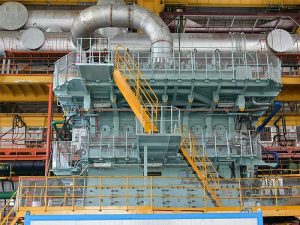
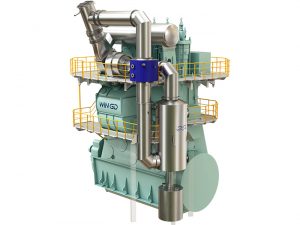
China’s Dalian Marine Diesel Co. has built a WinGD X52 marine two-stroke engine that is the first engine to be fitted with WinGD’s own on-engine NOx abatement solution, offering significant reductions in

Swiss based engine developer WinGD (Winterthur Gas & Diesel) reports thatm as shipowners continue to invest in big containerships, it has booked more than 80 orders of its largest engines in 2021
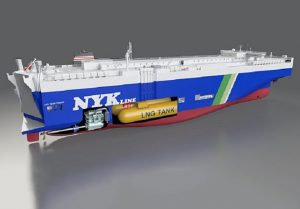
Four LNG-fueled PCTCs (Pure Car/Truck Carriers) just ordered by Japan’s NYK Line will be the first vessels in the word to be equipped with WinGD’s X-DF2.0 iCER main engines. The iCER (Intelligent
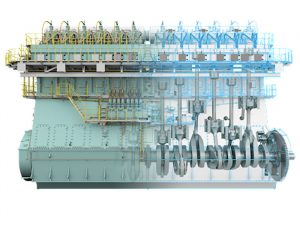
Winterthur Gas & Diesel’s 12X92DF dual engine has been recognized by Guiness World Records as the most powerful Otto-cycle engine ever built. In tests carried out at engine builder CSSC-MES Diesel Co

CSSC Marine Service Co (CMS), the worldwide equipment service subsidiary of China State Shipbuilding Corp (CSSC), has extended its range of services for WïnGD and RT-Flex two-stroke engines, with the introduction of
As pressures to reduce GHG emissions from ships grow, methane slip from LNG fueled engines could well become the target of future regulations. Though LNG produces less CO2 than conventional fuels, a