
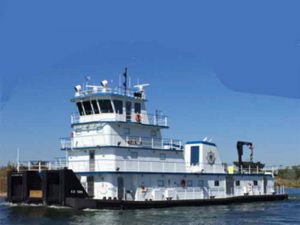
Horizon delivers another FMT towboat
NOVEMBER 25, 2016 — ., Bayou La Batre, Alabama, has delivered the M/V A.B. York, a 120′ towboat, to its longtime customer Florida Marine Transporters (FMT). It is the nineteenth vessel and
NOVEMBER 25, 2016 — ., Bayou La Batre, Alabama, has delivered the M/V A.B. York, a 120′ towboat, to its longtime customer Florida Marine Transporters (FMT). It is the nineteenth vessel and
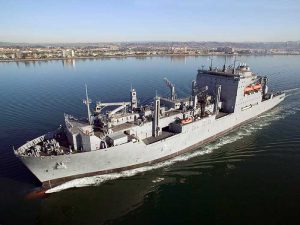
SEPTEMBER 26, 2016 — BAE Systems Southeast Shipyards Alabama LLC, Mobile, Alabama, is being awarded a $16,045,915 firm-fixed-price contract for a102-calendar day shipyard availability for the regular overhaul and dry docking of
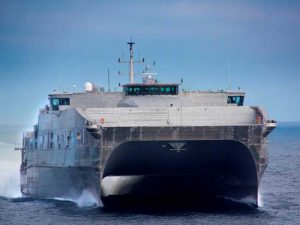
SEPTEMBER 16, 2016 — Austal USA, Mobile, AL, is being awarded a $248,898,142 modification to previously awarded Navy contract N00024-16-C-2217. The award covers the design and construction of two Expeditionary Fast Transport
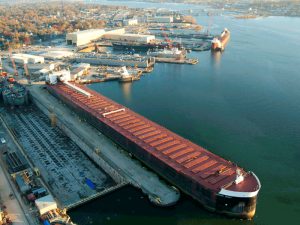
Anyone needing reassurance that the shipbuilding sector in the United States is alive and well need look no further than the Great Lakes. While yards along the U.S. Gulf reshuffle business strategies to help during the down oil market, yards along the Great Lakes continue to work on a number of projects, investing in infrastructure and leveraging partnerships to diversify portfolio offerings.
Perhaps the busiest group of all is Fincantieri Marine Group (FMG)—the U.S. subsidiary of one of the world’s largest shipbuilders in the world, Fincantieri. The Fincantieri Marine Group is comprised of three Great Lakes shipyards—Fincantieri Bay Shipbuilding (FBS), Fincantieri Marinette Marine (FMM), and Fincantieri ACE Marine (FAM).
Since acquiring the Wisconsin yards in 2008, Fincantieri has invested well over $100 million to build a shipbuilding group that will provide flexibility for its customers, and provide construction and repair services to both the government and commercial sectors.
Sturgeon Bay, WI-based Fincantieri Bay Shipbuilding (FBS), which is one of the last boat builders remaining in the Bay, has been essentially non-stop the last couple of years. The yard currently has numerous projects under various stages of construction with a backlog that extends through 2018. Most notably, the projects include newbuilds for one of the most active sectors in the country, the ATB market.
This past May, the yard delivered the Articulated Tug Barge (ATB) unit Barbara Carol Ann Moran and the 110,000 barrel ocean tank barge Louisiana to Moran Towing Corporation, New Canaan, CT. The unit was the third delivery to Moran under a 2014 contract.
The 5,300 HP, 121 ft ATB tug Barbara Carol Ann Moran is certified ABS Class +A-1 Towing Service, +AMS, and is equipped with state-of-the-art navigation and communications technology.
What made the delivery of the unit so impressive was that it was delivered on the exact day called for by the contract—emphasizing FBS’ high standards of meeting customer requirements, building a quality vessel and delivering on time.
Currently, FBS is under contract to construct two ATB tugs and two ocean going tank barges for Kirby Corporation; one ATB tug and one oceangoing tank barge for Plains All American Pipeline, LP; and one ATB tug and one oceangoing tank barge for AMA Capital Partners.
“We continue to be optimistic about the future of the industry we serve,” says, Todd Thayse, Fincantieri Bay Shipyard Vice President and General Manager.
To keep the momentum going, Fincantieri recently purchased the Palmer Johnson facility adjacent to the Bay Shipbuilding yard. Bay Shipbuilding has extensive expansion plans set for the 3-acre site, including the construction of new indoor Fabrication/Erection facilities, an indoor Blast and Coating building, outfitting shops and additional office facilities.
“This recent acquisition of the former Palmer Johnson facility has been well received by the industry and will allow us to pursue several new construction projects, which may include fishing vessels, ferries and landing crafts, while continuing to serve our core ATB market. These purpose-designed buildings will increase our overall output and capacity and improve our ability to meet critical schedules,” says Thayse.
“We will also be able to move more construction indoors which will allow FBS to further provide cost-effective solutions for our customers,” he added.
Indoor facilities will enable work to be ongoing for both newbuilds and repair work—especially during the winter months when Great Lakes fleet repairs are vital and time sensitive.
Earlier this year, FBS had 17 vessels at the yard undergoing winter repairs well into April. The vessels ranged from thousand-foot long bulk tankers, to medium-sized ships, to tugs and barges. Work included large-scale scheduled maintenance repairs, scrubber installations, repowering and structural steel renewal, in addition to electrical automation enhancement and ABS and U.S. Coast Guard inspections.
Additionally, Keylakes Shipping’s 768 ft bulk carrier John G. Munson is currently undergoing conversion at Bay Shipbuilding. The vessel is the tenth steam-to-diesel, or diesel-to-diesel repowering project that FBS has been awarded since 2009. The freighter, built in 1952 will undergo a complete repower at FBS. It is expected to undergo sea trials in 2018.
Meanwhile, FMG’s two other Great Lakes shipyards are busy constructing the next generation of warships for the U.S. Navy.
Earlier this summer, a keel laying ceremony was held at Fincantieri Marinette Marine, Marinette, WI, for the U.S. Navy’s 17th Littoral Combat Ship (LCS), the USS Indianapolis. The ship is one of six in various stages of construction at FMM, with an additional three ships in long-lead procurement. The yard has already delivered four LCS ships to the Navy—the USS Freedom (the lead ship in the Freedom variant), the USS Fort Worth, the USS Milwaukee and the USS Detroit.
The Lockheed Martin-led team is made up of Fincantieri Marinette Marine, along with naval architectural firm Gibbs & Cox, and more than 500 suppliers across 37 states. The U.S. Navy’s LCS construction program is divided between two groups—the Lockheed Martin team, building the Freedom variant, and the General Dynamics-led team, with Alabama-based Austal USA building the Independence class LCS.
Fincantieri Ace Marine, Green Bay, WI, also has a hand in producing the Freedom variant of the LCS. The yard, which specializes in the design and construction of high-speed coastal intercept and patrol vessels, most notably the builder of the Response Boat-Medium (RB-M) for the U.S. Coast Guard, produces the aluminum superstructures and additional aluminum components for the class.
To top off FMG’s three shipyards success, all three received the annual “Excellence in Safety” award from the Shipbuilders Council of America earlier this year. The award recognizes a shipyard’s commitment to safety, and the hard work and dedication put forth from shipyard employees.
The Great Lakes Group Eyes Expansion, Partners with Damen
FMG isn’t the only regional player seeking to further develop. This past June, the City of Cleveland authorized the sale of property adjacent to the Great Lakes Towing company headquarters. The acquisition of the property will enable the Great Lakes Shipyard, part of The Great Lakes Group, to operate at full capacity, all year round.
The expansion will include a 68,000 square foot facility that will accommodate a state-of-the-art 770-ton mobile Marine Travelift crane—the largest on the Great Lakes, and third largest in the world.
Great Lakes Group says that with the new facility in place, the Great Lakes Shipyard will be able to continuously provide all services for new vessel construction, as well as custom fabrication, ship maintenance and repairs.
Part of the services Great Lakes Shipyard will offer are those required for Subchapter M. Under Subchapter M regulations, towing vessels greater than 26 ft, or any vessel type moving dangerous or hazardous materials, must obtain a Certificate of Inspection documenting: Drydock inspection; Internal Structure Exam; Annual Inspection and Surveys; and Machinery and Electrical.
 Just last month, the yard kicked off construction for the first Damen Stan Tug 1907 ICE. The tug is the first in a series of ten being built in compliance with the new Subchapter M regulations. The tugs are being built for The Great Lakes Towing Company (the Towing Company).
The tugs will measure 65 ft x 24 ft x 9 ft and will be powered by two MTU 8V4000 M54R engines generating 1,000 hp at 1,600 rev/min.
“This new construction program is further evidence of the innovative spirit the Towing Company has always embraced since its founding over 117 years ago, and reflects the commitment we have to our customers and the entire Great Lakes/St. Lawrence Seaway marine transportation industry,” says Joe Starck, President of the Towing Company.
Under the construction program two new harbor tugs will be introduced each year for the next five years—helping to stabilize operations and improve day-to-day business, assures Starck.
“The tugs,” he added, “will be ideal for the long-term sustainability of our harbor towing activities, and provide our customers with an even greater level of reliability, performance, and safety, across our entire Great Lakes service network.”
The Great Lakes Towing Company’s fleet provides ship assist, cargo transportation and logistics, ice breaking, and emergency assistance for every kind of vessel, barge and marine structure on the Great Lakes-St. Lawrence Seaway.
The Damen Stan Tug 1907 ICE are also the first tugs to be built in the U.S. under Damen’s Technical Cooperation program with Great Lakes Shipyard. The agreement, which was entered into at last year’s Workboat show, authorizes the Great Lakes Shipyard as an official builder of Damen designs for the next five years.
Burger Boat’s diverse portfolio
Since 1863 Burger Boat Company, Manitowoc, WI, has done everything in its power to meet the needs of its growing customer base. The boat builder, which has delivered countless vessel types in the range of 50 ft to 200 ft in length, implements what it calls a “lean” philosophy to its business practice, ensuring procedures are performed and completed on time, and vessels are delivered to customers on budget.
A builder of steel and aluminum vessels, Burger builds everything from yachts to passenger vessels, such as the 98 ft passenger vessel Chicago’s Classic Lady for Chicago’s First Lady Cruises—and patrol to research vessels, such as the 78 ft research vessel Arcticus which was delivered to the U.S. Geological Survey in 2014, just to name is a few.
Last year, Burger delivered a tour boat to Chicago-based Wendella Boats. The 340- passenger Lucia is an 89 ft steel vessel that was designed by Timothy Graul Marine Design, Sturgeon Bay, WI. The steel boat is certified USCG Subchapter K, and is powered by two Caterpillar C12 main engines and features two Northern Lights generators.
Most recently, Burger began construction on a custom 103 ft 6 in x 26 ft 5 in full displacement steel and aluminum Explorer Motor Yacht for an unnamed owner.
The expedition style motor yacht has a steel hull and aluminum superstructure. The vessel, designed by DeBasto Design, Miami, FL, will be launched Spring 2017. The ABS class yacht will be powered by two Cat C-18 ACERT main engines, and will be able to reach a cruising speed of 12 knots.
Fraser faces OSHA fine
Located in Superior Wisconsin, on the St. Louis Bay of Lake Superior, Fraser Shipyards, part of the Fraser Industries group which also includes boat builders Lake Assault Boats, provides full shipyard services from its sixty five acre site, featuring two dry docks and approximately 2,200 feet of berthing space. Since 1890, Fraser Shipyards has been a prominent fixture in the Twin Ports of Duluth and Superior, serving the Great Lakes shipping community. Most of its current 150 workers, 75 percent of which are structural welders, equipment operators, fitters and pipe fitters, are third generation employees for the company.
That kind of longevity and loyalty from workers can serve as a testament to Fraser’s commitment to the industry, the community and its employees, but recent findings have raised questions about the yard’s safety culture.
Last month, the U.S. Department of Labor’s Occupational Safety and Health Administration (OSHA) announced that sampling results taken during a recent retrofit determined that 14 of Fraser Shipyards workers were exposed to heavy metals and had lead levels 20 times higher than the exposure limit.
According to OSHA’s Assistant Secretary of Labor, Dr. David Michaels, “Fraser Shipyards accepted a contract with a very low profit margin and penalties for delayed completion, but could not meet the schedule without endangering its workers.”
That contract, from Interlake Steamship Company, Middleburg Heights, OH, was for the modernization of the Herbert C. Jackson. OSHA stated in its report that Fraser Shipyards’ management was aware of the presence of lead and asbestos throughout the 1959 built vessel. The ship arrived at Fraser December 2015 for a six-month retrofit project and was required back in operation for the summer iron ore shipping season.
In a statement, James Farkas, President and Chief Operating Officer of Fraser Industries, said “We are a family-owned company that has been in Superior for 126 years. We see all of our employees, laborers and contractors as part of the family.”
He added, “We take the health and safety of our people and our community seriously. We acted to protect our people as soon as we learned of the problem. We have worked with all of our employees, laborers and contractors to ensure their health by bringing in medical experts, as well as the highest levels of testing, protective equipment and safe operating procedures. We strongly disagree with OSHA’s statement that any of the issues were caused or worsened by business or profit motivations.”
The agency cited 14 willful egregious health violations for each instance of overexposing a worker to lead, and cited five additional willful violations for failing to conduct monitoring to assess lead exposure and failing to implement a lead compliance or respiratory program.
Additionally, OSHA issued 10 serious violations to the company, and placed Fraser Shipyards in its Severe Violator Enforcement Program (SVEP). For companies on the list, mandatory follow-up inspections become the norm.
Since the findings, Fraser has taken steps to help mediate the matter, and protect its employees. According to a statement, as soon as the management learned of the high lead levels it halted work on the Herbert C. Jackson. Fraser Shipyards also went on to engage medical experts from the region’s two leading hospitals, and industrial safety experts from the International Brotherhood of Boilermakers union to advise the company and oversee health testing. And it purchased state-of-the-art safety gear and equipment to protect workers.
Additionally, Fraser engaged medical professionals, OSHA and union officials to develop and implement new safety procedures.
“We appreciate their responsiveness to getting this issue fixed and taking care our members,” said Mark Garrett, Director of Health and Safety Services for the International Brotherhood of Boilermakers, the union that represents workers at the yard. “We don’t get many employers that step up like they did. They were straightforward, asked for our help and put in place our recommendations for safety.”
In total, Fraser could face close to $1.4m in OSHA penalties.
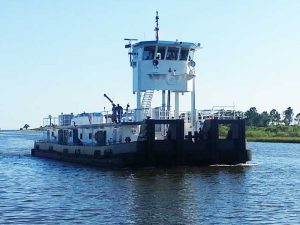
JULY 31, 2016 – Horizon Shipbuilding, Inc., Bayou La Batre AL, recently delivered the M/V Marty Cullinan, a 120 ft towboat with a retractable pilot house, to its home port of New
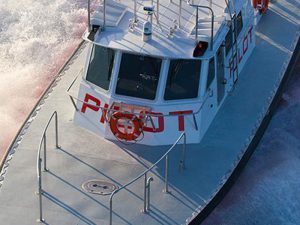
JUNE 24, 2016 — Gladding-Hearn Shipbuilding, Duclos Corporation, Somerset, MA, reports that it has won an order from the Alabama Pilot, Inc., in Mobile, AL, for a Chesapeake Class pilot boat. Delivery

JUNE 8, 2016 — The U.S. marine industry is condemning a measure proposed by Rep. Gary Palmer (R-AL) that would exempt Puerto Rico from the Jones Act – which requires waterborne cargo
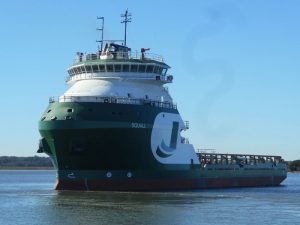
FEBRUARY 23, 2016 — BAE Systems, Jacksonville, FL, shipyard caps recently delivered M/V Squall, the fourth and final platform support vessel (PSV) built for Jackson Offshore Operators, LLC under a program that
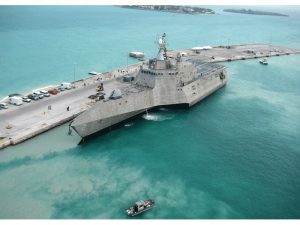
In the closing weeks of last year, all sorts of things happened that demonstrated that the way Navy ships actually get ordered is a little different from the way that the process is publicly portrayed.
Things began with the news that the Navy had placed a $200 million advanced procurement contract with Huntington Ingalls Industries’ Ingalls Shipbuilding division for LPD 28, the 12th amphibious transport dock of the San Antonio (LPD 17) class. The fact that there will be a 12th ship in the class illustrates how lobbyists can influence what Navy tonnage gets built—even ships that weren’t ever formally requested in the Navy’s budget submission.
Once that news was announced, the beltway types knew that another shoe would soon drop: an additional DDG 51 destroyer contract for General Dynamics Bath Iron Works.
Defense media predicted that BIW would get the additional destroyer under a “hull swap” agreement in a 2002 MOU between the Navy and its two largest shipbuilders that, among other things, reportedly included an agreement that, should a12th LPD be ordered, a fourth DDG 51-class ship or equivalent workload would be awarded to BIW.
Now where would the money for such a ship come from? We got the answer in the omnibus spending bill that the Congress passed just before Christmas (see this month’s Inside Washington column for more details). If you are to take at face value what they has to say it all happened thanks to Maine’s U.S. Senators.
As the bill was nearing passage, Sen. Susan Collins, a senior member of the Defense Appropriations Committee, and Sen. Angus King, a member of the Senate Armed Services Committee, said that the final omnibus spending bill includes $1 billion toward the construction of an additional DDG 51 destroyer that would “likely” be built at Bath Iron Works and would be in addition to those already included in the current multi-year procurement contract.
The statement issued by the two senators, interestingly, contained no acknowledgement whatsoever that the funding was any kind of pre-arranged “done deal,” widely expected by defense industry insiders.
It said that “as a senior member of the Defense Appropriations Committee, Senator Collins requested the funding toward the additional DDG-51 to help meet combatant commander requirements for destroyers across the globe. Senator Collins successfully advocated for the inclusion of the $1 billion in funding in the Senate Defense Appropriations Bill. The House Defense Appropriations Bill, however, allocated no funding for this additional destroyer. Following weeks of negotiations between the House and Senate regarding the bill, the omnibus bill appropriated the full $1 billion in funding toward this additional ship, affirming the strategic importance of our Navy and shipbuilding programs.”
ANOTHER QUESTION MARK OVER LCS
One of the Navy’s shipbuilding programs that has been evolving has been the Littoral Combat Ship (LCS). As compared with other surface combatants, either variant of the LCS is a small, relatively lower cost, ship. Now, however, it has been decided that future versions of the LCS would be beefed up to become frigates. Under either label, the ship is still affordable enough to enable the Navy to bring up the numbers in its shipbuilding plan to more easily reach its target of a 308-ship battle force.
That plan was thrown into disarray by a December 14 memo sent by Secretary of Defense Ash Carter to Secretary of the Navy Ray Mabus, essentially telling him to rethink the Navy’s budget priorities. Among other things, it directs him to reduce the Navy’s buy of Littoral Combat Ships (including frigatized versions) and to downsize to one of the two variants of the ship.
Before looking at that memo in more detail lets recap on the program as summarized in a recent Congressional Research Service report by veteran analyst Ronald O’Rourke.
“From 2001 to 2014, the program was known simply as the Littoral Combat Ship (LCS) program, and all 52 then-planned ships were referred to as LCSs. In 2014, at the direction of Secretary of Defense Chuck Hagel, the program was restructured. As a result of the restructuring, the final 20 ships in the program (ships 33 through 52), which were to be procured in FY2019 and subsequent fiscal years, were to be built to a revised version of the baseline LCS design, and were to be referred to as frigates rather than LCSs.
“Under this plan, the LCS/Frigate program was to include 24 baseline-design LCSs procured in FY2005-FY2016, 20 frigates to be procured in FY2019 and subsequent fiscal years, and eight transitional LCSs (which might incorporate some but not all of the design modifications intended for the final 20 ships) to be procured in FY2016-FY2018, for a total of 52 ships.”
Two baseline LCS designs are currently being built. One was developed by an industry team led by Lockheed; the other—based on an Austal design—was developed by an industry team led by General Dynamics. The Lockheed design is built at Fincantieri Marine Group’s Marinette Marine shipyard at Marinette, WI; the General Dynamics design is built at the Austal USA shipyard at Mobile, AL, with Austal now also being the prime contractor. Ships 5 through 24 in the program are being procured under a pair of 10-ship block buy contracts that were awarded to the two LCS builders in December 2010.
“The 24th LCS—the first of the three LCSs requested for procurement in FY2016—was to be the final ship to be procured under these block buy contracts, but the contract might be extended to include the 25th and 26th ships (i.e., the second and third ships requested for FY2016) as well,” notes the CRS report.
THE MEMO
The December 14 memo sent by Secretary of Defense Ash Carter to Secretary of the Navy Ray Mabus, not only directs him trim the Navy’s LCS buy of Littoral Combat Ships, but also seems to indicate a very deep divide on what should be the Navy’s budgetary priorities overall.
The memo has already prompted Congressional supporters of the LCS to promise to thwart any attempt to trim the shipbuilding program.
But the memo was leaked and here are some extracts:
“The Navy is critical to our nation’s defense. Recognizing the importance of the fleet, the Department has and will continue to increase the size and capability of the battle force—as the Navy has noted, compared to the 278 ships in 2008, today we have 282 ships in the fleet, and more than 30 are currently under construction. We are well on our way to reaching the 308-ship goal that will meet the Department’s warfighting posture requirement. This requirement should be met, but not irresponsibly exceeded.
“For the last several years, the Department of the Navy has overemphasized resources used to incrementally increase total ship numbers at the expense of critically-needed investments in areas where our adversaries are not standing still, such as strike, ship survivability. electronic warfare. and other capabilities. This has resulted in unacceptable reductions to the weapons, aircraft. and other advanced capabilities that are necessary to defeat and deter advanced adversaries.
“Earlier this year the Department of Defense gave guidance to correct and reverse this trend of prioritizing quantity over lethality; however, counter to that guidance, the Department of the Navy’s latest program submission fails to do so. It is accordingly unbalanced, creates too much warfighting and technical risk, and would exceed the numerical requirement of 308 ships.
“I have made clear in our discussions, in my budgetary guidance, and in public remarks that our military is first and foremost a warfighting force, and while we seek to deter wars, we must also be prepared to fight and win them. This means that overall, the Navy’s strategic future requires focusing more on posture, not only on presence, and more on new capabilities, not only ship numbers.
“The Department’s priorities are 1) to build advanced capabilities, 2) to close growing gaps in naval aviation, and 3) to ensure sufficient ship capacity. To meet these priorities, the Department will build to a total of 40 Littoral Combat Ships (LCS) and frigates (FF), the number that the Navy’s own warfighting analysis says is sufficient to need. This plan reduces, somewhat, the number of LCS available for presence operations, but that need will be met by higher-end ships, and it will ensure that the warfighting forces in our submarine, surface, and aviation fleets have the necessary capabilities and posture to defeat even our most advanced potential adversaries. Under this rebalanced plan, we will still achieve the Navy’s 308-ship goal, we will still. exceed 300 ships in each year from FYI9 to FY30, and we will be better positioned as a force to be overwhelming in posture rather than overextended in presence.
“Specifically, the Department of the Navy will:
Reduce the planned LCS/FF procurement from 52 ships to 40 ships (creating a 1/1/1/1/2 profile for eight fewer ships within the FYDP) by down-selecting LCS/FF production to one variant in FY2019. Forty LCS/FF will exceed recent historical presence levels and will provide a far more modern and capable ship than the patrol coastals, minesweepers, and frigates that they will replace. CAPE will provide specific implementation direction and the decision will be documented in the Resource Management Decision (RMD).
Procure 10 Flight III destroyers (DDGs) within the FYDP. Recognizing the significant capabilities that Flight III destroyers provide, the Department will continue to procure 10 DDGs across the FYDP. In addition, we will upgrade additional Flight IIA DDGs, procure additional advanced electronic warfare capabilities, and invest in munitions that will enable the fleet to hold adversary surface ships at risk. The rebalance will allow us to upgrade a large portion of the current DDG fleet, while still protecting procurement of new DDGs.
“The Navy’s amended budget cuts two submarine combat system upgrades, reduces towed array procurement, and misses a key opportunity to add Virginia Payload Modules (VPM) to our fast attack submarines. VPM is the most cost-effective way to increase the capability and capacity of our submarines; therefore the Navy will invest in an additional Virginia Payload Module in FY20. Waiting until FY20 to procure an additional VPM will provide substantial time to allow the Navy to plan for and execute this increased workload even as production of the Ohio Replacement Program begins. The Department will also restore the two combat system upgrades cut in the Navy’s submission and procure an additional 10 SSN upgrades. These upgrades will ensure we continue to have the most lethal submarine force in the world.”
The memo then spells out a number of things other than ships which Secretary Carter deems needed by the Navy and concludes: “These choices will create a Navy that is far better postured to deter and defeat advanced adversaries, while still continuing to grow the size of the fleet. As both you and I have noted, ship count alone is a poor measure of the effectiveness of the force. With the rebalance laid out this memo, our fleet will not only be larger and more effective than it is today; it will also be equipped with the weapons and capabilities it needs to win any potential war.
“The Department of Defense is relying on the Department of the Navy to support and carry out these critical strategic decisions.”
THE WASHINGTON GAME
Ash Carter has held a number of key Department of Defense posts that began with serving as Assistant Secretary of Defense for International Security Policy during President Clinton’s first term, from 1993 to 1996. He was Under Secretary of Defense for Acquisition, Technology, and Logistics from April 2009 to October 2011, and Deputy Secretary of Defense from October 2011 to December 2013.
So, he knows how the Washington game is played. This has led to speculation that what is playing out here is a tried and tested strategy whereby you don’t budget for the things that you know the Congress will insist on funding anyhow.
The leaking of the memo, which appeared on the Navy League’s website within days of being issued, has already galvanized Alabama congressmen into speaking out loudly in defense of the LCS.
SHIPBUILDING PLAN
You never know what ships exactly will be ordered by the Navy until it makes its budget request—and until that budget has gone through the Congressional grinder. However, the Table below based on the Navy’s FY 2016 budget submission indicates that, at the time that budget was submitted, the intention was for the FY 2017 budget to ask for two Virginia Class submarines, two Arleigh Burke class destroyers, three Littoral Combat Ships, one LHA(R) amphibious assault ship, one Fleet tug/salvage ship (TATS) and Mobile Landing Platform (MLP)/Afloat Forward Staging Base (AFSB).
It will be interesting what actually gets ordered. Even more interesting will be to see what will be in the next rendition of the Navy’s 30 year shipbuilding plan, particularly where LCS/FF numbers are concerned.
JANUARY 14, 2016 — World Marine LLC has bought the assets of shipbuilder Signal International, after the U.S. Bankruptcy Court for the District of Delaware gave its go ahead for the sale