Vale announces first ethanol-powered ocean-going vessel
Written by Marine Log Staff
Credit: Anderson Bibico
Brazilian mining giant Vale and Chinese shipping company Shandong Shipping Corporation have concluded an agreement for new ethanol-powered Guaibamax vessels, which are scheduled for delivery starting in 2029.
The agreement marks a milestone for global iron ore transport: this is the first time in the maritime industry that ethanol will be used as the primary fuel on an ocean-going vessel. With the potential to reduce carbon emissions by around 90% compared to the use of heavy fuel oil, commonly used in shipping, the initiative reinforces Vale’s goal to reducing its carbon emissions across the value chain and promoting decarbonization in the maritime sector, in line with ongoing discussions at the International Maritime Organization (IMO).
The agreement between Vale and Shandong includes 25-year contracts for the construction of two vessels, with an option for additional ships. The adoption of these second-generation Guaibamax vessels, which are 340 meters long and have a capacity of 325,000 tonnes, is part of the Brazilian mining company’s multi-fuel strategy. In addition to ethanol, these vessels will be capable of using methanol and heavy fuel oil, and their design also allows for conversion to use liquefied natural gas (LNG) or ammonia.
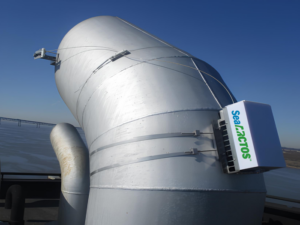
“Vale’s pioneering efforts towards decarbonization in maritime transport are guided by a strategy that combines flexibility and efficiency. ‘The use of ethanol as fuel in the ships that transport our ore, combined with the adoption of rotor sails to harness wind energy, places Vale in a unique position for the energy transition in global shipping over the coming decades, whilst driving similar initiatives in the sector’, says Rodrigo Bermelho, Vale’s Director of Shipping.
Considering the full fuel cycle from well to wake, ethanol can reduce carbon emissions by around 90% (in the case of second-generation ethanol) compared with heavy fuel oil. In addition to maritime transport, Vale’s adoption of ethanol in its logistics operations includes trials on trucks at its operations and on locomotives on the Vitória a Minas Railway.
Reducing emissions
The new ethanol-powered ships will be similar to 10 other dual-fuel vessels (methanol and heavy fuel oil) that Shandong will deliver to Vale from 2027 onwards. The second generation of the Guaibamax will be equipped with five rotor sails—which harnesses wind energy to reduce fuel consumption—more efficient engines, hydrodynamic devices, a shaft generator, frequency inverters and silicone paint, amongst other energy efficiency improvements. The set of technologies applied will reduce GHG emissions by around 15% compared to the current generation of Guaibamax.
These technologies and alternative fuels are being tested as part of the Ecoshipping program, a research and development initiative created by Vale to support the maritime industry’s decarbonization efforts and improve the efficiency of the mining company’s fleet. Vale’s chartered fleet includes first-generation Valemax vessels since 2011, second-generation Valemax vessels since 2018 and, since 2019, the first generation of Guaibamax. These vessels are already among the most efficient in the world and can reduce CO2 equivalent emissions by up to 41% compared to a standard capesize vessel.
Categories: Environment, News, Shipbuilding