Op-Ed: How cruise is setting the standard for low-methane slip on LNG
Written by Maikel Arts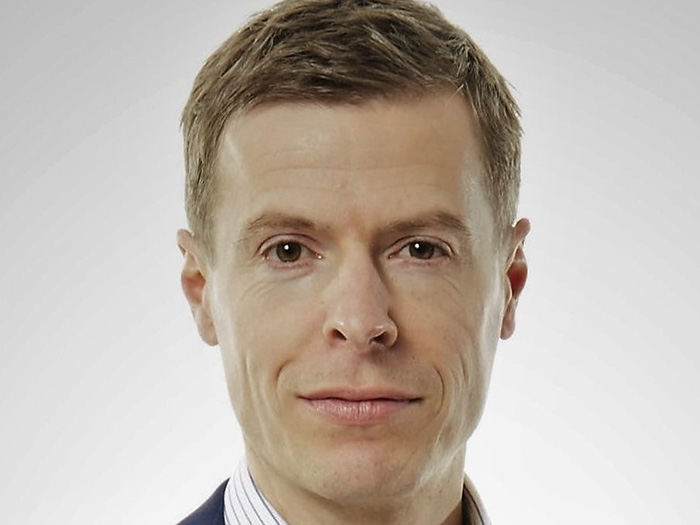
As the cruise industry embraces LNG, the conversation has shifted from feasibility to methane slip. Advances in engine technology, independent validation, and real-world operations show LNG becoming a credible, scalable fuel for passenger shipping. When methane slip is effectively reduced, LNG-fueled cruise ships can enjoy a longer regulatory compliance window than any other fossil-based marine fuel today.
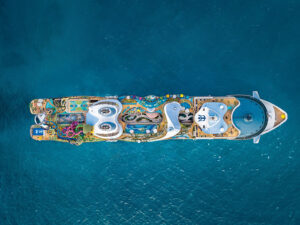
When Icon of the Seas entered service early last year, she became more than the world’s largest cruise ship. She is also the strongest proof yet that LNG can power a vessel of unprecedented scale. Six dual-fuel Wärtsilä 46DF engines drive a floating city of nearly 10,000 people, turning LNG into a proven solution for the cruise sector.
However, one challenge still demands attention—methane slip, or unburned methane. Despite LNG’s emissions benefits—cutting SOx, NOx, particulates and a meaningful reduction in CO₂—unburned methane continues to draw scrutiny as even small percentages of slip, a far more potent GHG than CO2, can damage LNG’s reputation as a climate solution.
LNG progress in practice
The cruise segment is now demonstrating how methane slip can be reduced in practice. MSC has played a central role with its LNG-fueled vessels, Euribia, World Europa and World America—all powered by Wärtsilä 46DF engines. They have proven dual-fuel reliability and efficiency at scale.
Cruise vessels usually operate within load ranges where methane slip is significantly lower—confirmed by independent measurements. MSC Cruises’ LNG vessels and Brittany Ferries’ Salamanca 46DF engines recorded an annual average methane slip coefficient of 1.57% while earlier studies reported around 1.7%. These are well below commonly cited regulatory results and provide a robust operational baseline for improvements.
The next milestone is World Asia, the first cruise ship to feature Wärtsilä 46TS-DF engines with NextDF technology, pushing methane slip to levels once thought unattainable.
LNG’s journey in cruise has unfolded through a series of landmark vessels. Delivered in 2022, World Europa, ran on 46DF engines and carried a 150-kW solid oxide fuel cell demonstrator to explore how hybridization benefits. In January 2024, Royal Caribbean’s Icon of the Seas—the largest cruise ship ever built that also ran on 46DF engines—further proved LNG’s scalability.
Progress continues with World Asia. Two-stage turbocharging of the 46TS-DF engine boosts efficiency across the full load range, setting a new benchmark for low methane slip. One engine will pilot Wärtsilä’s NextDF technology, reducing methane slip to below 1.4% at all load points, and as low as 0.9% across a wide load range. NextDF is also available on W31DF and W25DF engines, enabling mid-sized and smaller LNG cruise ships to reduce GHG emissions.
Such performance relies on engine design as well as on operational excellence. Wärtsilä’s lifecycle agreements reflect this, such as a five-year contract with Royal Caribbean covering 37 vessels with maintenance, predictive monitoring via Expert Insight, and performance-based optimization.
Cruise as LNG’s testbed
Cruise has become the proving ground for LNG innovation for three key reasons.
First, visibility. Cruise ships—destinations as well as vessels—operate near cities and coastal communities, meaning emissions are scrutinized by passengers, ports, investors, and NGOs. Cutting methane slip builds LNG’s credibility and builds trust in the industry—crucial for the fossil fuel with the longest environmental compliance.
Second, scale and complexity. Cruise ships function as floating hotels, entertainment venues and logistics hubs. When vessels as large as Icon of the Seas and as sophisticated as World Europa adopt LNG, they demonstrate LNG is not a marginal option, but a reliable, mainstream choice.
Third, complementary technologies. Batteries, hybrid systems, fuel cells, waste-heat recovery and shore power enable engines to run at more stable loads where methane slip is naturally lower. These technologies strengthen LNG rather than replace it and create a pathway toward renewable drop-in fuels like bio-LNG and synthetic LNG.
This evolution is already underway. In July 2025, TUI Cruises’ Mein Schiff Relax completed a ship-to-ship bio-LNG bunkering in Barcelona, proving renewable methane works seamlessly within existing LNG systems and infrastructure. Bio-LNG, which recycles carbon already in the natural cycle, can cut emissions by up to 80% compared to HFO.
Even when fossil LNG is used, climate benefits remain significant. Methane slip has reduced by more than 90% over three decades, and with NextDF, weighted averages can approach 1% in real operations. These are improvements being achieved on vessels entering service today.
Regulation is evolving. The EU has recently provided guidance permitting shipowners to use actual methane slip values instead of only default factors. This change allows operators with investments in new technologies and lower methane slip to reflect their results more accurately.
Progress in the cruise sector has never depended on a single breakthrough, but on practical advances—ship by ship, class by class. LNG continues to develop, strengthen, and prove itself under the sector’s most demanding operational and reputational expectations. That is the story cruise tells today, and one that helps define shipping’s broader transition to a lower carbon future.
Maikel Arts is head of cruise for Wärtsilä.
Categories: Cruise Ships, Engines & Fuel, News, Op-Eds
![orstein Hagen and Leah Talactac [Screengrab from YouTube video]](https://www.marinelog.com/wp-content/uploads/2026/05/vikingceotransition-300x225.jpg)