
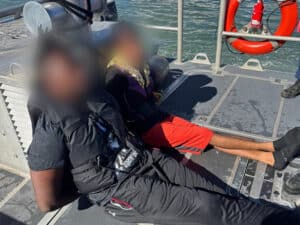
Coast Guard rescues two aliens who jumped from barge in San Juan Harbor
A Coast Guard Station San Juan boat crew rescued two aliens from the water this past Sunday, after they jumped from a barge that was transiting San Juan Harbor, Puerto Rico. The
A Coast Guard Station San Juan boat crew rescued two aliens from the water this past Sunday, after they jumped from a barge that was transiting San Juan Harbor, Puerto Rico. The
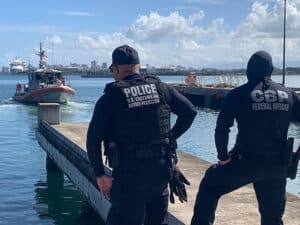
U.S. Coast Guard and Customs and Border Protection have apprehended 12 stowaway migrants in a response that began at 8.43 a.m Saturday, Nov. 25, when watchstanders at Sector San Juan received notification
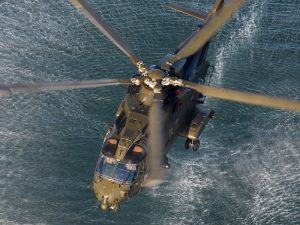
An incident in which a group of stowaways took control of the Navios Tankers Management 75,000 dwt tanker Nave Andromeda in the English Channel off Gosport, Hampshire, ended when U.K. special forces

“With the migrant crisis in the Mediterranean and the media attention this continues to receive, it is often easy to forget that the problem of stowaways is still a very real problem for shipowners,” says UK P&I Club Claims Executive Amanda Hastings. “The majority of these stowaways are finding more creative ways in which to board ships.”
“In addition to conducting thorough stowaway searches in accordance with the ship’s ISPS Code compliant security plan, and being vigilant whilst in port, additional precautions may need to be taken due to ship design,” notes Ms. Hastings.
“Although there is currently no international regime dealing exclusively with stowaways, there are several international instruments that apply,” says Ms. Hastings. “These include the UN Declaration on Human Rights, the European Convention on Human Rights and the FAL Convention. Shipowners should take care to ensure that stowaways are not subject to degrading or inhumane treatment whilst on board, and should be provided with water, food, clothing, medical treatment (if required) and accommodation.
“Shipowners should also be aware of the potential costs of disembarking stowaways, for example in Brazil, a straightforward repatriation can cost upwards of US$30,000 per stowaway. This figure can quickly increase if the stowaway is detained for any particular length of time. Costs for shipowners can also be incurred, depending on the jurisdiction, through immigration fines, medical testing, police escorts, cost of travel documents, detention costs and repatriation expenses such as flights and additional clothes.
“Stowaways can often result in unexpected expenses for shipowners and the issue is unlikely to go away. As ship security improves, stowaways will find more creative ways of boarding ships. If a stowaway is discovered once the ship has left port, dependent on location, shipowners may find it more cost effective to return to port and disembark the stowaway there, rather than risk higher costs in other jurisdictions, such as Brazil.”