
ABS publishes guidance on fuel cells
Classification society ABS has published its Guide for Fuel Cell Power Systems for Marine and Offshore Applications to support the design, evaluation, and construction of fuel cell systems on vessels and offshore
Classification society ABS has published its Guide for Fuel Cell Power Systems for Marine and Offshore Applications to support the design, evaluation, and construction of fuel cell systems on vessels and offshore
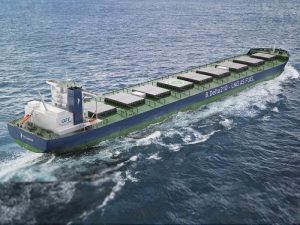
Classification society ABS has granted Approval in Principle (AiP) to Deltamarin and GTT for a dual-fuel Newcastlemax bulk carrier design. Deltamarin, GTT and ABS have been cooperating on the development of the
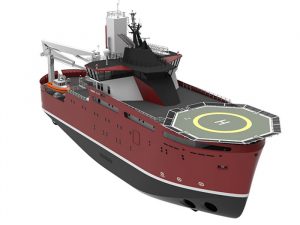
Vard Marine Inc. has been awarded ABS Approval in Principle (AiP) t for its design of a Jones Act wind farm service operations vessel (SOV). The AiP is for a customized version
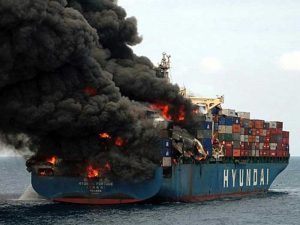
The just-published ABS Guide for Fire-Fighting Systems for Cargo Areas of Container Carriers is the first of its kind to address firefighting and safety systems of cargo holds of container vessels, the
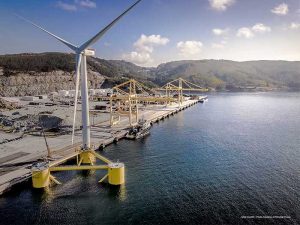
The world’s largest floating offshore wind turbine, an 8.4-megawatt (MW) an ABS-classed unit, recently departed for its final destination, the WindFloat Atlantic wind farm, 20 kilometers off the Portuguese coast of Viana
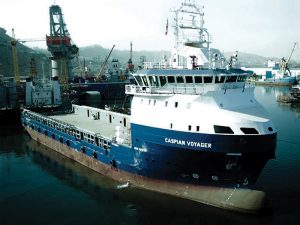
Dubai headquartered OSV specialist Topaz Energy and Marine has entered its 2012-built, 79.4 m long platform supply vessel Caspian Voyager into the ABS Extended Dry-Docking (EDD) scheme. The program will extend the

ABS has appointed cyber expert Ian Bramson as its Global Head of Cybersecurity. In this role, Bramson will lead the development of a cyber security risk reduction program to meet increasing demand

Dr. Kirsi Tikka has stepped down as Executive Vice President and Senior Maritime Advisor at American Bureau of Shipping (ABS). Effective September 2, 2019 she will become an independent non-executive director of
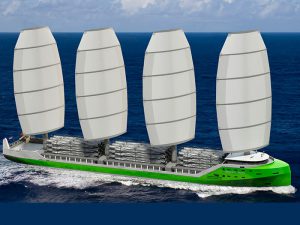
ABS and Netherlands based research institute MARIN have launched a Joint Industry Project (JIP) to investigate transparent and validated methods to assess the performance of wind-assisted shipping propulsion technologies. The JIP covers
A new ABS Advisory on Gas and Other Low Flashpoint Fuels provides guidance on available technologies, regulatory requirements and installation and operational considerations for adopting gas or other low flash point fuels.