Search Results for: sea change ferry

  • News

CEO Spotlight: Lynne Griffith, Assistant Secretary, WSF

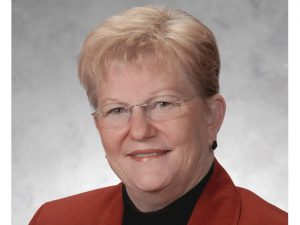
MARINE LOG recently had an opportunity to sit down with Lynne Griffith, the new Assistant Secretary of Washington State Ferries. In the fall of 2014, Griffith became the first woman to hold the position and is responsible for guiding the 1,900 employees that work at the iconic Washington State Ferries to meet their operational, budgetary, and safety goals.It’s no small task: Washington State Ferries is the largest ferry operation in the U.S., carrying about 22 million passengers annually and about 10 million vehicles between 20 different ports in and around Puget Sound.

Some of the key challenges Griffith faces are renewing the WSF fleet—which has an average age of about 35 years old— modernizing the system’s terminals, and investing in new IT systems to improve efficiency and communications with riders. Like most state-run agencies around the country, the Washington State Department of Transportation was hit hard by the recession, which means a loss of revenue and cuts to services across the board. About 70 percent of the ferry system’s operations are funded by the fare box. By comparison taxpayers in New York fund the entire cost of the Staten Island Ferry.

Although she doesn’t have a maritime background, Griffith is well suited for the role with 35 years in the transportation industry, including her role as CEO at Pierce Transit in Washington State, where she had to face similar budgetary constraints and operational challenges.“I’ve always been connected to public service or serving members of the public through transportation. It’s not quite like the movie, Trains, Planes, and Automobiles, but I’ve really done planes, trains, buses, and boats,” jokes Griffith.She started her professional career at 18 working at a small airline. “I used to dispatch airline equipment from parts of the network within the airline. It was just like dispatching buses or getting crews and vessels ready to go in the morning. There’s a very strong similarity in terms of the technical aspects of getting the mode of transportation ready to serve the public.”

Griffith was invited to participate in the selection for the new WSF head by the state Secretary of Transportation 2014. “But I said no. I couldn’t see the connection. I was getting ready to retire.” What changed Griffith’s mind were two high profile ferry incidents. The first was in July 2014 when the 2,500-passenger, 202-vehicle ferry Tacoma lost power on the Seattle-Bainbridge Island route, which caused lengthy delays for passengers crossing Puget Sound.The second occurred on August 15, 2014, when hundreds of Seahawks fans flocked to the ferry to attend a preseason game at CenturyLink Field. After setting sail for Seattle, the Cathlamet had to return to the Bremerton dock to unload 484 passengers because of fears of overloading. However, an official state inquiry ordered by Washington State Department of Transportation Secretary Lynn Peterson found that the vessel was not overloaded, but rather that the count was wrong due to a faulty counting device.

“After those incidents, it dawned on me that Washington State Ferries needed to focus on its operations. And that’s my background—operations. Whether it’s the airline industry or the transit industry, I have always been on the operating end.” Griffith knew she could help. She contacted the state and threw her name back into the hat.Hired back in September 2014, Griffith knew she had to quickly become deeply engaged in the organization in order to assess what exactly needed fixing. That meant learning what agents do at the terminal, deck hands on board, captains in the pilothouse and engineers in the engine room.

“That was the first smart thing I did. The willingness of employees to be candid and open with me really helped me understand what’s working, what’s not working, so that wherever I was going to apply to my leadership role in this organization, I was going to apply it to the right areas. They helped me tremendously to understand where the attention is needed.”As part of the learning process, she took ordinary seaman training. “That was a real eye opener in terms of just how tough their jobs are. They have to be prepared for everything from fire fighting to CPR.”

“As a leader, you have to understand what your employees do and how good they have to be at their jobs, and what their needs are.” Griffith says that insight provides her with the valuable raw knowledge to inform state legislators where funding is needed whether it is for training, maintenance or new hires.“It is hard to sell, that message, when you are in a distressed financial environment. Of course, everyone in the public sector has been grappling with that for a very long time. The recession is long over, but to rebuild that capacity … is a big climb up a very steep ladder,” she adds.

A high priority for Griffith has been a renewal of the aging fleet, as well as renovations to two of the system’s busiest terminals. Washington State Ferries signed a Notice to Proceed giving shipbuilder Vigor Industrial the go ahead to get started on work on the fourth vessel in the 144-vehicle capacity, Olympic Class ferry series and work will begin this month.
The new ferry is funded through the Connecting Washington transportation package, which is being paid for through a hike in state gasoline taxes.

WSF is building the Olympic Class ferries to replace some of the fleet’s oldest vessels. The Olympic Class design is based on the Issaquah class, the most versatile vessel in the WSF fleet.

13451853973 29b87889e7 o

Two of four are in service, the third will be complete in 2017 and the fourth is scheduled for completion in 2018. The first vessel, Tokitae, joined the Mukilteo/Clinton route in June 2014. The second, Samish, was put into service on the Anacortes/San Juans Island route in June 2015. Chimacum, the third ferry, will replace one of the older vessels on the Seattle/Bremerton route in 2017.

The budget to build the vessel is $122 million, and delivery is scheduled for mid-2018.“I actually think that the build program needs to move on beyond the Olympic Class. Right on the back of the group of new vessels, we have a whole group in our existing fleet that is going to hit 60 years old. We need to be thinking about how we are going to pursue those replacements. What are those vessels going to look like? Are they the same Olympic Class vessel or are they going to be different. We are going to have to think about the funds for those vessels, so we don’t have an interruption in the build program.”

“Technology changes so quickly. Do we need to build ferries that last 60 years or should they be something else? Vessels that are built to last 60 years are more expensive to construct. I don’t know what the answer is, but we have to open ourselves up to thinking about those things.” She notes that some of the older vessels will have to be retained as surge or back up capacity. 

WSF, however, will have to compete with the Coast Guard, Navy, and a number of commercial operators for access to regional shipyards, whether it is for drydockings or dockside repairs. Griffith is working closely with Matt Von Ruden, the new Director of Vessels at WSF, on innovative ideas to improve operations.

“Anything from expanding engine room training to collaborating with our shipyard partners in finding solutions for getting our vessels in for inspection or for those big fixes.“Looking at it as a newcomer, I don’t think that replacing every terminal, building every new vessel or adding to the fleet is financially feasible right now. The mistake is that we report that we can do more and more and more without the funding dynamics changing.

“The public is never going to tolerate that much tax. So how can we be smart? What technology can we use? What practical design can we use that gives people what they need?“If you look at it differently and open up your mind—we’re already thinking about different types of fuel that could offer savings for the state if there would be a fuel spike again down the road, about how we can fix and modernize terminals instead of rebuilding at the maximum cost—we can get there with a balance of what the public thinks is acceptable and what we can afford.”

Griffith sees her port engineers, captains, deck hands, and mates as a valuable source of new ideas. “We have one staff chief who thought of an idea to save about $2 million per year just on his route.” That involved modifying operational practices as the ferry came into dock. Instead of using all engines before docking, using just three engines to slow the vessel as it approaches the dock, then two engines when docking. The practice cut the amount of fuel burned.

She also worked with the union to provide more transparency in the service’s Ferry Alerts. With more informative alerts, riders can now make better decisions on whether they should go to the dock or find alternate routes during service disruptions.  “If we don’t give enough information, we just made an angry customer.” says Griffith.

While Washington State Ferries has shelved the idea of converting one of its older vessels to hybrid propulsion, it is moving ahead with the idea of burning Liquefied Natural Gas (LNG) as a marine fuel. Griffith would prefer incorporating the technology into a newbuild, but sees the benefits of converting an existing vessel to burn LNG.“There is a lot of apprehension about LNG. There have been questions about whether converting a vessel is practical. What I see is that our experts are going to learn something in that process. We will learn about logistics and how the vessels would be fueled so that, if we make a major investment in a new vessel, we would be a little bit smarter.”

Besides renewing its fleet, WSF also needs to attract new blood to its organization. Griffith points out that the average age of pilot house personnel is 65 and the average age of engine room personnel is 55. “We need a mentoring program right now before we lose the talent. We need to work with local maritime schools and conduct an outreach to local mariners.

“The state does not pay competitively to the private sector. We have to build a package of information to convey the idea of why they should come to work for us. Some of the key benefits of working at Washington State Ferries, however, is that employees have an improved quality of life; the ability to go home at night to their families and long-term security.”
  • News

CEO Spotlight: Lynne Griffith, Assistant Secretary, WSF

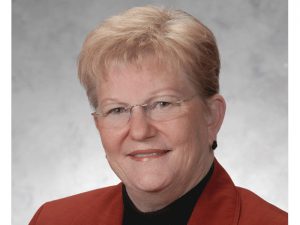
MARINE LOG recently had an opportunity to sit down with Lynne Griffith, the new Assistant Secretary of Washington State Ferries. In the fall of 2014, Griffith became the first woman to hold the position and is responsible for guiding the 1,900 employees that work at the iconic Washington State Ferries to meet their operational, budgetary, and safety goals.It’s no small task: Washington State Ferries is the largest ferry operation in the U.S., carrying about 22 million passengers annually and about 10 million vehicles between 20 different ports in and around Puget Sound.

Some of the key challenges Griffith faces are renewing the WSF fleet—which has an average age of about 35 years old— modernizing the system’s terminals, and investing in new IT systems to improve efficiency and communications with riders. Like most state-run agencies around the country, the Washington State Department of Transportation was hit hard by the recession, which means a loss of revenue and cuts to services across the board. About 70 percent of the ferry system’s operations are funded by the fare box. By comparison taxpayers in New York fund the entire cost of the Staten Island Ferry.

Although she doesn’t have a maritime background, Griffith is well suited for the role with 35 years in the transportation industry, including her role as CEO at Pierce Transit in Washington State, where she had to face similar budgetary constraints and operational challenges.“I’ve always been connected to public service or serving members of the public through transportation. It’s not quite like the movie, Trains, Planes, and Automobiles, but I’ve really done planes, trains, buses, and boats,” jokes Griffith.She started her professional career at 18 working at a small airline. “I used to dispatch airline equipment from parts of the network within the airline. It was just like dispatching buses or getting crews and vessels ready to go in the morning. There’s a very strong similarity in terms of the technical aspects of getting the mode of transportation ready to serve the public.”

Griffith was invited to participate in the selection for the new WSF head by the state Secretary of Transportation 2014. “But I said no. I couldn’t see the connection. I was getting ready to retire.” What changed Griffith’s mind were two high profile ferry incidents. The first was in July 2014 when the 2,500-passenger, 202-vehicle ferry Tacoma lost power on the Seattle-Bainbridge Island route, which caused lengthy delays for passengers crossing Puget Sound.The second occurred on August 15, 2014, when hundreds of Seahawks fans flocked to the ferry to attend a preseason game at CenturyLink Field. After setting sail for Seattle, the Cathlamet had to return to the Bremerton dock to unload 484 passengers because of fears of overloading. However, an official state inquiry ordered by Washington State Department of Transportation Secretary Lynn Peterson found that the vessel was not overloaded, but rather that the count was wrong due to a faulty counting device.

“After those incidents, it dawned on me that Washington State Ferries needed to focus on its operations. And that’s my background—operations. Whether it’s the airline industry or the transit industry, I have always been on the operating end.” Griffith knew she could help. She contacted the state and threw her name back into the hat.Hired back in September 2014, Griffith knew she had to quickly become deeply engaged in the organization in order to assess what exactly needed fixing. That meant learning what agents do at the terminal, deck hands on board, captains in the pilothouse and engineers in the engine room.

“That was the first smart thing I did. The willingness of employees to be candid and open with me really helped me understand what’s working, what’s not working, so that wherever I was going to apply to my leadership role in this organization, I was going to apply it to the right areas. They helped me tremendously to understand where the attention is needed.”As part of the learning process, she took ordinary seaman training. “That was a real eye opener in terms of just how tough their jobs are. They have to be prepared for everything from fire fighting to CPR.”

“As a leader, you have to understand what your employees do and how good they have to be at their jobs, and what their needs are.” Griffith says that insight provides her with the valuable raw knowledge to inform state legislators where funding is needed whether it is for training, maintenance or new hires.“It is hard to sell, that message, when you are in a distressed financial environment. Of course, everyone in the public sector has been grappling with that for a very long time. The recession is long over, but to rebuild that capacity … is a big climb up a very steep ladder,” she adds.

A high priority for Griffith has been a renewal of the aging fleet, as well as renovations to two of the system’s busiest terminals. Washington State Ferries signed a Notice to Proceed giving shipbuilder Vigor Industrial the go ahead to get started on work on the fourth vessel in the 144-vehicle capacity, Olympic Class ferry series and work will begin this month.
The new ferry is funded through the Connecting Washington transportation package, which is being paid for through a hike in state gasoline taxes.

WSF is building the Olympic Class ferries to replace some of the fleet’s oldest vessels. The Olympic Class design is based on the Issaquah class, the most versatile vessel in the WSF fleet.

13451853973 29b87889e7 o

Two of four are in service, the third will be complete in 2017 and the fourth is scheduled for completion in 2018. The first vessel, Tokitae, joined the Mukilteo/Clinton route in June 2014. The second, Samish, was put into service on the Anacortes/San Juans Island route in June 2015. Chimacum, the third ferry, will replace one of the older vessels on the Seattle/Bremerton route in 2017.

The budget to build the vessel is $122 million, and delivery is scheduled for mid-2018.“I actually think that the build program needs to move on beyond the Olympic Class. Right on the back of the group of new vessels, we have a whole group in our existing fleet that is going to hit 60 years old. We need to be thinking about how we are going to pursue those replacements. What are those vessels going to look like? Are they the same Olympic Class vessel or are they going to be different. We are going to have to think about the funds for those vessels, so we don’t have an interruption in the build program.”

“Technology changes so quickly. Do we need to build ferries that last 60 years or should they be something else? Vessels that are built to last 60 years are more expensive to construct. I don’t know what the answer is, but we have to open ourselves up to thinking about those things.” She notes that some of the older vessels will have to be retained as surge or back up capacity. 

WSF, however, will have to compete with the Coast Guard, Navy, and a number of commercial operators for access to regional shipyards, whether it is for drydockings or dockside repairs. Griffith is working closely with Matt Von Ruden, the new Director of Vessels at WSF, on innovative ideas to improve operations.

“Anything from expanding engine room training to collaborating with our shipyard partners in finding solutions for getting our vessels in for inspection or for those big fixes.“Looking at it as a newcomer, I don’t think that replacing every terminal, building every new vessel or adding to the fleet is financially feasible right now. The mistake is that we report that we can do more and more and more without the funding dynamics changing.

“The public is never going to tolerate that much tax. So how can we be smart? What technology can we use? What practical design can we use that gives people what they need?“If you look at it differently and open up your mind—we’re already thinking about different types of fuel that could offer savings for the state if there would be a fuel spike again down the road, about how we can fix and modernize terminals instead of rebuilding at the maximum cost—we can get there with a balance of what the public thinks is acceptable and what we can afford.”

Griffith sees her port engineers, captains, deck hands, and mates as a valuable source of new ideas. “We have one staff chief who thought of an idea to save about $2 million per year just on his route.” That involved modifying operational practices as the ferry came into dock. Instead of using all engines before docking, using just three engines to slow the vessel as it approaches the dock, then two engines when docking. The practice cut the amount of fuel burned.

She also worked with the union to provide more transparency in the service’s Ferry Alerts. With more informative alerts, riders can now make better decisions on whether they should go to the dock or find alternate routes during service disruptions.  “If we don’t give enough information, we just made an angry customer.” says Griffith.

While Washington State Ferries has shelved the idea of converting one of its older vessels to hybrid propulsion, it is moving ahead with the idea of burning Liquefied Natural Gas (LNG) as a marine fuel. Griffith would prefer incorporating the technology into a newbuild, but sees the benefits of converting an existing vessel to burn LNG.“There is a lot of apprehension about LNG. There have been questions about whether converting a vessel is practical. What I see is that our experts are going to learn something in that process. We will learn about logistics and how the vessels would be fueled so that, if we make a major investment in a new vessel, we would be a little bit smarter.”

Besides renewing its fleet, WSF also needs to attract new blood to its organization. Griffith points out that the average age of pilot house personnel is 65 and the average age of engine room personnel is 55. “We need a mentoring program right now before we lose the talent. We need to work with local maritime schools and conduct an outreach to local mariners.

“The state does not pay competitively to the private sector. We have to build a package of information to convey the idea of why they should come to work for us. Some of the key benefits of working at Washington State Ferries, however, is that employees have an improved quality of life; the ability to go home at night to their families and long-term security.”
  • News

CEO Spotlight: Lynne Griffith, Assistant Secretary, WSF


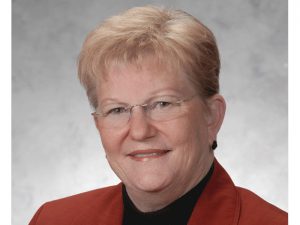
MARINE LOG recently had an opportunity to sit down with Lynne Griffith, the new Assistant Secretary of Washington State Ferries. In the fall of 2014, Griffith became the first woman to hold the position and is responsible for guiding the 1,900 employees that work at the iconic Washington State Ferries to meet their operational, budgetary, and safety goals.It’s no small task: Washington State Ferries is the largest ferry operation in the U.S., carrying about 22 million passengers annually and about 10 million vehicles between 20 different ports in and around Puget Sound.

Some of the key challenges Griffith faces are renewing the WSF fleet—which has an average age of about 35 years old— modernizing the system’s terminals, and investing in new IT systems to improve efficiency and communications with riders. Like most state-run agencies around the country, the Washington State Department of Transportation was hit hard by the recession, which means a loss of revenue and cuts to services across the board. About 70 percent of the ferry system’s operations are funded by the fare box. By comparison taxpayers in New York fund the entire cost of the Staten Island Ferry.

Although she doesn’t have a maritime background, Griffith is well suited for the role with 35 years in the transportation industry, including her role as CEO at Pierce Transit in Washington State, where she had to face similar budgetary constraints and operational challenges.“I’ve always been connected to public service or serving members of the public through transportation. It’s not quite like the movie, Trains, Planes, and Automobiles, but I’ve really done planes, trains, buses, and boats,” jokes Griffith.She started her professional career at 18 working at a small airline. “I used to dispatch airline equipment from parts of the network within the airline. It was just like dispatching buses or getting crews and vessels ready to go in the morning. There’s a very strong similarity in terms of the technical aspects of getting the mode of transportation ready to serve the public.”

Griffith was invited to participate in the selection for the new WSF head by the state Secretary of Transportation 2014. “But I said no. I couldn’t see the connection. I was getting ready to retire.” What changed Griffith’s mind were two high profile ferry incidents. The first was in July 2014 when the 2,500-passenger, 202-vehicle ferry Tacoma lost power on the Seattle-Bainbridge Island route, which caused lengthy delays for passengers crossing Puget Sound.The second occurred on August 15, 2014, when hundreds of Seahawks fans flocked to the ferry to attend a preseason game at CenturyLink Field. After setting sail for Seattle, the Cathlamet had to return to the Bremerton dock to unload 484 passengers because of fears of overloading. However, an official state inquiry ordered by Washington State Department of Transportation Secretary Lynn Peterson found that the vessel was not overloaded, but rather that the count was wrong due to a faulty counting device.

“After those incidents, it dawned on me that Washington State Ferries needed to focus on its operations. And that’s my background—operations. Whether it’s the airline industry or the transit industry, I have always been on the operating end.” Griffith knew she could help. She contacted the state and threw her name back into the hat.Hired back in September 2014, Griffith knew she had to quickly become deeply engaged in the organization in order to assess what exactly needed fixing. That meant learning what agents do at the terminal, deck hands on board, captains in the pilothouse and engineers in the engine room.

“That was the first smart thing I did. The willingness of employees to be candid and open with me really helped me understand what’s working, what’s not working, so that wherever I was going to apply to my leadership role in this organization, I was going to apply it to the right areas. They helped me tremendously to understand where the attention is needed.”As part of the learning process, she took ordinary seaman training. “That was a real eye opener in terms of just how tough their jobs are. They have to be prepared for everything from fire fighting to CPR.”

“As a leader, you have to understand what your employees do and how good they have to be at their jobs, and what their needs are.” Griffith says that insight provides her with the valuable raw knowledge to inform state legislators where funding is needed whether it is for training, maintenance or new hires.“It is hard to sell, that message, when you are in a distressed financial environment. Of course, everyone in the public sector has been grappling with that for a very long time. The recession is long over, but to rebuild that capacity … is a big climb up a very steep ladder,” she adds.

A high priority for Griffith has been a renewal of the aging fleet, as well as renovations to two of the system’s busiest terminals. Washington State Ferries signed a Notice to Proceed giving shipbuilder Vigor Industrial the go ahead to get started on work on the fourth vessel in the 144-vehicle capacity, Olympic Class ferry series and work will begin this month.
The new ferry is funded through the Connecting Washington transportation package, which is being paid for through a hike in state gasoline taxes.

WSF is building the Olympic Class ferries to replace some of the fleet’s oldest vessels. The Olympic Class design is based on the Issaquah class, the most versatile vessel in the WSF fleet.

13451853973 29b87889e7 o

Two of four are in service, the third will be complete in 2017 and the fourth is scheduled for completion in 2018. The first vessel, Tokitae, joined the Mukilteo/Clinton route in June 2014. The second, Samish, was put into service on the Anacortes/San Juans Island route in June 2015. Chimacum, the third ferry, will replace one of the older vessels on the Seattle/Bremerton route in 2017.

The budget to build the vessel is $122 million, and delivery is scheduled for mid-2018.“I actually think that the build program needs to move on beyond the Olympic Class. Right on the back of the group of new vessels, we have a whole group in our existing fleet that is going to hit 60 years old. We need to be thinking about how we are going to pursue those replacements. What are those vessels going to look like? Are they the same Olympic Class vessel or are they going to be different. We are going to have to think about the funds for those vessels, so we don’t have an interruption in the build program.”

“Technology changes so quickly. Do we need to build ferries that last 60 years or should they be something else? Vessels that are built to last 60 years are more expensive to construct. I don’t know what the answer is, but we have to open ourselves up to thinking about those things.” She notes that some of the older vessels will have to be retained as surge or back up capacity. 

WSF, however, will have to compete with the Coast Guard, Navy, and a number of commercial operators for access to regional shipyards, whether it is for drydockings or dockside repairs. Griffith is working closely with Matt Von Ruden, the new Director of Vessels at WSF, on innovative ideas to improve operations.

“Anything from expanding engine room training to collaborating with our shipyard partners in finding solutions for getting our vessels in for inspection or for those big fixes.“Looking at it as a newcomer, I don’t think that replacing every terminal, building every new vessel or adding to the fleet is financially feasible right now. The mistake is that we report that we can do more and more and more without the funding dynamics changing.

“The public is never going to tolerate that much tax. So how can we be smart? What technology can we use? What practical design can we use that gives people what they need?“If you look at it differently and open up your mind—we’re already thinking about different types of fuel that could offer savings for the state if there would be a fuel spike again down the road, about how we can fix and modernize terminals instead of rebuilding at the maximum cost—we can get there with a balance of what the public thinks is acceptable and what we can afford.”

Griffith sees her port engineers, captains, deck hands, and mates as a valuable source of new ideas. “We have one staff chief who thought of an idea to save about $2 million per year just on his route.” That involved modifying operational practices as the ferry came into dock. Instead of using all engines before docking, using just three engines to slow the vessel as it approaches the dock, then two engines when docking. The practice cut the amount of fuel burned.

She also worked with the union to provide more transparency in the service’s Ferry Alerts. With more informative alerts, riders can now make better decisions on whether they should go to the dock or find alternate routes during service disruptions.  “If we don’t give enough information, we just made an angry customer.” says Griffith.

While Washington State Ferries has shelved the idea of converting one of its older vessels to hybrid propulsion, it is moving ahead with the idea of burning Liquefied Natural Gas (LNG) as a marine fuel. Griffith would prefer incorporating the technology into a newbuild, but sees the benefits of converting an existing vessel to burn LNG.“There is a lot of apprehension about LNG. There have been questions about whether converting a vessel is practical. What I see is that our experts are going to learn something in that process. We will learn about logistics and how the vessels would be fueled so that, if we make a major investment in a new vessel, we would be a little bit smarter.”

Besides renewing its fleet, WSF also needs to attract new blood to its organization. Griffith points out that the average age of pilot house personnel is 65 and the average age of engine room personnel is 55. “We need a mentoring program right now before we lose the talent. We need to work with local maritime schools and conduct an outreach to local mariners.

“The state does not pay competitively to the private sector. We have to build a package of information to convey the idea of why they should come to work for us. Some of the key benefits of working at Washington State Ferries, however, is that employees have an improved quality of life; the ability to go home at night to their families and long-term security.”
  • News

Electric & Hybrid: Call me Ishmael, no longer

Call me Ishmael. Melville’s famous opening line in his novel Moby Dick refers to an outcast and could once have been the motto of the hybrid and electric marine industry. There were a number of projects where hybrid and full electric drivetrains were prototyped and they worked well…for a while. The limitation was always the battery technology, where lead acid batteries were just not suited to this type of application. As a result, these projects and technologies were “interesting” with “lots of potential” but not a serious technology for the mainstream marine industry.

The advent of lithium ion batteries has fundamentally changed the value proposition for the hybrid and electric drivetrain. These batteries are smart, durable and have a lifetime that will ensure the customer is able to achieve their targeted Return on Investment (ROI). As a result, the hybrid and electric drivetrain has come of age.

To date, Corvus Energy has deployed over 30 MWh of its Lithium Polymer battery-based Energy Storage Systems (ESS) on over 45 projects. These vessels include large and small ferries, offshore supply vessels (OSVs), tugboats, research vessels, luxury superyachts and port cranes. Only two of these applications are for full electric ferries, the remainder are all hybrid vessels, but a common element is that both types of drivetrains make the vessel more efficient, as well as more environmentally sustainable.

Of course an ESS cannot create energy, but only stores it. The ESS therefore enables the vessel to use the cheapest energy available and shift it in time to the point where it is most cost effective. For a full electric this means the ESS is charged from shore using low cost energy and eliminates completely energy generated by costlier, on-board generators. For hybrids, it moves energy from the efficient portion of the generator’s load curve and replaces energy that would have been generated on the less efficient portion of the generator’s load curve.

Full Electric Drivetrains
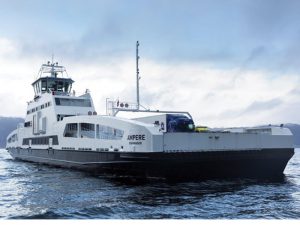
At one time the round trip efficiency of an ESS was at 70% or less and the energy density was also not very high. This meant an ESS required a LOT of space on a vessel and did not actually store that much energy. The round trip efficiency on the Corvus ESS is now over 95% and the energy density is high enough that a space the size of a 20-foot container can store 650 kWh. This means that an ESS can now deliver enough power and energy to make a full electric drivetrain cost effective. Even with these improvements, full electric drivetrains still work best for applications where the duty cycle is relatively short such as a ferry with a route that is less than an hour between charging points. The 120-car Ampere ferry in Norway, for example, has a route which crosses Sognefjord between Lavik and Oppedal in 20 minutes and then recharges for 8 minutes from a shore-based charging station which uses the grid and another, smaller Corvus ESS to deliver a large amount of power into the vessel’s ESS in a short period of time. The shore-based charging station then recharges from the grid for about 48 minutes until the ferry returns.

The ferry operator, Norled, has other, diesel-fueled vessels on this route and based on a comparison has estimated that the Ampere is saving over 1 million liters of expensive, ultra-low sulfur diesel fuel per year. It is also saving 90% of the maintenance cost of the diesel engines and 100% of the cost of the NOx emissions, which are taxed in Norway. Norled is now looking at expanding the operating hours of the Ampere each day and is examining other routes it operates to determine if they could benefit from a fully electric ferry.

Hybrid Drivetrains
A hybrid drivetrain consists of a either a diesel or LNG engine as the prime generator for the vessel and supplements this engine with an ESS. The ESS is able to charge with energy produced when the engine generator is operating in its most efficient range and then, when the engine generator would be operating in its inefficient range, the engine is shut off and energy is extracted from the ESS to operate the vessel.

A harbor tug is a good application for a hybrid drivetrain. It will typically spend up to 25% of its time sitting and waiting for a call to push a ship. While in this mode, the vessel needs to maintain its position and run its hotel load. The engine is too large to idle and provide power just to the hotel load and so the engine drives its thrusters in opposite directions, thereby keeping the vessel in position but “boiling water” and wasting fuel. With a hybrid system, the engine is turned off and the ESS is used to periodically operate the thrusters to keep the vessel in position, and also serving the hotel load. When the ESS gets to the minimum state-of-charge, the engine is started to charge the batteries, serve the hotel load and run the thrusters. Depending on the hybrid drivetrain configuration, the ESS can also be used to supplement the engine when the tug is pushing or pulling a vessel to get it into position. When the batteries are charged the engine is turned off. An ESS on a tug can save up to 25% on fuel and emissions, as well as reducing maintenance on the engine(s).

An ESS is also very effective to replace the operation of a second engine that is running in spinning reserve to provide emergency power in the event the prime mover generator fails during a critical operation. On the Scandlines ferries in Denmark and Germany they only operate one generator during crossing and use their ESS for spinning reserve. Scandlines have identified 13% reduction in fuel and emissions and a 45% reduction in generator maintenance.

Likewise, Offshore Supply Vessels (OSVs) in the North Sea can use an ESS for spinning reserve during Dynamic Positioning (DP) operation, where the vessels have to be kept stationary when servicing floating oil and gas platforms. DNV-GL has now approved ESS for DP operations. Eliminating the operation of an additional generator used in spinning reserve has the potential to save fuel, emissions, maintenance and even the capital cost of the additional generator.


Key Benefits
The key benefits from an ESS include:

  • Reduced generator hours/generators running in efficient range
    • Reduced fuel consumption
    • Reduced emissions
    • Reduced maintenance
  • Improved capital management
    • Reduced number of generators
    • Reduced size of generators
    • Generator life extension – operation in efficient range provides longer lifetime
  • Emergency backup
    • Spinning reserve
    • Emergency and auxiliary backup
  • Passenger/crew comfort
    • Reduced noise
    • Reduced vibration
    • Reduced fumes
  • Reduced emissions
    • GHG’s
    • Reference air emissions – NOx , SOx , PM
  • Improved performance
    • Better ramping on LNG engines
    • Instant response to throttle
    • Better transient load management

The Future is Now
No longer the elusive white whale, cost effective and proven hybrid electric propulsion has arrived and is here to stay with early adopters now reaping the benefits. An ESS helps owners make their vessels more efficient by helping them manage the operating and capital costs of their vessels, while also making these vessels more reliable and environmentally sustainable. No longer outcasts like Ishmael, the electric and hybrid marine industry has proven the value proposition for electric drivetrains and energy storage. Corvus Energy’s ESS is a key piece of these innovative hybridization projects for commercial vessels, which are fundamentally changing these marine markets. Where once there was only a potential for these benefits, Corvus Energy has the ESS technology, people and experience to make them real.


  • News

Crowley’s David Ridge awarded company’s top honor

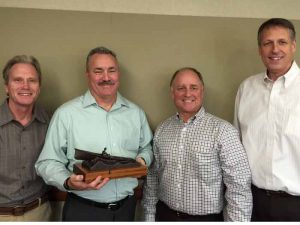
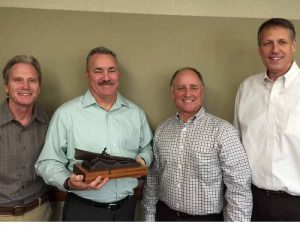
Crowley’s Chairman, President and CEO Tom Crowley Jr., the grandson of the company’s founder, presented the award before more than 70 employees and senior leaders including two past recipients of the award, Bruce Harland, vice president, marine solutions, and Craig Tornga, vice president, government relations.

Mr. Ridge, a 30-year Crowley employee, was selected for the award because of his reputation for high performance. In his nominating letter, Crowley’s Captain Rod Jones, general manager, marine services, wrote: “David has proven his competence, loyalty and exemplary performance time and again, both aboard the vessels and in the office. Whether commanding Crowley assets half-way around the world or facilitating a training seminar in Valdez, his commitment to the core principles of safety, integrity and high performance have never waned. He projects an aura to those around him that not only instills confidence in his ability, but also trust in his judgement – a tireless and effective manager, who demonstrates daily the leadership skills he has honed over years of decision making in stressful situations.”

Mr. Ridge joined Crowley in 1984 as a mate, subsequently working aboard a variety of vessels operated by the company, including oil and cargo barges, offshore towing tugs, and ship assist and tanker escort tugs. In 1986, he was assigned master for Crowley’s military support service operating out of Sasebo, Japan, before transferring aboard Crowley’s harbor ship assist and tanker escort tugboat fleet in San Francisco Bay in 1987. He continued working aboard company tugs until 1996, when he changed roles again, as master of tow operations of Crowley’s 450 series barges transiting U.S. West Coast oil terminals. He came ashore as port captain in Seattle in 2005, and was later assigned to manager, marine operations, in Valdez, Alaska, for the ship assist and tanker escort contract with Alyeska SERVS in 2007. In 2014, he was promoted to his current position of director, marine operations, in Valdez.

“It’s not often that we see a tug captain come ashore,” said Mr. Crowley, on presenting the award. “It’s a difficult transition … I can’t think of a more difficult place to work [than Valdez.] Dave has taken a true leadership role there … in making sure the customer has confidence, that we are there to get the job done and to work with a great team. I congratulate him on his efforts.”

“I am honored to have received this award, but the recognition really should go to my team,” said Mr. Ridge. “Crowley is the most unique and worthwhile company I have ever had the pleasure of working for and it’s the people I work with who make me who I am. I share this award with them.”

The Thomas Crowley Award was created in 1985 and only 60 of the company’s more than 5,300 employees have received the award which symbolized by a limited edition bronze sculpture, which depicts company founder Thomas Crowley ferrying goods to and from ships on San Francisco Bay in the early 1890s.

  • News

Crowley’s David Ridge awarded company’s top honor

Crowley’s Chairman, President and CEO Tom Crowley Jr., the grandson of the company’s founder, presented the award before more than 70 employees and senior leaders including two past recipients of the award, Bruce Harland, vice president, marine solutions, and Craig Tornga, vice president, government relations.

Mr. Ridge, a 30-year Crowley employee, was selected for the award because of his reputation for high performance. In his nominating letter, Crowley’s Captain Rod Jones, general manager, marine services, wrote: “David has proven his competence, loyalty and exemplary performance time and again, both aboard the vessels and in the office. Whether commanding Crowley assets half-way around the world or facilitating a training seminar in Valdez, his commitment to the core principles of safety, integrity and high performance have never waned. He projects an aura to those around him that not only instills confidence in his ability, but also trust in his judgement – a tireless and effective manager, who demonstrates daily the leadership skills he has honed over years of decision making in stressful situations.”

Mr. Ridge joined Crowley in 1984 as a mate, subsequently working aboard a variety of vessels operated by the company, including oil and cargo barges, offshore towing tugs, and ship assist and tanker escort tugs. In 1986, he was assigned master for Crowley’s military support service operating out of Sasebo, Japan, before transferring aboard Crowley’s harbor ship assist and tanker escort tugboat fleet in San Francisco Bay in 1987. He continued working aboard company tugs until 1996, when he changed roles again, as master of tow operations of Crowley’s 450 series barges transiting U.S. West Coast oil terminals. He came ashore as port captain in Seattle in 2005, and was later assigned to manager, marine operations, in Valdez, Alaska, for the ship assist and tanker escort contract with Alyeska SERVS in 2007. In 2014, he was promoted to his current position of director, marine operations, in Valdez.

“It’s not often that we see a tug captain come ashore,” said Mr. Crowley, on presenting the award. “It’s a difficult transition … I can’t think of a more difficult place to work [than Valdez.] Dave has taken a true leadership role there … in making sure the customer has confidence, that we are there to get the job done and to work with a great team. I congratulate him on his efforts.”

“I am honored to have received this award, but the recognition really should go to my team,” said Mr. Ridge. “Crowley is the most unique and worthwhile company I have ever had the pleasure of working for and it’s the people I work with who make me who I am. I share this award with them.”

The Thomas Crowley Award was created in 1985 and only 60 of the company’s more than 5,300 employees have received the award which symbolized by a limited edition bronze sculpture, which depicts company founder Thomas Crowley ferrying goods to and from ships on San Francisco Bay in the early 1890s.

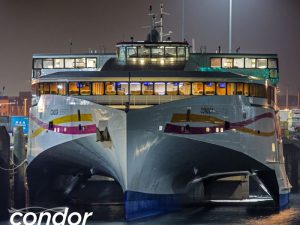
The plight of the Condor …

APRIL 15, 2015 — U.K. ferry operator Condor Ferries seems to have been experiencing a series of unfortunate events with Condor Liberation, the 102 m Austal trimaran it acquired last year (see