Search Results for: Vard

  • News

The Nordic Influence


Shipping is a crucial contributor to the economies of the Nordic countries—Denmark, Finland, Norway, and Sweden—and the industry continues to be a magnet to attract bright young talent. The region’s ship operators maintain an edge over competitors from lower cost areas by investing in newer tonnage that can be operated efficiently and they are ready to take advantage of every benefit than can be reaped from advances in technology. And, in today’s regulatory climate, it doesn’t hurt that the ecologically conscious Nordic countries are an incubator for green technology.

If we take a look at the numbers of ships controlled from Scandinavia countries published by UNCTAD, the statistics can be misleading. While Finland doesn’t make UNCTAD’s cut of the top 35 shipping nations, the Finnish Shipowners Association says its membership consists of 21 companies operating 101 ships.

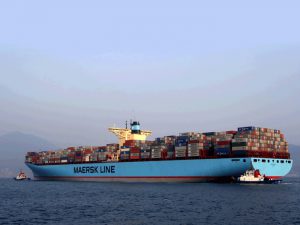
What these numbers don’t show is the number of ships chartered in by the region’s shipowners or their strengths in some key sectors. The obvious example of this is Maersk Group. It is the world’s second largest shipowner in terms of its owned fleet (720 vessels totaling 25.5 million gt) but the largest in terms of number of ships controlled (767 vessels totaling 31.7 million gt).

As of the third quarter of last year, the average age of ships in the Norwegian fleet of foreign-going vessels (under Norwegian and other flags) was 10.9 years. Indicating how Norwegians keep the fleet fresh: In the first nine month of last year, 57 newbuildings totaling 2.09 million dwt were added along with 38 pre-owned vessels totaling 818,000 dwt. Equally significantly, disposals and losses totaled 126 ships and 2,.29 million dwt.

The Danish fleet is also young, in gross tonnage terms, 31.9% is under five years old, 28.7% is 5-9 years old, 23% is 10-14 years old, 12.2% is 15-19 years old and just 4.1% is 20 years old or more.

Keeping fleets young means ordering ships. Breaking down 2015 world newbuilding orders by owner’s country of domicile, we find Norway coming in at number 8, ordering 188 vessels totaling 8.7 million dwt and Denmark in the 11th place placing orders for 131 ships totaling 7.2 million tons.

maersk2

PARTNERING WITH SUPPLIERS
Wherever ships are built—and whoever is buying them—a large percentage of their value is likely to be equipment produced by companies based in the Nordic region, who benefit from a willingness by the region’s shipowners to partner in trialing of equipment aboard ship in real life, working conditions.

Historically, this loop used to also include shipyards, but with the shift of shipbuilding to Asia, this is less the case today. Last year’s Danish Maritime Days included a workshop on “Lack of yard presence in innovation supply chain — How can we as an industry enable improved technology uptake through earlier involvement with the yards?”

Nobody in the room had an instant answer. But there were anecdotal references to the dangers of sharing information too readily with Asian shipyards that see nothing wrong with putting one shipowner’s bright ideas into competitors’ ships.

What remains of the region’s shipbuilding industry is mostly focused on smaller, specialized tonnage, but it retains much of the infrastructure of earlier days including, the intellectual property found in classification societies, design houses, research institutions, model basins and similar facilities—creating ships on the drawing board, the computer and in models that will eventually come to life in full-scale steel in Asia.

Meantime, of course, some yards remain very much in business and winning orders.

DENMARK: MOVING BEYOND
With shipbuilding migrating to lower cost countries, the shipyard capacity in the region has shrunk considerably. For example, there are only a handful of yards in Denmark.

One of those is Fayard A/S in Munkebo. Located on the Odense fjord, it is a large, primarily ship repair, facility whose slogan is “Speed is all—Quality is everything.” It has four large graving docks, all served by high capacity cranes, and a 700 m working berth.

Dry Dock 3, measuring 315/415 m in length and 90 m in width, is the largest dock and is capable of undertaking simultaneous construction work on a variety of ships. Dry docks 1 and 2, may be smaller in size but are  280/303 m lengths and 44/45 m widths and are used for repair and maintenance work on ships. Dry docks 4, measuring 145 m x 30 m x 8 m, is primarily used for smaller vessels. Docks 1, 2 and 4 have modern dock gates and pumping systems that allow the yard to start working on a vessel with 3-4 hours of arrival. The dock gates open or close in just four minutes.

Karstensens Skibsvaerft A/S in Skagen currently has a labor force of around 250, and can build vessels up to 135 m in length. While most are fishing vessels, the yard has been building three Knud Rasmussen-class of offshore patrol vessels, the third of which is near completion using a hull built at Poland’s CRIST shipyard last April.

 Orskov Yard A/S in Frederikshavn converts and repairs all types of vessels in facilities that include two graving docks two floating dry docks with a capacity of up to 215 m x 34 m. The yard employs 230 people and cooperates closely with a wide range of subcontractors to provide all-round, one-stop solutions.

Søby Værft AS in Søby Ærø offers ship repair services using three graving docks with capacities up to 115 m x 24 m x 6 m. It also undertakes newbuildings and one project it is getting set for is the EU-supported E-ferry project, aimed at bringing into service a 4.2 mWh battery capacity electrically powered, ICE class B, single ended, drive-through RO/RO passenger ferry with one continuous main deck for trailers and cars. It will use state-of-the-art electric only systems with an automated high power charging system.

The initial aim is to demonstrate an energy efficient and emission free ferry for passengers and vehicles in an operational viable setup on the Soeby-Fynshav and Soeby-Faaborg connections in the Danish part of the Baltic Sea. The longer term aim is to see 10 more E-ferries in operation in Europe and worldwide every year, reaching a total of 100 or more by 2030— saving 100,000-300,000 tonnes of CO2 annually.

SWEDEN: WHERE DID THE YARDS GO?
The Nordic country with the fewest surviving shipyards is Sweden, where the once gigantic industry has shrunk to the point that it apparently no longer supports a national shipbuilding association—so statistics on it are hard to come by.

Newbuilding is pretty much confined to Saab Kockums naval shipbuilding activities and a handful of small yards involved in smaller tonnage.

Two large repair facilities are still operational. Oresund Dry Docks, in Landskrona on the Øresund Strait beween Denmark and Sweden has facilities that include a 195 m x 35 m graving dock and a 165 m x 28 m floating dock. Damen Oskarshamnsvarvet, on the west coast, has facilities that include an 80 m x 15 m floating dock. Activities at Damen Shiprepair Götaverken in Gothenburg ended in 2014, due to “the depressed situation of the Scandinavian shipping market, the increased number of Baltic repair docks and the appreciation of the Swedish Krona (SEK).

Though Gothenburg no longer has a shipyard, it still has one of Europe’s best known towing tanks, operated by SSPA Sweden AB.

SSPA has the capability to perform most kinds of model testing in its facilities: the towing tank, the large cavitation tunnel and the seakeeping and maneuvering basin – Maritime Dynamics Laboratory, (MDL). Wind tunnel tests can be performed at external test facilities.

All test facilities at SSPA are designed for performing tests with large models, which have many advantages as scale effects are reduced and more reliable measurements can be performed.

NORWAY, HANGING IN THERE
For those interested in the preservation of Norwegian shipbuilding capability, a big question in the months ahead will be whether the Vard Group, a Fincantieri company, can continue to keep five Norwegian shipyards alive based on its previously successful strategy of supplying primarily the offshore oil and gas sector with specialized vessels designed and fitted out in Norway using hulls built in Romania.

In addition to its Norwegian yards, Vard has two yards in Romania, two in Brazil and one in Vietnam. Vard’s biggest recent headaches have included well-documented problems with its Brazilian activities and it has said that these are under review.

Outside of Brazil, Vard’s problems are those shared by all shipbuilders historically dependent on the oil and gas sector—getting enough orders to keep capacity occupied and diversifying into other sectors.

Its most recent order came in November and was for design and construction of what was described only as “one offshore vessel for an undisclosed international customer.” It is being designed by Vard Design in Ålesund, Norway. The hull will be constructed at Vard Braila in Romania and outfitting and delivery is scheduled from Vard Langsten in Norway in 2017.

That order followed contracts worth a total $100 million for the design and construction of two offshore subsea construction vessels for Dubai-based Topaz Energy and Marine. The hulls will be constructed at Vard Tulcea in Romania, with delivery scheduled from Vard Brattvaag in Norway.

In the fisheries sector, Vard last year secured an order from Brevik AS of Norway for a coastal fishing vessel, but, for this vessel, Vard Braila in Romania will undertake all stages of production.

Another fisheries order came from a Canadian client and was for a 79 m stern trawler of Rolls-Royce NVC 374 design. Vard Braila will build the hull and the vessel will be fitted out at Vard Aukra in Norway in the fourth quarter of 2016.

Thus far, Vard has either not been looking at the offshore wind sector or has been keeping very quiet about it. That’s not the case with other Norwegian shipbuilders.

A significant current project currently under way at the Ulstein shipyard is the fitting out of the first of two innovative offshore wind industry Service Operation Vessels (SOV) being built for Germany’s Bernhard Schulte Offshore GmbH that will be Ulstein’s first for the offshore wind industry — and the first to feature its innovative X-Stern which allows a vessel to be positioned with the stern faced towards the weather instead of the bow.

The hull of the first X-Stern SOV hull arrived at Ulstein’s Ulsteinvik shipyard in January and is scheduled for sea trials starting late spring. Starting this summer, the vessel will work at the Gemini wind farm in the Netherlands for Siemens Wind Power Service.

A project underway at Fjellstrand AS is another pointer to the growing attraction of offshore wind service opportunities in a depressed oil and gas market. It is converting a platform supply vessel it delivered only in April of last year into a wind farm support vessel.

Havyard Group established its credentials in the offshore wind sector with the delivery last February of the first of three Havyard 803 SOVs to Denmark’s Esvagt. In addition, Havyard has an order from Esvagt for aa design and equipment package for a Havyard 931 CCV crew change vessel that will be built at Spanish shipyard Astilleros Zamakona.

Late last year, Esvagt ordered a further Havyard SOV, aimed at a new niche for vessels of this kind, smaller wind farms. This Havyard 831 design is described as compact and efficient, but with ample capacity to transport service personnel and equipment. The first Havyard 831is also being built outside Norway, at the Cemre shipyard in Turkey.

Though design and equipment deals are obviously profitable for Havyard, that leaves shipyard capacity to be filled and another sector where it has been successful is the design and construction of large fish carriers. Last November Havyard was able to fill a gap in production of these vessels by using the covered building dock at its Leirvik shipyard for refit and refurbishment of two Faroese fishing trawlers.

Kleven, operates two shipyards—Myklebust Verft and Kleven Verft—and its orderbook includes a deep sea minerals exploration vessel and several fisheries vessel in among the AHTs and OCVs.

A recent contract came from Sølvtrans and is for delivery of a live fish carrier vessel for Myklebust Verft. This is Kleven’s second order from Sølvtrans for this type of vessel, both of which are being built to to Rolls-Royce NVC 387 design.

While ship designs are part of the stock in trade at Ulstein, Vard and Havyard, Kleven’s orderbook is pretty much a portfolio for Norwegian specialist ship design firms. The deep sea minerals vessel, which is on order for De Beers Marine Namibia, is being built to MT 6022 design from Marin Teknikk. This design is well proven in the offshore construction segment, but the De Beers ship will include a wide range of tailor made equipment and features.

A large pelagic midwater trawler/ purse seiner that Kleven is building for Gitte Henning AS in Skagen, Denmark, is based on a design from another well known independent design house, Salt Ship Design, which in October had 16 vessels of its design under construction at Norwegian and foreign shipyards.

“Unlike the current offshore market, fisheries and fish farming are doing very well and these segments represents an increasingly important market for Salt,” it said.

In addition to the independent design houses and shipyard design divisions, Norway is also the home of Rolls-Royce’s and Wärtsilä’s Ship Design divisions, which have absorbed various independents over the years. Having a ship design department makes all sorts of sense for both of them, as a ship design is the envelope for, quite literally, a boatload of equipment and systems.

FINLAND, BACK FROM THE BRINK?
In Finland, thanks largely to government support —including diplomatic efforts— a large part of the shipbuilding industry has emerged from the ashes of what was STX Finland.

Most importantly, with a lot of Finnish Government coaxing, Germany’s Meyer Werft has acquired the Turku shipyard, enabling it to continue as one of the world’s premier cruise ship yards.

Shipbuilding has also returned to the Rauma shipyard after STX announced its closure in 2013, with the site being sold to the local municipality. The shipyard reopened as Rauma Marine Constructions Oy (RMC) the following year and in December 2015 reported that it was to “receive a major infusion of capital for further growth from the government backed Finnish Industry Investment Ltd, and two investment companies, Finda and a fund managed by Taaleritehdas. That news came the day after the Finnish Ministry of Defense issued a Request For Information to kick off a long planned plan to build four new corvette size vessels.

The Rauma shipyard also has considerable expertise in the area of icebreaking vessels — which keeps what is now Arctech Helsinki Shipyard from having a monopoly in that area. When STX Finland ’s troubles threatened the survival of the Helsinki yard, Russia’s United Shipbuilding Company took a 50% stake in and subsequently took total ownership control and the yard’s orderbook primarily includes advanced icebreaking tonnage for Russian projects, though an icebreaker for the Finnish Transportation Authority is currently fitting out.

The other repository of Finnish icebreaking knowhow is ice-going vessel design and engineering specialist Aker Arctic, whose capabilities include ice model testing. Its largest shareholder is Finnish Industry Investment, which is also major stakeholder in the reborn Rauma yard.
 

Eastern launches MPFSV for Harvey Gulf

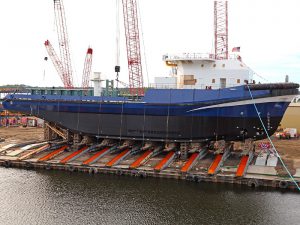
JANUARY 19, 2016 — Eastern Shipbuilding Group, Inc., Panama City, FL, recently launched the M/V Harvey Stone (Hull 234) for Harvey Gulf International Marine, LLC of New Orleans, LA, in a ceremony

  • News

Wartsila solutions picked for world’s largest crane vessel


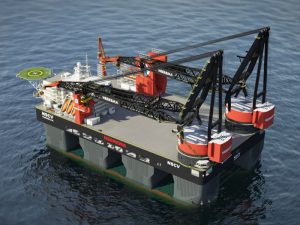
The vessel is being built on behalf of Netherlands based Heerema Offshore Services and when completed will be the largest of its type, and the third largest vessel overall, in the world. The contract with Wärtsilä was placed in October.

“We have a long standing relationship with Wärtsilä propulsion solutions on other vessels in our fleet and look forward to successfully continuing this relationship. We have every confidence that these state-of-the-art thrusters are the right choice for this vessel, which is destined for offshore projects worldwide,” says Sipke Schuurmans, Heerema Offshore Services.

Accurate positioning of the vessel will be ensured by eight 5,500kW Wärtsilä Underwater Mountable thrusters, four of which are also retractable.Wärtsilä has developed these four forward retractable thrusters specifically for this project, and given them the type indication WST-65RU. They feature a unique combination of retractable and underwater mountable functionality.

The thrusters installed at the aft of the vessel are WST-65U underwater mountable thrusters.

The outboard parts of both types are completely interchangeable.

The underwater demounting capability of all eight thrusters means that neither drydocking, nor the use of a habitat is necessary in order to exchange the thrusters.

The thrusters are equipped with Wärtsilä Oceanguard anti-pollution face type seals, which have been selected primarily because of the challenging environments in which these thrusters will operate.

In addition to the thrusters, the full scope of supply includes auxiliaries for steering and lubrication, the control units, and Wärtsilä’s Propulsion Condition Monitoring Service (PCMS).

Wärtsilä will also supply comprehensive centrifugal pump packages.

Delivery of the Wärtsilä equipment will commence at the end of next year.

“Once again, Wärtsilä’s unmatched offering to the marine sector is emphasised with this multi product contract to one of the largest vessels ever to be built. For a large vessel of this type involved in offshore construction work, efficient dynamic positioning is a major requirement. The eight degree tilted propeller shaft solution that is a feature of the Wärtsilä Underwater Mountable thrusters, significantly reduces the interaction between the thrusters and the hull, thereby notably enhancing the vessel’s dynamic positioning performance. This feature, together with the retractability of the thrusters, was extremely important in the award of this valuable contract,” says Arto Lehtinen, Vice President, Propulsion, Wärtsilä Marine Solutions.

The new vessel will be equipped with two cranes of 10,000 tonnes lifting capacity, which is beyond any heavy crane lifting that the marine contracting market currently offers.

The NSCV will be self-propelled with a transit speed of 10 knots.

Good news, bad news from Sembcorp Marine

The good news is that subsidiary Sembcorp Marine Rigs and Floaters Pte. Ltd. has secured a contract to design and build a new floating, storage and offloading (FSO) vessel for MODEC Offshore Production Systems (Singapore) Pte. Ltd. (MOPS), a subsidiary of MODEC, Inc.

The bad news is Marco Polo Marine Ltd yesterday canceled a $214 million contract placed by subsidiary MP Drilling at Sembcorp Marine’s PPL Shipyard for the construction of a high-spec Pacific Class 400 jack-up.

“In arriving at this decision to terminate the rig construction contract,” said Marco Polo, it had taken into account “various factors including cracks found on all three legs of the New Rig during two rounds of tests, notwithstanding repair works carried out by PPL after the first round of tests.”It said it would not be taking delivery of the rig and would be seeking return of its initial $21.4 million payment, plus interest.

Today, Sembcorp Marine said that PPL Shipyard had not received any notice of termination of the construction contract at the time it learnt of the announcement.

“PPL Shipyard disagrees with the allegations in the announcement and will regard this as repudiatory breach of the contract, and will terminate the Contract and claim amounts due under the Contract against MP Drilling and its guarantor Marco Polo Marine,” said Sembcorp Marine. “PPL Shipyard will take the necessary steps to enforce its rights.

MODEC FSO

Scheduled for delivery in first quarter 2018, the new floating, storage and offloading (FSO) vessel ordered by MODEC Offshore Production Systems (Singapore) Pte. Ltd.(MOPS) will be Sembcorp Marine’s first FSO newbuilding secured on a full turnkey project basis including Engineering, Procurement, Construction and Commissioning (EPCC). MODEC will supply the internal turret and topside modules (vapor recovery unit and metering skid) which Sembcorp Marine will install and integrate.

Mr. William Gu Wei Guang, Head of Sembcorp Marine Rigs & Floaters, said: “This is our 24th project working with MODEC and the first newbuild FSO for SCM Rigs & Floaters. The FSO will be built using our facilities at Tuas Boulevard Yard. We thank MODEC for placing their confidence and trust in us.”

When completed, the FSO will be deployed at Maersk Oil’s Culzean field, the largest new oil and gas field to have been discovered in the North Sea for a decade, and recently approved by the UK Oil & Gas Authority for development.

First Vessel launched at Eastern Shipbuilding using FORAN


The Harvey Sub-Sea is the first of two MPSVs being built for New Orleans-based Harvey Gulf International Marine.

The FORAN CAD/CAM system was developed by Spanish engineering firm Sener. Back in June 2013, Sener and Eastern Shipbuilding inked a deal for the complete implementation of FORAN.

The goal of the implementation was to improve the overall design and production processes at the shipyard. FORAN was implemented in all design and production disciplines and was adapted to fulfill the U.S. shipbuilding practices.

Using FORAN on several vessel construction projects, Eastern Shipbuilding has improved its production time and quality. Eastern Shipbuilding VP of Engineering, Fernando Malabet, says, “Eastern Shipbuilding Group received a regulatory design package with minimal details and extensive areas to be defined and refined during the 3D development of the model. This task needed to be accomplished not only with experienced 3D modelers, but also allowing the Naval Architect to be part of the modeling process, this way filling in the blanks and properly complete the design of the vessel. This can only be achieved by using a Software like FORAN.”

Malabet says, “FORAN not only cut the modeling time by 50% as compared to other software packages, but allowed different disciplines and people with different levels of training in modeling ability, to become part of the process, which made it more efficient, exact, and we had time to receive feedback from Owners and Production. Once the output presentation and process was agreed with the Production side of the yard, with Sener’s help we automated as much as possible the creation of Nests and Assemblies, creating a full package with a time reduction of about 25% in comparison with the time that it took with other software packages.”

“Since the original packages from both design firms for Hull 249 and 234 were ‘Regulatory’ only, ESG was able to complete the design and detailed sufficiently for production purposes with the use of FORAN, for all areas, Structure, Piping, Electrical and Outfitting, involving from Modelers, 2D Designers to Engineers of various disciplines. From this Model, Structural As-Builds will be developed showing a higher level of detail and accuracy than the original package contained. Finally ESG can say: Basic Regulatory Design by VARD (vessel 249) or ROBERT ALLAN (vessel 234) and Detail Production design by ESG, thanks to the use of a fully integrated Software like FORAN,” he says.

Sener, who is collaborating closely with Eastern Shipbuilding to fulfill its demands, is making a strong effort to improve FORAN in order to help the shipbuilding stakeholders to develop better vessel construction projects and to be more competitive. FORAN celebrated its 50th anniversary in 2015.


  • News

Designs on Expansion


To mitigate the shipping industry’s contraction, Spanish engineering firm GHENOVA Ingeniería, Seville, Spain, has seized opportunities in the high-growth markets of Latin America. A key project enabling them to establish a strong foothold is the design of a fleet of LPG tankers for Transpetro, using AVEVA Marine.

According to Ignacio Grau, GHENOVA’s Head of Marketing and Communication, the naval sector has been GHENOVA’s core market since the company’s founding. However, several projects signed in Brazil, both for naval engineering and energy, are now expanding the company’s client base. As a Spanish company, GHENOVA has a head start.

“For us, expansion into Latin America was a natural choice,” says Julián Fontela, GHENOVA’s Manager of Business Development. “We have fewer linguistic or cultural barriers to entry than equivalent North American or other Anglophone companies.”

The depressed shipping market following the slump in 2008 especially impacted GHENOVA’s customer base in Europe and in the naval sector; the company recognized the need to pursue new opportunities in high-growth markets. “Our main office in Latin America is in Brazil, and from there we are orchestrating our expansion into the rest of Latin America,” explains Julián. “Projects executed from the Brazilian office are of strategic importance for us, because each one demonstrates both the high quality of our work and our long-term commitment to our customers in the region as a whole. This strategy really represents a key ingredient for the growth of the company.”

Adds Ignacio, “The focus on both Europe and Latin America has meant intensified activities and a resulting notable staff increment, which are cornerstones of a longer-term growth strategy: we want to reach EURO 50 million in annual revenue and significantly increase our workforce by 2018.”

LPG tanker engineering
In September 2011, a year after GHENOVA first entered Brazil, success came with the signing of a EURO 7 million contract with the STX Promar shipyard (now Vard, part of the Fincantieri group) to carry out the engineering of eight LPG tankers for Transpetro. A subsidiary of Petrobras, Transpetro is Brazil’s largest oil & gas distribution company. It stores and transports oil, ethanol, biofuels and natural gas, and has a network of more than 11,000 kilometers (7,000 miles) of pipelines.

“Our Brazil office is very strong on the marine side and the LPG project is a great reference case,” says Julián. “It clearly demonstrates our capabilities to neighboring countries who are also important oil & gas players on the global stage. We hope that this project will be a springboard for GHENOVA to foster relationships with other oil & gas producers in the region.”

The project consists of the detailed engineering and purchasing support for the prototypes of three LPG carrier designs. A design for four vessels with a pressurized capacity of 7,000 m3 has already been delivered. The first three are already in fabrication. The first vessel in the series has been christened Oscar Niemeyer and will be delivered in December 2014. A further vessel design for two LPGs with a smaller pressurized capacity of 4,000m3 is also complete; at the time of writing, both vessels are being constructed and will be delivered soon. GHENOVA is now working on a design for two semi-pressurized vessels that will each have a capacity of 12,000 m3. GHENOVA is responsible for all the detailed engineering of the structures, piping, equipment and outfitting, the electrical, instrumentation and electronics systems, and HVAC and accommodation. The Brazilian team are using AVEVA Hull, AVEVA Outfitting, and AVEVA Cable Design, collaborating with their colleagues at the Spanish headquarters with the help of AVEVA Global.

The business opportunity
This high-profile project provided an excellent opportunity for GHENOVA to establish a reputation with Petrobras. A link to Petrobras is an endorsement of GHENOVA’s capabilities and sends a strong message to other organizations in the region. Furthermore, GHENOVA has established a connection with this Brazilian oil & gas giant at a crucial time in Petrobras’s history. The offshore Santos Basin discovery means that Petrobras will invest in fleet expansion and renewal to support its future increase in E&P activities and, as a result, there will be opportunities for further projects.

Another key factor that will push forward growth in this market is the Certificado de Registro e Classificação Cadastral (CRCC) certificate, which is awarded by Petrobras to companies that meet all the requirements to become an approved services provider. The CRCC specifically certifies GHENOVA’s ability to carry out comprehensive shipbuilding and tanker-ship projects.

This document allows GHENOVA to tender and participate in bids for work from Petrobras and, combined with the LPG project, marks a significant step forward. GHENOVA describes it as its “passport” into the Brazilian market.

Selecting the right tool for the job
To make the most of this business opportunity, GHENOVA needed the best tool for the job. With previous experience with Tribon, GHENOVA had successfully adapted to AVEVA Marine several years ago and is very happy with the result; their designers and engineers were able to adjust quickly and smoothly to the new system. Their AVEVA deployment forms part of a suite of applications that enables GHENOVA to meet a wide range of client- and project-specific requirements. As a result, GHENOVA selects the design software on a case-by-case basis. “Our business is engineering, first and foremost,” says Julián. “Each of the different types of software that we use is one system within a diverse toolkit. Every client has different requirements and meeting those requirements is key. We don’t only design ships; among other things we also design thermal power plants, so our choice of software for any particular project is usually dictated by the nature of the project and the client’s requirements.”

As a result, AVEVA Marine was chosen specifically for this project because it best matched Transpetro’s needs and was consequently mandated by Vard Brazil. “This is an entirely new project for us, so it was essential to select a 3D engineering and design tool that could deliver true strategic value,” explains Francisco Cuervas, General Director of GHENOVA. “AVEVA Marine met all the requirements that the client set out, making it the ideal choice for such an important project. The integrated AVEVA Marine applications have helped us to save many hours during the design phase, allowing an efficient and accurate model to be delivered to our customer.”

Rui Miguel de Sousa, GHENOVA Brazil’s Branch Director, says, “The AVEVA solution was subjected to a rigorous tender process and its integrated hull and outfitting design capability stood out against the competition. It will enable us to efficiently create clash-free, production-oriented design. We are confident this will help us achieve reduced rework and deliver the highest quality designs. With concurrent global project execution we can also ensure that all sites and users have access to the latest approved data, right down to attribute details.”

“We will continue to use AVEVA Marine as part of an overall service offering as we continue to seek out opportunities in both our European client base, and our expanding new client base in Latin America,” says Julián.


Norwegians square up to offshore challenge

A growing number of laid-up OSVs and sweeping job cuts in Norway’s offshore sector present major challenges to the owners and operators of some of the most sophisticated offshore vessels in the world. Numbers change on a regular basis but, by mid-October, about 70 offshore vessels of various types were laid up, and more would be idle in the coming days, analysts predicted.

The Norwegian economy is, of course, heavily dependent on offshore energy but in good times, the country has been prudent with proceeds. Its sovereign wealth fund is the largest in the world. And the Norwegians are used to riding the peaks and troughs of energy prices with pragmatism. Adjusting to downturns is painful in the short run, but part of life.

Norway’s west coast offshore cluster, located around Aalesund and Fosnavåg, is home to a bunch of blue-chip names involved in every stage of servicing North Sea energy companies. According to Per Erik Dalen, Chief Executive of Campus Aalesund—an educational hub at the center of the cluster—the region is home to no fewer than 13 ship design firms, 20 ship operators and 169 equipment suppliers.

DeBeers KlevenVessels currently under construction include a deep-sea mining vessel for De Beers at Kleven Shipyard in Ulsteinvik and what ABB claims to be the most sophisticated cable layer, also contracted at Kleven, for high-voltage cable installation. Across the bay, ship design and offshore builder Ulstein has just launched the design for a new multi-function vessel specifically targeting energy firms seeking to cut CAPEX and OPEX.

The company’s S182, a shallow vessel aimed at the South East Asia, Middle East and African markets, is designed as a platform which can be adapted for a range of offshore functions including cable laying, construction, shallow-water installation, pipe- and cable-laying and dive support. Without mission equipment, the vessel is likely to cost about $45 million, less than 40% of the company’s high-end HX102 unit designed for deep water and harsh conditions.

Meanwhile, Island Offshore – another company within the cluster partly owned by Edison Chouest – lifted subjects on a contract with Kawasaki Heavy Industries earlier this year to build a Rolls-Royce-designed combined well intervention and top-hole drilling vessel capable of a range of subsea and well functions. The UT 777 vessel has DP3, ice-class and the highest level of comfort notation.

Some might question the decision to go ahead on such a vessel at this time, but Managing Director Håvard Ulstein is confident that the decision to proceed, despite the current market, is the right one.

“This vessel will be a significant contributor to our service range and to Island Offshore as a company. We have great confidence in this project,” he says. Delivery is scheduled for 2018 or 2019 by which time many analysts believe oil prices will have rebounded.

At a recent workboat conference in Abu Dhabi, Synergy Offshore’s Chief Executive Fazel Fazelbhoy went so far as to predict oil prices could bounce back far sooner than expected, perhaps even hitting $200 a barrel within the next two years. He proposed a number of arguments, including the fact that today’s 1.5 million b/d crude surplus could easily be offset by depletion rates and cutbacks in E&P spending much sooner than expected.

Campus Aalesund’s Dalen is more cautious but nevertheless positive about the outlook, pointing out that the downturn has had little impact on innovation. The offshore energy sector may be having a tough time at the moment, he concedes, but in a longer timeframe, about 70% of the earth’s surface is ocean, 80% of it is more than 800 meters deep, and roughly nine-tenths remains unexplored.

He concedes that low oil prices are having a greater impact on the North Sea and other regions of relatively high-cost production than, say, the shallow and benign waters of the Arabian Gulf. But when oil prices rebound—whenever that may be—tomorrow’s oil and gas lies in regions characterised by the “four d’s” – deep, distant, difficult and dangerous. Norwegian expertise will be in constant demand.

Bucking the trend
Coming from two separate fishing families, life partners Rita Christina Sævik and Espen Ervik, have developed a unique business model in sharp contrast to those of offshore vessel operators nearby in Fosnavåg on Norway’s west coast. The small tight-knit community in and around the coastal town was traditionally reliant on fishing but has become a centre for offshore innovation focused on the harsh environment of the North Sea.

Today, Aalesund, Fosnavåg and Ulsteinvik are key centres at the heart of the country’s west coast offshore cluster. The cluster includes OSV heavyweights such as Bourbon Offshore, Farstad, Havila, Olympic Shipping, Rem Offshore, Remøy Shipping and Solstad.

But the collapse in oil prices is having a dire impact on many companies’ operations. Although they believe the downturn is temporary, it means laying up boats and laying off seafarers. This is a major challenge in such an offshore-oriented community.

While more OSVs head for lay-up, however, Rita and Espen’s business is thriving. Their antecedents were fishing folk, and both had fishing in their blood. When Rita became MD of her father’s company, Kings Cross AS, in 2005, the pair put their heads together to develop a new business.

Eighteen months later, Ervik & Sævik was set up and work began on the design of an up-to-the-minute fishing vessel capable of working all year round, despite increasingly restrictive fishing quotas. Thus the Christina E took shape.

She is a fishing vessel with a unique selling point. When she’s not landing catches of blue whiting, capelin, herring and mackerel from some of the world’s roughest seas during about five months of the year, the dynamically positioned vessel is deployed on sophisticated offshore operations including seismic work, subsea installation and ROV surveys.

Designed by Vik & Sandvik, with input from SINTEF, equipment supplier MMC and Norwegian state energy firm Statoil, the Christina E was built in Denmark with support from Norway’s NOx Fund. The vessel incorporates latest fishing technologies which enable large volumes of fish to be caught and kept in optimal conditions on board to get the highest prices at auction.

October was the middle of the mackerel fishing season. “We are happy with the prices and the feedback from buyers is very positive regarding quality,” says Rita. But she explains that the ship’s economics would not stack up without working in the offshore sector for up to seven months each year.

Statoil is a repeat charterer, having taken the Christina E on hire in both 2012 and 2013, and for 19 days so far this year. For the rest of the offshore season this year, the vessel has been working for ORG Geophysical as she did exclusively in 2014.

So how do Fosnavåg’s OSV owners view the Ervik & Sævik operation?

“Fosnavåg is a little place and everybody knows each other,” Rita explains. “We have very good contact and a strong marine sector. Since we are a little company compared to the others, I don’t think they see me as a competitor.”

With a strong fishing heritage, it is no surprise that Rita and Espen are diligent about working conditions. Tommy Nielsen, for example, is one of two chefs head-hunted by Rita from fine restaurants. Nielsen himself is a chef and a sommelier.

“Usually, those who cook on board are called stewards,” says Rita. “We are proud to call them chefs.”

Fine food and good living conditions are popular with charterers’ personnel. “All the charterers are very satisfied with the ship and the crew. We have ROV people who have been on board five times and charterers like Statoil and ORG Geophysical take the ship several times,” Rita comments.

So will the Christina E have a sister?

“Our plan is to develop the company in either offshore (another ship) or in fishery (buy more quotas),” Rita explains. “This will depend on how the market develops. Do not say never about something!”

Change is in the air
In the current challenging offshore oil and gas sector, offshore support vessel owners are looking for every opportunity to keep their vessels working, even if it means converting them for other markets.

Ship Design FjellstrandA good example is the Platform Supply Vessel Vestland Cygnus, which is poised to find a new life in the offshore wind market. Delivered this past April by the Fjellstrand Shipyard in Norway, the Vestland Cygnus went to work on a time charter to Apache North Sea Ltd. for a firm 60 days, followed by 30 optional days for work in the U.K. sector of the North Sea.
Now, Norway’s Vestland Offshore says the Fjellstrand AS has been awarded a contract worth around NOK 150 million (about $18 million) to convert the Vestland Cygnus into a wind farm support vessel.

The PSV will be fitted with a 134-person accommodations module, a 100 tonne/40 m offshore crane and a new walkway system for boarding of wind turbines. Additionally 1.2 m sponsons will be added on either side of the vessel.

The converted vessel will have SPS (special purpose ship) class notation.

The design for the conversion is being supplied by Wärtsilä, which provided the original design for the vessel and also supplied a complete electric propulsion system based on the Wärtsilä Low Loss concept with four Wärtsilä 20 engines, as well as an integrated automation system.

“We have developed several concepts for wind farm service vessels, both for newbuilds and conversion projects, and our design is very suitable for this vessel’s new operational profile. We have also worked closely with the Fjellstrand yard for many years on numerous projects and the cooperation between our companies is excellent,” says Ove Wilhelmsen, Managing Director, Wärtsilä Ship Design, Norway.

“The new design will enable the transportation and accommodation of a high number of people. It is important that the vessel has very good stability, even in the most challenging sea and weather conditions, so that personnel can safely board rigs or wind mills. We are confident that the Wärtsilä design meets all our requirements,” says Hans Martin Gravdal, owner of Vestland Cygnus.

Following completion of the rebuild project by the shipyard, the Vestland Cygnus will transport service personnel to and from wind farms.

The conversion will be completed by June 2016.

  • News

Deltamarin and Brevik launch gas carrier design


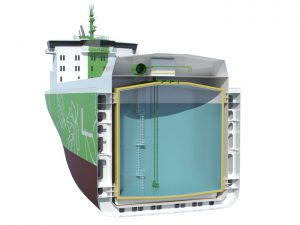
A new multigas carrier design uses the successful B. Delta bulk carrier hull from Finland’s Deltamarin to carry gas in new-generation cylindrical gas tanks developed by Vard affiliate Brevik Technology AS.

The design can be utilized for LNG, LPG, LEG and ethane carriers.

“Up to now gas carriers have been complex and expensive to design and construct. This is not the case anymore as Brevik Technology has developed cylindrical steel tanks, which are separate from the vessel hull,” says Brevik Technology’s Managing Director Øystein Kristoffersen Sæther.

Brevik Technology’s independent gas carrying method challenges the traditional and expensive way of building the vessel and the tanks as one entity. The patented containment design has already been approved by classification societies.

BrevikThe cylindrical tank design allows the tanks to expand in all directions without putting stress on the vessel hull. The independent containment system, which can be built into a vessel as is, results in better possibilities to utilize the existing well-proven ship design.

“This is where the shipowner can get significant benefits by choosing a readily available and highly efficient B.Delta hull design already proven in operation”, says Deltamarin’s Managing Director Mika Laurilehto.

The design based on the B.Delta is actually a bulk carrier design equipped with cylindrical tanks for the gas cargo.
“As a bulk carrier, the vessel is easier and cheaper to build compared to a traditional gas carrier, and there may be many new potential shipyards capable of constructing such a vessel,” says Mr. Laurilehto.

The new design is now available for the market for smaller-scale gas carriers of 31,000 cu.m, with similar designs for medium- and larger-scale vessels to follow.

The design will also be available for retrofit vessels, such as the conversion of a bulk carrier to gas carrier.