Damen Marine Components: Deck equipment and maneuvering systems
Written by Marine Log Staff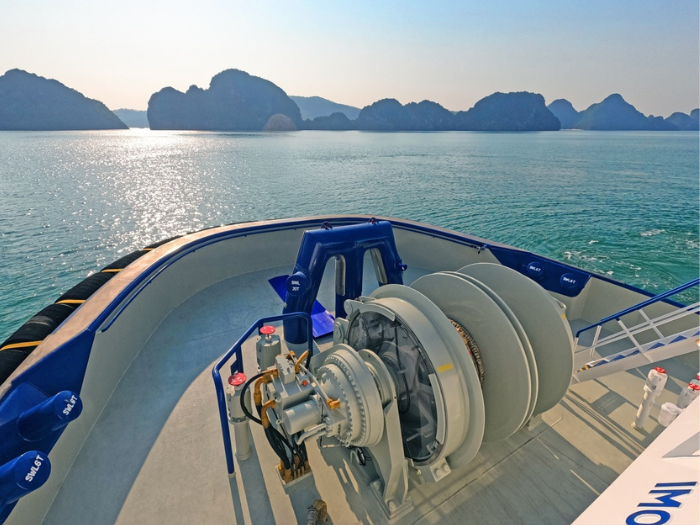
Sponsored Content: As tug operators navigate heavier loads, tighter harbor approaches and increasingly complex assignments, the performance of deck equipment and maneuvering systems has taken center stage. Towing winches, towing pins, tugger winches and integrated control systems must deliver precision and durability every day, in all conditions. Reliability is no longer a differentiator. It is a baseline requirement for vessels that work at the sharp end of port and offshore operations.

In this Q&A, Marine Log editor-in-chief Heather Ervin speaks with Ronald Beekhof, Sales Manager at Damen Marine Components, about how the company’s deck equipment and maneuvering systems are engineered to meet those demands. From robust construction and in house development to full scale testing and global service support, Beekhof details how integrated solutions are designed to enhance control, simplify maintenance and sustain uptime across the global tug fleet.
Heather Ervin (HE): From DMC’s perspective, what are tug owners and captains prioritizing most today when it comes to deck equipment and maneuvering systems?
Ronald Beekhoff (RB): From DMC’s point of view, tug owners and captains focus first on safety, control and reliability. Tug operations are becoming more demanding, with higher loads and more complex man oeuvres in amongst others busy ports. Operators need deck equipment and maneuvering systems that give precise control, even in difficult conditions.
Another key priority is operational continuity. Tug operators want systems that work every day without unexpected failures. Compared to many competitors, DMC offers fully integrated solutions that are designed to work together. This reduces operational risks and helps crews work with confidence.
HE: Tug operations place extreme demands on towing winches, towing pins, and tugger winches. How does DMC design its deck machinery to perform reliably in harsh and unpredictable conditions?
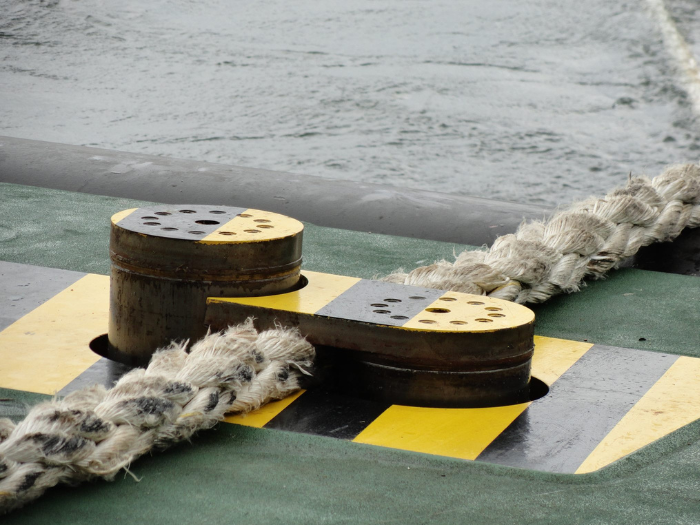
RB: DMC designs its deck machinery to perform under the toughest conditions.. Equipment must handle high dynamic loads, sudden shock forces and constant exposure to seawater and weather. For this reason, DMC focuses strongly on robust construction, high-quality materials, and proven engineering.
HE: DMC emphasizes in-house development and standardized components. How does that approach benefit operators in terms of reliability, maintenance, and lifecycle costs?
RB: In-house development allows DMC to keep full control over design, engineering, and quality. This is a clear difference from competitors that rely heavily on external suppliers. Because DMC designs and produces key components itself, it can ensure consistent performance and reliability. In addition, customization is of course always possible.
The use of standardized components across different products makes maintenance simpler. Operators benefit from easier spare parts management and faster repairs. Over the full lifecycle of the vessel, this approach leads to lower operating costs and higher availability.
HE: How important is testing at DMC’s production facilities in validating performance before equipment reaches the tug market?
RB: Testing plays a central role in DMC’s quality philosophy. All critical deck equipment is tested at DMC’s production facilities before delivery. This ensures that the equipment meets performance, safety, and reliability requirements.
We use extensive functional and load testing. This reduces the risk of issues during commissioning or operation and gives customers confidence that the equipment will perform as expected from day one.
HE: With tug operators often working on tight schedules, how does DMC’s 24/7 global service network—particularly in the U.S.—support uptime and operational continuity?
RB: Tug operators cannot afford long downtime. DMC supports them with a 24/7 global service network, offering fast technical support and access to spare parts. This is especially strong in key tug markets such as the United States. As we reckon short downtime is essential, we see the need of having a service provider in the USA as well. As we speak, we are in the final stage of a collaboration with a service partner who will be able to provide service for all our installed components across the USA.
HE: How do customization and flexibility factor into DMC’s deck equipment offerings, especially as tug designs and operating profiles continue to evolve?
RB: While DMC uses standard platforms, it also offers a high level of customization and flexibility. Deck equipment can be adapted to different vessel types, power levels and operating profiles, such as harbor towing, escort towing or offshore support.
Categories: Inland

![A dual-fuel combustion strategy developed in a Caterpillar marine engine at DOE’s National Transportation Research Center at Oak Ridge National Laboratory shows methanol can efficiently power inland and coastal vessels.[Photo: Genevieve Martin/ORNL, U.S. Dept. of Energy]](https://www.marinelog.com/wp-content/uploads/2026/06/A-dual-fuel-combustion-strategy-developed-in-a-Caterpillar-marine-engine-300x225.jpg)