Legal

VIDEO: Chilean Navy scuttles salvaged ferry

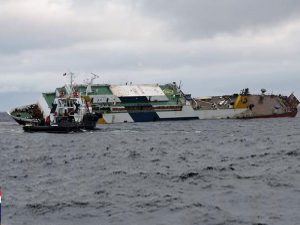
Following the grounding, the ferry, the 126.31 m Amadeo I operated by Navimag, was parbuckled and refloated by Resolve Marine, in an operation that was the subject of a case study presented at this year’s Marine Log Marine Salvage Conference by Sam Kendall-Marsden, Syndicate Director, Charles Taylor and Co. Limited and Todd Schauer, Director of Operations, Resolve Fire & Salvage (Americas), Inc.

Subsequent to the salvage, however, insurers declared the vessel a Total Constructive Loss.

amadeo 500pxThe Chilean Maritime Authority (DIRECTEMAR), which is a department of the Chilean Navy, granted permission for the vessel to be sunk under its supervision in 2,700 m of water, northwest of Puerto Natales and over 70 km off Diego de Almagro Island.

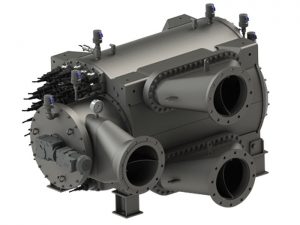
Photo from DIRECTEMAR shows Amadeo I prior to parbuckling operation

The sinking was the final chapter in a story that began in 1976 when the vessel was delivered by Norwegian shipbuilder Trosvik Versted as the Seaspeed Dana. Since then, the vessel had sailed under a variety of owners, flags and names.

According to the Chilean Navy, DIRECTEMAR decided that the vessel should be sunk as hull damage was so extensive as not to allow for safe passage during towing to a port for scrapping. Dismantling the ferry in situ was also ruled out because of the risk of serious environmental impact from what would have been a long operation in a location subject to extreme weather conditions.

The Chilean Navy says that prior planning to ensure compliance with strict precautions for the protection of the marine environment meant that the sinking went “smoothly and according to plan.”

CO2 emissions: Shipping is part of the solution

ICS, whose membership comprises national shipowners’ associations from 37 countries representing more than 80% of the world merchant fleet, has some key messages for government negotiators on the progress shipping is making to reduce its carbon footprint.

According to ICS, the global industry is already delivering carbon neutral growth having reduced total CO2 emissions by more than 10% since 2007, despite an increase in maritime trade.  

CO2 emissions from international shipping now represent just 2.2% of the world’s total CO2 emissions compared to 2.8% in 2007 (UN IMO Green House Gas Study, 2014). 

“These are genuine reductions through fuel efficiency, without the need for complex virtual measures such as carbon offsets,” said ICS Secretary General, Peter Hinchliffe. “With bigger ships, better engines and smarter speed management, the industry is confident of a 50% CO2 reduction by 2050 when the entire world fleet will comprise super fuel-efficient ships, many using clean fuels such as LNG.” 

But in the run-up to the Paris Conference, the shipping industry recognizes that governments expect more.
IMO has already set a mandatory target whereby all ships built from 2025 (including those in developing nations) must be 30% more efficient than ships built in the 2000s.  This applies to over 95% of the world merchant fleet, under new regulations that came into force worldwide in 2013. 

ICS says that IMO is the only place that can ensure that the entire world fleet will continue to deliver further CO2 reductions, regardless of a ship’s flag, while respecting the United Nations Framework – Convention on Climate Change (UNFCCC) principle of “Common But Differentiated Responsibility.” 

ICS stresses that the 10% CO2 reduction achieved since 2007 is across the shipping sector globally, not just ships registered in richer countries which are the only nations required to make commitments for land-based CO2 reductions under the current Kyoto Protocol on climate change. 

“The entire world fleet is about 20% more efficient than in 2005.  With the support of the shipping industry, IMO has already achieved a great deal and is the only forum that can deliver further significant CO2 reductions from international shipping,” said Peter Hinchliffe. 

A new ICS fact sheet “Delivering CO2 Emission Reductions: Shipping is Part of the Solution” can be downloaded HERE

Trojan Marinex books 12 ship BWT retrofit order

“Being the first in the world to have submitted for United States Coast Guard Type Approval, we are committed to providing vessel owners the certifications they need to not interrupt their business of trade,” says Christian Williamson, Senior VP at London, Ontario, based Trojan Technologies. “Ulusoy required not only regulatory compliance confidence but also a solution that was both compact and seamless to operate, minimizing disruption to the vessel and crew. We are very pleased to be able to meet their needs.”

“Trojan Marinex is able to offer a highly valued solution – compact, low power draw systems, an integrated service network, and compliance confidence,” says Mesut Cesur, General Manager, Ulusoy Denizyollari Isletmeciligi A.S. “We are impressed with their commitment to obtain United States Coast Guard Type Approval, and strongly feel that their systems are the best fit for these twelve vessels.”

Trojan Marinex BWT system testing for USCG Type Approval was conducted under the supervision of DNV – a certified Independent Lab (IL) by the United States Coast Guard (USCG). It was conducted in accordance with the EPA’s Environmental Technology Verification (ETV) Ballast Water Protocol — a testing requirement for systems to obtain USCG Type Approval. The system is tested and approved to one of the lowest UV transmittance values in the industry, under full flow conditions, and in all three salinity ranges – fresh water, brackish water, and marine water. The entire product suite has achieved IMO Type Approval and USCG AMS Acceptance. In March 2015, a formal application for USCG Type Approval was submitted – this was the first application in the industry.

The Trojan Marinex BWT combines filtration and UV integrated in a single, compact unit. Thanks to TrojanUV Solo Lamp Technology, the system has an extremely low power draw, making it an attractive solution for large vessels such as bulkers and tankers

Five paths to greener coastal shipping

The program was launched by DNV GL and now also involves 25 partners from the Norwegian maritime industry and the Norwegian authorities.

The pilot projects include several different ship types, and infrastructure with an emphasis on alternative fuel concepts.

“When we launched the Green Coastal Shipping Programme, we said we wanted to make Norway a world showcase for green coastal shipping. With these five pioneering pilot projects we are well on our way,” says Program Director Narve Mjøs.

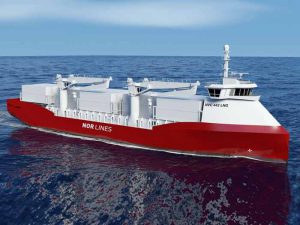
CargoFerry plug-in hybrid: Shipping company Nor Lines will lead the first pilot project, CargoFerry Plug-in Hybrid, which aims to develop a cost-effective and profitable short-sea containership powered by a plug-in hybrid LNG/battery propulsion system. It is a short-sea containership concept with a zero-emission solution during port sailing and operations. After developing the technical concept, the project partners will calculate the vessel’s environmental footprint and carry out a cost/benefit analysis.

Next-generation green shuttle tanker: Teekay Tankers will lead the second pilot project, which will investigate technical solutions for utilizing batteries and VOC (Volatile Organic Compounds) in a shuttle tanker. Battery technology has not been used on this vessel type yet and the project will explore how it could potentially help to optimize operations and reduce the need for installed power. The project partners will also look at the possible use of batteries as a “spinning reserve.”

After assessing the economic and regulatory feasibility of battery-powered shuttle tankers, the project will review new technological solutions for utilizing VOC (volatile organic compounds) produced on board by capturing and condensing the recoverable gases produced during offshore loading. Using the liquid VOC for onboard power generation could reduce total fuel consumption and the environmental impact of the vessel. As VOC are generated during offshore loading, using them as an energy source could offer an additional environmental benefit to reduction in total demand for fuel.

Hybrid ocean farming vessel: The third pilot project, by ABB and the Cargo Freighters’ Association, aims to define an optimized hybrid propulsion system for more energy efficient operations with greater redundancy.

Conversion of cargo carrier into battery-hybrid LNG carrier: This project aims to develop a cost-efficient LNG distribution concept with a hybrid LNG/battery propulsion solution and zero-emission port operations. Converting an existing vessel may provide a cost-effective option for small LNG carriers. The project owners Øytank Bunkerservice and the Norwegian Gas Association will lead the way in developing the technical concept, calculating the environmental footprint and carrying out a cost/benefit analysis.

Pioneering green port project: The fifth pilot project has the objective of developing a low-energy-consumption port with a minimal carbon footprint. Some of the technologies being employed to achieve this include electric heavy-duty vehicles and cranes. The green port will also be equipped with smart gates, offer cold ironing services and charging stations for plug-in hybrid ships.

Risavika Harbor in Stavanger will take the lead in the green port project, developing the technical concept, undertaking a cost/benefit analysis, calculating the environmental footprint and presenting a plan for further development of the concept.