Legal

Optimarin passes U.S. BWTS testing milestone

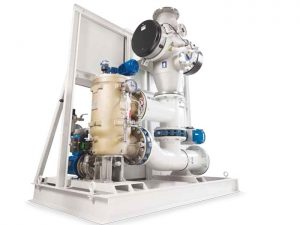
NOVEMBER 11, 2015 — Norwegian ballast water treatment system (BWTS) specialist Optimarin says it has become the first UV system supplier to meet the most stringent USCG marine water requirements, positioning it

Royal Caribbean orders another seven BWTS retrofits


The seven retrofit installations will bring the total number of Hyde Guardian and Guardian Gold systems fitted on RCL group vessels to twenty-seven, including both newbuilds and retrofits.

Hyde Marine has already completed retrofits on over ten RCL vessels, and the orders issued for this next series of vessels will ensure the supply of treatment systems through 2016 in accordance with the compliance dates for each vessel.

The cruise line is one of seven Hyde Marine customers that have installed ten or more Guardian systems.
“Hyde Marine has been a valuable partner in assisting us as we navigate the new regulatory requirements for ballast water treatment,” said Michael Jones, Vice President Supply Chain Management, Royal Caribbean Cruises Ltd. “Our crews are pleased with how easily and reliably the system operates, and with how seamlessly they integrate with existing automation systems.”

“Hyde Marine is very pleased to expand upon our successful partnership with RCL,” said John Platz, President Hyde Marine. “This clearly demonstrates our customer’s continued satisfaction with our products and service, and helps RCL to ensure compliance and commonality in their fleet.”

Hyde Marine has sold more than 430 of its ballast water treatment systems to date. The Hyde Guardian Gold BWTS uses space-efficient filtration and ultraviolet disinfection to treat ships’ ballast water to prevent the spread of invasive species from port to port.

First LNG containership transits Panama Canal

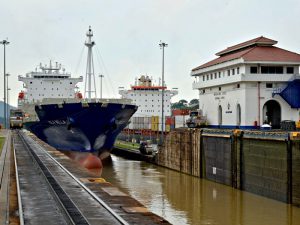
NOVEMBER 4, 2015—The Isla Bella, the world’s first LNG-powered container vessel, transited through the Panama Canal on October 30. The transit by the Isla Bella marks a milestone for the maritime industry

Searchers may have found sunken El Faro

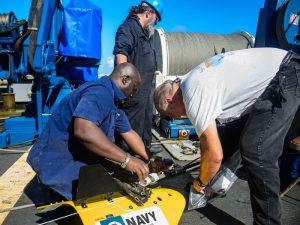
NOVEMBER 1, 2015—The U.S. National Transportation Safety Board reports that a search team on board the U.S. Navy tug USNS Apache has found the wreckage of a ship that they believe to be

CARB: compliance problems with ultra low sulfur fuel oil

ARB staff has found that, without taking precautions, there is a high likelihood of a violation of the sulfur limit with these fuels.

Based on reviews of bunker delivery notes, these fuels, as purchased, are generally reported to be below, but close to, the 0.1% sulfur regulatory limit. However, shipboard in-use samples collected and tested by ARB staff have sometimes been found to exceed the regulatory limit.

The discrepancy could be due to shipboard contamination with high sulfur fuels in tanks or pipes, or other factors.

The ARB this week issued a notice to alert vessel operators that there is a risk of exceeding the sulfur limit when using these fuels, and to suggest possible steps that operators can take to reduce the likelihood of noncompliance.

Download the notice HERE

NTSB: Search fails to locate El Faro pinger

The second stage of the search will now start, attempting to find the vessel using side scan sonar.


The USNS Apache arrived at the last known position of the El Faro on October 23, and began searching for the vessel with a Towed Pinger Locator (TPL).

The search area consists of a 10 nautical mile by 15 nautical mile area, in which the USNS Apache towed the TPL on five search lines across the search area in order to detect the acoustic signal associated with the El Faro’s pinger.

The USNS Apache concluded the first phase of the pinger locator search on October 26, 2015, with negative results.

The NTSB says that the TPL’s ability to detect the El Faro’s pinger may be affected by the orientation of the vessel as it lays on the sea floor or the current condition and functionality of the pinger.

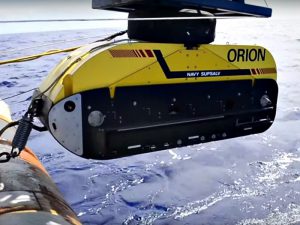
The second phase of the search began yesterday, using the Orion side-scan sonar system. The second phase of the search will be conducted over the same search area. This phase will consist of 13 search tracks and will take about 14 days to complete. The side scan sonar system will be used to locate the El Faro, and if found, create an image of the vessel.

If the ship is found on the sea floor, its Voyage Data Recorder or “black box” can be retrieved to help investigators determine the El Faro’s final moments. It is suspected that the ship sank in Hurricane Joaquin on October 1 and is lying on the sea bottom in 15,000 feet of water near the Crooked Islands in the Bahamas. All 33 onboard are presumed lost.

Fednav takes delivery of first BWTS equipped Laker

The ship, the 34,500 dwt ocean going laker Federal Biscay, is fitted with a ballast water treatment system (BWTS) — a first for ships transiting the Great Lakes, says Fednav, the largest international operator in the Great Lakes/Saint Lawrence Seaway System.

Fednav announced in April that it would equip all 12 ships in its Oshima shipyard newbuild program with BallastAce ballast water treatment systems (BWTS) (see earlier story).

Developed by JFE Engineering Corporation in Japan, the BallastAce system will be effective in both fresh and salt water. BallastAce operates through a combination of filtration and sodium hypochlorite (bleach) injection into the ship’s ballast system.

“This is a pivotal step in protecting the Great Lakes against invasive species and preserving biodiversity in the region,” said Paul Pathy, president and co-CEO of Fednav Limited. “Fednav is proud to be the first shipping company to deploy such systems, and we are pleased that the Federal Biscay is serving as a test ship for this technology.”

Fednav will start using BallastAce in the Great Lakes at the opening of the St. Lawrence Seaway in 2016.

With the assistance of Fednav, the BallastAce system (which is already USCG AMS approved) will continue the necessary testing for full U.S .Coast Guard type approval for fresh, brackish, and salt water at the GSI facility in Superior, WI, and at MERC in Baltimore, MD. During the first six months of 2016, the system installed on the Federal Biscay will be be used for the shipboard testing element of the type approval requirements.

Fednav expects that the IMO Ballast Water Management Convention, to which Canada is a signatory, will most likely enter into force in 2016, the year the U.S. Coast Guard and EPA require the installation of systems on ships trading in US waters.