Q&A: Inside the Jones Act—A working mariner’s view
Written by Heather Ervin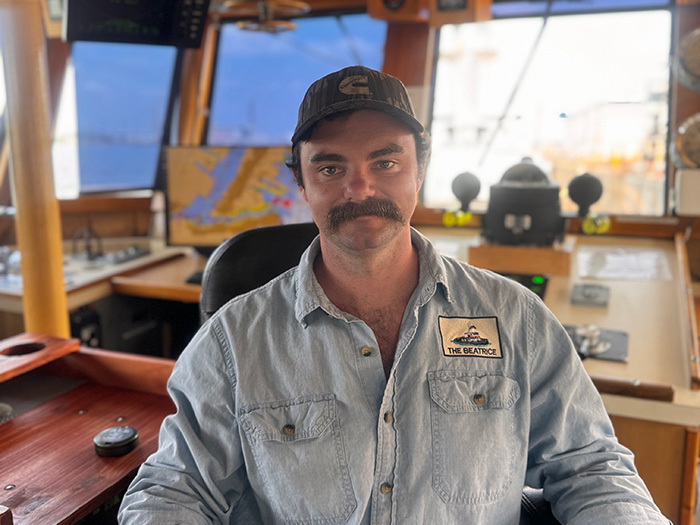
Capt. Reed Richardson
The Jones Act is often debated in terms of economics, trade policy, and domestic shipping costs. But for the thousands of American mariners who work aboard U.S.-flag vessels, the law represents something far more personal: a career, a livelihood, and a vital link in the nation’s maritime workforce.
In this exclusive Marine Log Q&A, Reed Richardson, captain of the ATB Beatrice for Centerline Logistics, shares a mariner’s perspective on what the Jones Act means on the waterfront. Drawing on his experience working in New York Harbor, Richardson discusses the role the law plays in sustaining American jobs, supporting local communities, maintaining maritime expertise, and preserving the workforce that underpins U.S. national security and supply chain resilience. He also offers his views on the challenges of rebuilding the mariner pipeline, the broader impact on shipyards and maritime businesses, and what policymakers should understand about the people behind the industry.
Marine Log (ML): For those who work under the Jones Act every day, what does it actually mean for your career, your family, and your local community?
Capt. Reed Richardson (RR): The Jones Act means everything for my career and family. It has provided a very comfortable life for me, my family, and all other American sailors. Without the Jones Act, I honestly feel we would not have a job. With foreign vessels and crews, what we get paid in a day they will get paid in a month. American sailors are highly trained in what we do on the water, but for the majority of us, especially the hawsepipers, our training and skills do not correlate to any landside jobs. As for our local community, it would suffer. With the comfortable lifestyle the Jones Act allows us to live, we can go out to eat and support many local businesses. Without it, most of us would barely make ends meet trying to start over.
ML: When people talk about changing or repealing the Jones Act, what do you think they misunderstand about the mariners and maritime workforce that support the industry?
RR: I think they misunderstand that it’s not only about cost. It’s about homeland security, safety, and the environment. Who cares more about all that than the hard-working Americans. With the loss of the Jones Act, you lose American sailors. If we were to go into another world war, who is going to man Military Sealift Command vessels or keep the supply chain moving, especially if the war is against the very countries that took over American shipping?
As for environmental, we care about our water ways. We take extra precautions to avoid spills and pollution. Safety wise, we are highly trained in what we do. It took me 10 years to make Captain with many rigorous classes and sea service to achieve it. We also have the local knowledge of our home ports, knowing currents, depths, and a community of operators we work beside that we are willing to help each other out when we need a hand.
I work out of New York harbor, and I’ve seen highly skilled operators from Philadelphia come up here and get in a bind. Now, imagine how a foreign and possibly non-English speaking crew come up and what kind of trouble they could get in. Lastly, we keep our vessels up to the highest standards and are inspected regularly. You will find on foreign flagged vessels this is not the case.
ML: How difficult wouId it be to rebuild the U.S. mariner workforce if a significant number of American flag vessel jobs disappeared?
RR: In my opinion, rebuilding the U.S Mariner Workforce would be impossible. Like I’ve mentioned before, it took me 10 years to become a captain, and it happened for me very quickly. If you lose the workforce, there will be no one training up to fill mine and other mariners’ shoes. It certainly doesn’t happen overnight.
ML: Beyond vessel operators, who else is affected by a strong U.S.-flag fleet? How do shipyards, suppliers, port workers, and other maritime businesses fit into this ecosystem?
I would say everyone would suffer. Shipyards would go out of business. From what I’ve witnessed in a few of my shipyards, stents 99% if not 100% of vessels in the shipyards are American. Foreign vessels do their shipyards abroad to cut cost, which also leads to lack of skilled labor and inadequate repairs. Many marine suppliers would probably go under, too. Foreign vessels will get their supplies from their home countries or China for pennies on the dollar.
ML: The Jones Act is often discussed in terms of economics and trade policy. From your perspective as a working mariner, what role does it play in U.S. readiness, resilience, and national security?
RR: It plays a big role. Without the Jones Act, you lose American mariners, and when it comes down to it, who’s going to fill the spots on the Military Sealift Command boats taking supplies to our Navy and the troops overseas. As for here at home, us American mariners are trained and watch over our ports and coastlines.
ML: If you had the opportunity to speak directly to policymakers debating the future of the Jones Act, what would you want them to understand about the people behind the industry?
RR: I would say to policy makers, who could be better to rely on for looking after our homeland security, supply chain, and maintaining the environment than highly trained American mariners. We care about our country and its well-being.