20,000 seafarers are trapped in the Mid East: IMO calls for safe evacuation framework
Written by Nick Blenkey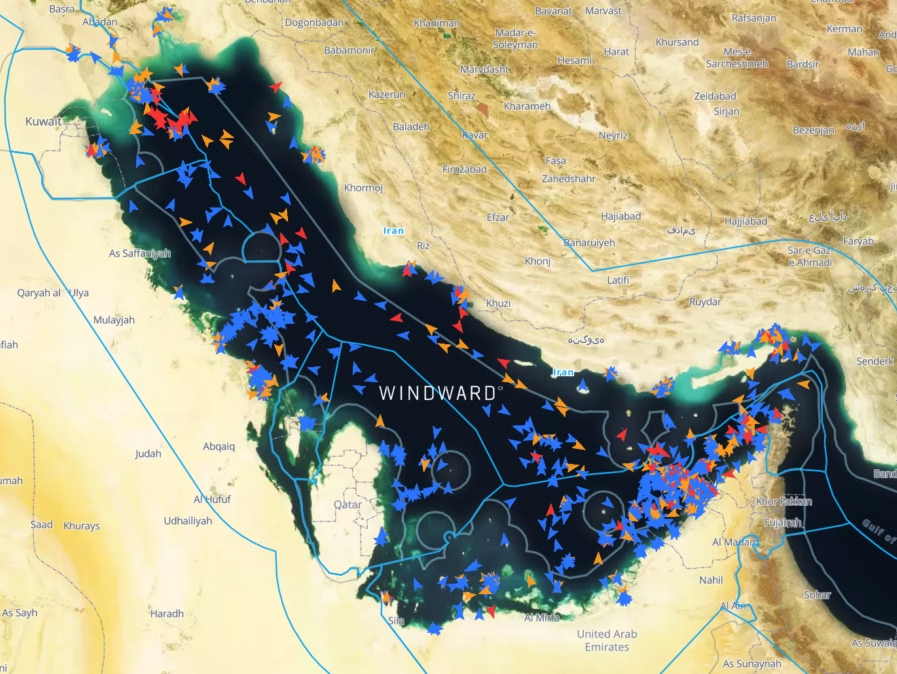
Image: Windward AI
With traffic through the Strait of Hormuz still effectively at a standstill, the IMO Council met from March 18-19, 2026, to discuss the situation in the Middle East and its impact on shipping and seafarers. Among its conclusions was a call or the establishment of a safe maritime framework, as a provisional and urgent measure, to facilitate the safe evacuation of merchant ships currently confined within the Gulf region. (You can read the full record of the meeting HERE).
The aim of the measure is to protect the lives of seafarers and ensure safe commercial shipping by avoiding military attacks.
The Council directed IMO Secretary-General Arsenio Dominguez to take the necessary immediate actions to initiate the establishment of the framework, in collaboration with the relevant parties.
“I am ready to start working immediately in negotiations to establish a humanitarian framework to evacuate all vessels and seafarers trapped. However, for this to materialize, i will need the understanding, commitment and, above all, the concrete actions from all relevant countries and stakeholders,” said Dominguez.
TRAPPED SHIPS FACE FUEL AND WATER SHORTAGES
The realities of the situation are that there are currently about 20,000 seafarers on board ships trapped in the area according to the International Chamber of Shipping—and those ships face not only fuel shortages, but shortages of water on board.
As of March 19, Windward AI identified 1,290 foreign-flagged cargo and tanker vessels inside the Gulf. Activity is now heavily concentrated along the western coast, with the UAE and Saudi Arabia serving as the primary hubs, while operators pull away from the Iranian coastline and prioritize more secure GCC infrastructure.
The current fleet composition highlights which registries, operators, and vessel types continue to maintain a presence in the gulf under these conditions.
Flag registries:
Panama: 379 vessels.
Marshall Islands: 259 vessels.
Liberia: 251 vessels.
Comoros: 217 vessels.
Singapore: 96 vessels.
Ownership and management by country:
China: 480 vessels.
Singapore: 474 vessels.
Greece: 431 vessels.
Marshall Islands: 329 vessels.
Japan: 323 vessels.
Vessel subclasses:
Bulk carriers: 415 vessels.
General cargo: 341 vessels.
Crude oil tankers: 283 vessels.
Oil products tankers: 226 vessels.
Container vessels: 119 vessels.
LNG tankers: 51 vessels.
- Read the full Windward AI report HERE.
Categories: News, Safety and Security