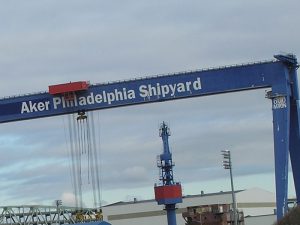
Aker Philly facing higher costs, delivery delays

The company, which is planning to change its name to Philly Shipyard, reported an order backlog of $1,043.2 million as of September 30, 2015, providing for shipbuilding activity with delivery dates through 2018.

In its third quarter report, the company says that it has recently completed a thorough analysis of its production schedule and budgets based on its experiences with the construction activities on the current product tanker program and the purchasing and engineering activities on the two containership’s on order by Matson project.

“As a result of this analysis,” it says, it has “prepared a revised forecast which includes higher costs of construction and later delivery dates for the vessels in AKPS’s backlog than previous forecasts. Corrective actions have been put in place to address some of these additional costs and schedule impacts.”

MORE

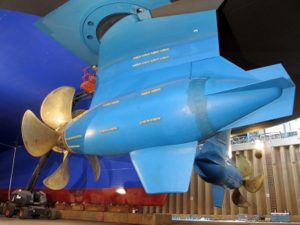
Azipods ordered for two more Carnival Corp. newbuilds

ABB’s delivery will also include generators, main switchboards, a remote control system and distribution transformers.

One of the ships is for Carnival Corporation’s Holland America Line brand and will 99,500 gt, 2,650 passenger sister ship to Koningsdam, currently under construction at the Fincantieri shipyard. It will be delivered in fourth quarter 2018.The other is Carnival Cruise Line’s 3,954-passenger a sister ship to Carnival Vista. It is set for delivery for in first quarter 2018 and will be the line’s twenty-sixth ship

“We are pleased to continue our collaboration with Fincantieri, which is known as one of the world’s leading cruise ship builders. Longstanding customer relationships with leading shipyards such as Fincantieri are testament to our continued dedication to quality and customer value,” says Heikki Soljama, managing director for ABB’s Marine and Ports business.

The collaboration between ABB and Fincantieri spans over 25 years: ABB’s first electric propulsion delivery to Fincantieri was for a Carnival cruise ship in 1990. Since then, 14 ships built by Fincantieri have been equipped with ABB’s Azipod propulsion. Twenty-four of Carnival Corporation’s ships are equipped with Azipod propulsion.

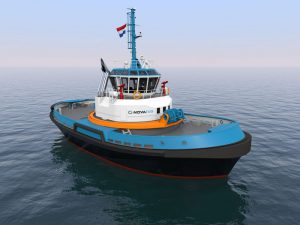
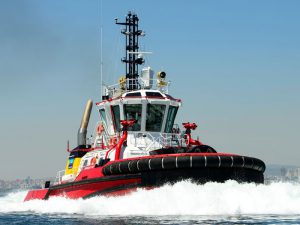
Damen inks deals for Carrousel Rave Tugs and ASD

Additionally, Multraship has also agreed a deal with Damen for a new state-of-the-art ASD 3212 tug as part of its planned fleet expansion

Construction of the CRTs will begin immediately. The hulls of the vessels will be built by German shipbuilder Theodor Buschmann GmbH in Hamburg, with final outfitting carried out by Damen Maaskant Shipyards in Stellendam, the Netherlands. Delivery of the Bureau Veritas-classed vessels is scheduled for first-quarter 2017.

The Carrousel towing system consists of a towing point on a straightforward steel ring, freely rotating around the superstructure of the tug. According to Novatug, a towing load simply cannot capsize a Carrousel tug and the tug’s own hull profile can safely be used for generating braking and/or steering forces, based on the lateral resistance of the hull through the water and given the kinetic energy present in the moving tow and/or the current.

In the CRT, this towing system is combined with the advantages of the RAVE Tug (Robert Allan Ltd. – Voith Escort) jointly developed by naval architectural consultancy Robert Allan Ltd. and Voith Turbo Marine. The unique characteristic of the concept is the longitudinal alignment of two Voith drives, delivering very precise and improved force generation characteristics.

The CRTs have an overall length of 32 m, and a bollard pull of minimum 70 tonnes. Propulsion is via two Voith thruster units and two ABC main engines of 2,650 kW operating at 1,000 rpm. Free running speed is over 14 knots at 5,300 kW.

The CRT’s combination of low operational costs, speed of action and enhanced control over the tow can provide major advantages over conventional tugs, for example by widening or even removing tidal and/or weather windows for certain ports.

Novatug will offer the Carrousel Rave tugs on the basis of long-term bareboat charters, basically a financial or operational lease construction, an arrangement proven in other capital-intensive industries such as aviation. Its customer for the first two units is its parent, Multraship.

Leendert Muller, managing director of Multraship, says, “Safety is always our overriding objective, and that it is why we have opted wholeheartedly to produce the Novatug CRT. This new tug design, for the first time, eliminates what has always been the most significant threat to safety in towing – the risk of capsizing under a tow load. The benefits in terms of efficiency and flexibility, meanwhile, are also enormous.”


carr

Carrousel Rave Tug

ASD TUG

The new state-of-the-art ASD 3212 tug acquired by Multraship — the Dutch-flag, LR-registered Multratug 31 — was built at Damen Song Cam, Vietnam. A sister vessel to Multratugs 19, 29 and 30, it will operate mainly in the Western Scheldt area. It has a maximum bollard pull of 83.2 tonnes and a maximum speed of 15 knots.

The 453 gt vessel is powered by two Caterpillar 3516C engines and has two Rolls Royce Azimuth thrusters and a 2,800 mm-diameter controllable pitch propeller.The vessel’s deck layout features a hydraulically driven escort double drum winch forward and single drum aft, and a 25 mt deck crane. There are two one-man cabins, four two-man cabins, a mess room and galley.

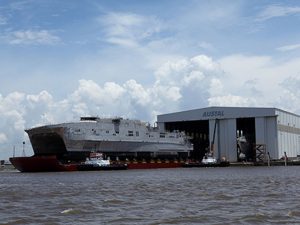
Future USNS Brunswick completes Acceptance Trials

The ship, which was constructed by shipbuilder Austal USA, is the sixth in the EPF class. The EPF class ships were formerly known as Joint High Speed Vessels, or JHSVs. In September, the Secretary of the Navy brought in a new E ship class designator that, in addition to seeing the Joint High Speed Vessel (JHSV) become the Expeditionary Fast Transport, or EPF, sees the Mobile Landing Platform (MLP) become the Expeditionary Transfer Dock, or ESD; and the Afloat Forward Staging Base (AFSB) variant of the MLP become the Expeditionary Mobile Base, or ESB. 

“Conducting Acceptance Trials is a major milestone for the shipyard and the program office,” said Capt. Henry Stevens, Strategic and Theater Sealift Program Manager, Program Executive Office, Ships. “We are very proud of our contractor and government team’s commitment to delivering affordable, quality ships and look forward to the delivery of EPF 6 later this year.” 

The ship’s trials included dockside testing to clear the ship for sea and rigorous at-sea trials during which the Navy’s Board of Inspection and Survey (INSURV) evaluated and observed the performance of EPF 6’s major systems.

Completion of Brunswick’s Acceptance Trials signifies that the ship is ready for delivery to the fleet in the near future.

“We’re proud to have successfully completed acceptance trials for USNS Brunswick, and excited to see the continued improvement ship to ship on this mature program,” said Craig Perciavalle, Austal USA’s president. “Austal’s EPF team continues to do a tremendous job constructing incredible ships and preparing them to enter the fleet.”

The Brunswick is the sixth ship in Austal’s 10-ship $1.6 billion EPF block-buy contract awarded by the U.S. Navy in 2008. Three more under construction at Austal’s Mobile, AL, shipyard.

EPFs are versatile, non-combatant, transport ships that will be used for fast intra-theater transportation of troops, military vehicles, and equipment. EPF is designed to commercial standards, with limited modifications for military use. The vessel is capable of transporting 600 short tons 1,200 nautical miles at an average speed of 35 knots, and can operate in shallow-draft ports and waterways, interfacing with roll-on/roll-off discharge facilities, and on/off-loading vehicles such as a combat-loaded Abrams Main Battle Tank. Other joint requirements include an aviation flight deck to support day and night aircraft launch and recovery operations.

EPF 6 will have airline style seating for 312 embarked forces, with fixed berthing for 104.

The EPF’s large, open mission deck and large habitability spaces provide the opportunity to conduct a wide range of missions.

“We’re excited about the feedback we’re receiving about how well these ships are doing on deployment and about the overall potential of the program,” said Mr. Perciavalle.

In addition to the EPF program, Austal is also building 10 Independence-variant Littoral Combat Ships (LCS) for the U.S. Navy under a $3.5 billion block-buy contract. Three LCS have been delivered while an additional six are in various stages of construction.When it was launched at Austal’s Mobile, AL, shipyard in May EPF 6 was JHSV 6.

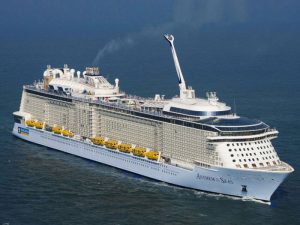
Royal Caribbean orders fifth Quantum class ship

Meyer Werft delivered the second Quantum Class ship, Anthem of the Seas, from its Papenburg, Ems, shipyard in April of this year. The third, Ovation of the Seas, is set for mid-2016 delivery and the fourth is planned for delivery in 2019.

“It is such a pleasure to announce the order of another Quantum-class ship as we are welcoming Anthem of the Seas to North America,” said Richard D. Fain, Chairman and CEO, Royal Caribbean Cruises Ltd. “These ships have been received with excitement, and performed exceptionally well, across the globe. We fully expect that momentum to continue as we add to this innovative class of ships.”

“At Royal Caribbean we are focused on continuously improving efficiency and sustainability, and the fifth Quantum class vessel will be clear evidence of this,” said Michael Bayley, President and CEO, Royal Caribbean International. “Of equal importance is our ability to consistently surpass guest expectations, and we are harnessing the power of the latest technology to do so on this ship.”

Based upon current ship orders, says Royal Caribbean, projected capital expenditures for full year 2015, 2016, 2017, 2018 and 2019 are $1.6 billion, $2.4 billion, $0.5 billion, $2.5 billion and $1.4 billion, respectively.Capacity increases for 2015, 2016, 2017, 2018 and 2019 are expected to be 5.4%, 6.4%, 3.4%, 3.7% and 6.6%, respectively. These figures do not include potential ship sales or additions.

Following are the main particulars of the Quantum Class ships. If the numbers don’t quite convey how big these ships are, take a look at the infographic below, released by Royal Caribbean as the Anthem of the Seas is set to make its New York debut.

Tonnage    168,600 GT
Overall Length    348 m
Width    41.4 m
Decks    18
Engine Output    67,200 kW
Speed    22 kts
Number of Passenger Cabins    2,094
Passengers    4,188

low 1446477685 RC AnthemNYGen vert

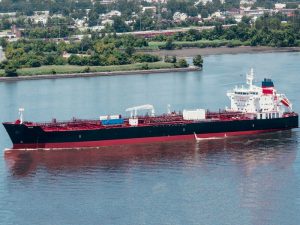
Crowley tanker first to get ABS LNG-Ready approval

The LNG-Ready Level 1 approval was issued, along with an approval in principle for the first vessel in a series built by Aker Philadelphia Shipyard and operated by Crowley Maritime Corporation, the recently delivered Ohio.

By achieving compliance with the ABS Guide for LNG Fuel Ready Vessels, Crowley has the option to convert the product tankers in the series to LNG fueled propulsion at a later date having already been granted a conceptual review.

“ABS has played a fundamental role in supporting the ambitions of the maritime industry as it moves to embrace the opportunity of LNG as fuel,” says ABS Chairman, President and CEO Christopher J. Wiernicki. “This milestone builds upon our work to provide owners with the guidance and support they need to move ahead with shipbuilding projects that allow them the flexibility to respond to changes over the lifetime of their vessels.”

ABS published the Guide for LNG Fuel Ready Vessels in 2014. The LNG-Ready endorsements allow shipowners and yards the flexibility to limit their initial investment while planning for the future conversion to dual fuel or gas-powered combustion engines. A well-thought-out plan can prepare shipowners to face ever-increasing stricter environmental regulations as well as help save time and money by considering basic gas-fueled ship requirements during the preliminary design and minimizing the potential changes during the future conversion.

“Crowley is proud to be the first company to actually receive this designation from ABS,” says Rob Grune, SVP and general manager petroleum services for Crowley. “As our business continues to shape itself to better meet the requirements of our customers, these vessels that stand ready and able to operate on a cleaner, alternative fuel source are our way of anticipating future demands.”

“Working with ABS and Crowley to build the first LNG-Ready product tanker has been a valuable process and has allowed the shipyard to deliver a vessel with the flexibility to evolve in the future” says Scott Clapham, SVP of Aker Philadelphia Shipyard.

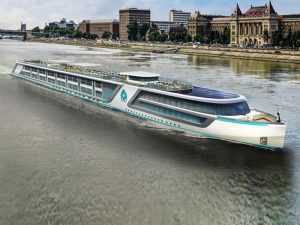
Crystal ups river cruise orders at Lloydwerft, buys Mozart

Crystal Cruises’ parent company, Genting Hong Kong, entered into an agreement to acquire the shipyard in September, investing EUR 17.5 million for 70% of the new shipbuilding business and a 50% ownership of the shipyard’s land.

The decision to double the number of river cruise vessel newbuilds comes just months after Crystal Cruises unveiled its intention to embark on what it calls the “most significant brand expansion in the luxury travel and hospitality history” with the addition of Crystal River Cruises, Crystal Yacht Cruises, Crystal Exclusive Class ocean vessels and Crystal Luxury Air.

President and CEO Edie Rodriguez reported today that in addition to adding two more river vessels at the Bremerhaven shipyard, responding to strong demand from travelers and agents for an earlier Crystal river experience, Crystal has also completed the purchase of the German built MS Mozart, the largest river cruise vessel in Europe.

Following an extensive drydocking to create the upscale Crystal experience on board, the revamped vessel will be renamed Crystal Mozart and start Danube River cruises in July next year.
 

“In response to travelers and travel agents’ enthusiasm for Crystal River Cruises, and through Crystal’s innovation, we are upping the ante once again, bringing ‘true luxury’ to the river cruise sector with the largest guest suites and public spaces, the highest crew-to-guest-ratio and Crystal’s award-winning service,” said Mr. Rodriguez. “Once the transformation of Crystal Mozart is completed, it will truly be the crown jewel of the European rivers.”

Crystal Mozart is designed to fit into the wider locks of the Danube River from Passau in Germany to Budapest in Hungary, and holds the record of being the largest river cruise vessel on European rivers, measuring 75.1 feet wide (22.9 meters), which is double the width of an average industry river boat. The 160-guest capacity Crystal Mozart has window suites of 203 square feet, deluxe suites of 215 square feet, a penthouse suite of 322 square feet and two, two-bedroom Crystal Suites of 860 square feet, the largest suite on any river vessels. Due to its impressive width and size, the vessel’s unique features will remain, such as the public area that spans a single level and yacht-like amenities including multiple dining rooms, a wraparound promenade, a luxurious spa and fitness center, an indoor pool, beauty salon, and library.

The four new all-suite luxury river yachts will debut in June and August 2017, boasting suites of 220 square feet, deluxe suites of 250 square feet, a penthouse suite of 500 square feet and a two-bedroom Crystal Suite of 750 square feet.

The new vessels will feature a Palm Court with dance floor and glass domed roof, a library, fitness center, spa, and sporting equipment such as electric assisted bicycles, kayaks, and jet skis.

Designed with the maximum size to fit into the locks of rivers and under bridges, two of the Crystal River Yachts will cruise the Rhine, Main and Danube rivers with 110 guests. The other two will each have an 84-guest capacity, one will be cruising the Seine River and the other the Garonne and Dordogne rivers as well as navigating through the Gironde Estuary.

Itineraries, fares and bookings for the four new vessels will be available on November 30, 2015 (Cyber Monday).
Cat Marine inks milestone LOI with Turkish tug builder

Caterpillar calls the deal “a significant milestone” that “demonstrates Sanmar’s view that Cat power solutions are not only best-in-class today, but are likely to remain so for the foreseeable future.”

The LOI covers the supply of Cat propulsion engines and generator sets to Sanmar for the shipbuilder’s newbuilding program over the coming three years.

At least 84 propulsion engines and 86 generator sets are expected to be supplied between now and 2018. These will include 26 Cat C32, 22 Cat 3512C and 36 Cat 3516C propulsion engines plus 86 Cat C4.4 generator sets.

The engines will primarily power tugboats with bollard pulls of between 60 and 85 tonnes.

Caterpillar has a long relationship with Sanmar.

“The profile of the tugboat sector is changing,” said Cem Seven, Sanmar’s Managing Director. “Consolidation means there are fewer but larger tugboat operators which are increasingly focused on bigger, more powerful vessels to meet the very best standards on sustainability. Demand is shifting to more innovative tugboats which are capable of meeting the designed bollard pull more efficiently. This is what the Cat engines help us to provide to our customers.”

Mark Harrison, Caterpillar Marine Regional Sales Manager, said: “We are delighted to have this seal of approval from one of the industry’s leaders. Our strategy is to focus of designing products to help our customers be successful. For tugs, that is high reliability at increased engine power with quicker acceleration while at the same time providing lower fuel consumption, lower emissions and increased sustainability. Cat marine engines have proven over many years to deliver this to our customers in the tug boat segment.”

Levent Altun, Group Manager at Borusan, Caterpillar’s dealer in Turkey, added: “Even with the latest design features including advanced control and monitoring systems, Cat engines are renowned for ease of operation and straight forward maintenance. Together with the company’s world-wide network providing constant customer support, Cat marine engines and after-sales services are a perfect blend of state-of-the-art technology and sound human relations.”

Sanmar now provides vessels for many of the world’s leading tug operators and recently built and commissioned a second shipyard in Turkey to handle the growing demand.

This year, Sanmar achieved delivery of 25 tugboats to owners from ten different countries, setting a new company record.

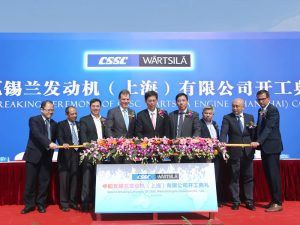
Construction of new Shanghai Wartsila factory begins


After the ground breaking ceremony, CWEC signed strategic cooperation agreements with the Hudong Zhonghua and Shanghai Waigaoqia (SWS) shipyards. It also signed a Letter of Intent ]with SWS for the delivery in 2017 of Wärtsilä Auxpac 32 generating sets for three large container vessels being built at the shipyard.

The CWEC joint venture was established in July 2014 for the manufacture of medium and large bore, medium speed, diesel and dual-fuel Wärtsilä engines. The new factory will be the first in China capable of producing locally large bore medium speed diesel and dual-fuel engines. By being able to produce and deliver locally, the new joint venture will provide CSSC Group and other Chinese shipyards with closer access to the Wärtsilä range of engines with the benefits of faster delivery times and competitive pricing. Wärtsilä’s share of the joint venture is 49 percent.

Products to be manufactured at the new facility will include the Wärtsilä 26, Wärtsilä 32, Wärtsilä 34DF, and Wärtsilä 46F engines, the first of which are expected to be ready for delivery in 2016. The production capacity is planned at 180 engines per year.

“It is an honor and a privilege to celebrate this latest milestone in our joint venture journey. By combining the strengths of our two companies; CSSC’s strong capabilities as the number one ship builder in China and Wärtsilä’s industry leading technologies, we can together make an important difference in today’s challenging global marine market,” said Roger Holm, Senior Vice President, Engines, Wärtsilä Marine Solutions.

This is an important occasion for the shipping industry in China. The new factory will produce state-of-the-art marine engines that will serve our customers with value adding efficiencies. We are pleased to cooperate with Wärtsilä in this exciting joint venture,” said Wu Qiang, President of CSSC.

The CWEC joint venture will target the offshore and LNG markets in particular, both of which are growing significantly in China. It will also serve the large container vessel segment.

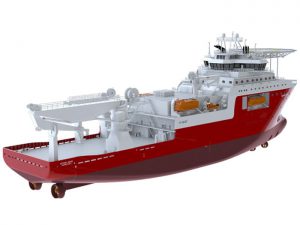
Rolls-Royce wins power and propulsion order for DP3 DSV

Being built to a new Skipsteknisk, Norway, designated ST-246 DSV, the 120 passenger vessel will be fitted with a 24 person SAT dive system and will have a 250 t offshore crane.

Under the contract with the shipbuilder signed by Rolls-Royce, the vessel will be equipped with the latest DP3 control system and four of the latest Bergen B33:45 generating sets. The total delivery also includes main propulsion, tunnel thrusters and remote controls.

The medium-speed Bergen B33:45 main engines, launched last year, offer a 20 percent increase in power per cylinder compared to existing engines in the Bergen range and comply with IMO Tier II and III rules.The B33:45 is designed to run for 25,000 hours between major maintenance when operating at average loads.

The vessel will be fitted with the Rolls-Royce Icon DP3 (Dynamic Positioning System) — the first Rolls-Royce contract for DP3 for a vessel built in China.

DP systems with classification 3 allow for safe and efficient operations in demanding conditions where any loss of position has the potential to result in fatal accidents, severe pollution or damage with major economic consequences.

The Rolls-Royce DP3 system has an award-winning ergonomic design. A unified look and feel to bridge controls ensures safe operation. The control system itself is closely connected with other inboard control systems and easy to integrate into a bridge arrangement. Among the many advantages, according to Rolls-Royce, is that it provides the vessel owner with a system that is easier and faster to install and commission. Fewer service engineers will also be required for service and maintenance of thrusters and controls later in the vessel’s lifetime.

Helge Gjerde, Rolls-Royce, President Commercial – Marine, said: “We are delighted to win this contract in the current difficult market. We are also pleased to welcome Jumeria Offshore as a new customer and we are looking forward to working with them on such an exciting and advanced ship project.”

skipstek 700

LOAD MORE