Team aims to speed availability of LNG as marine fuel

The team, led by Siemens Drilling and Marine, Dresser-Rand and Lloyd’s Register, aims to provide an end-to-end solution, encompassing the entire supply chain, that will remove obstacles that can hold back wide-spread adoption of natural gas as the marine fuel of choice.

“Our integrated solution, encompassing the entire supply chain of LNG including gas-fueled marine propulsion systems, will remove the chicken-and-egg hurdle from the LNG-equation,” says David Grucza, Siemens Drilling and Marine. “This is a disruptive concept for the maritime industry, and the technology exists for immediate adoption. This joint solution is not limited geographically, and we stand ready to support the marine industry globally, although our initial focus is on deploying U.S. shale gas.”

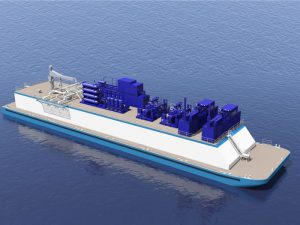
The initial end-to-end solution offered to the North American inland and coastal waterways community comprises the following elements

It has been designed and engineered by Waller Marine Inc. (WMI) and the Shearer Group Inc. (TSGI), respectively, and will be constructed by Conrad Industries shipyard in Texas.

“Together, the team brings a holistic answer to the LNG marine fuel question of what comes first – the bunkering station or the engine?” says David Waller, President, Waller Marine, Inc. “The innovative solution to this industry hurdle includes the entire supply chain from liquefaction, LNG bunkering and design, all while meeting EPA and USCG compliance and providing smart, sustainable, lower greenhouse gas alternative fuels to operators.”

“Lloyd’s Register is well placed to support a new fleet of gas-fueled ships – and help them to operate safely and efficiently,” says Mark Darley, Americas Regional Marine Manager and President of Lloyd’s Register North America (LRNA). “Our expertise and leadership in gas technology and operations – from gas carriers to LNG bunkering and gas as a marine fuel – helps lead to the best decisions based on the best, independent, technical insight.”

Lloyd’s Register has established clear standards describing different levels of readiness to use natural gas as a marine fuel. Lloyd’s Register also provides training on the key practical aspects of modern LNG carriage by sea and risk management services to support safe LNG bunkering.

Siemens AG (Berlin and Munich) is active in more than 200 countries, focusing on the areas of electrification, automation and digitalization. One of the world’s largest producers of energy-efficient, resource-saving technologies, Siemens is No. 1 in offshore wind turbine construction, a leading supplier of gas and steam turbines for power generation, a major provider of power transmission solutions and a pioneer in infrastructure solutions.

Dresser-Rand, a Siemens Business, is among the largest suppliers of rotating equipment solutions to the worldwide oil, gas, petrochemical, and process industries.

Lloyd’s Register (LR) is the leading classification society in the gas carrier market – both for LNG and LPG – and is also taking a leadership role in the international development of gas as a marine fuel.

Waller Marine, Inc. is a global leader in the design of Floating Gas to Liquids (GTL), Floating Power Generation and Floating Liquefaction (LNG) and is is a licensed engineering firm with EPC capabilities.

Conrad Industries Inc. specializes in the construction, conversion and repair of a wide variety of marine vessels for commercial and governmental customers and the fabrication of modular components of offshore drilling rigs and floating, production, storage and offloading vessels.It has been awarded a contract to build a 2,200 cu.m. LNG bunkering barge — the first in the U.S.

The Shearer Group, Inc., founded in 2010, provides naval architecture, marine engineering, marine surveying and professional engineer services to clients in the inland and offshore marine industries.
WinGD DF engines to power MOL LNG newbuild

The vessel will be engaged in a 20-year free-on-board (FOB) off-take of approximately 800,000 tons per year of LNG, sourced from U.S.Gulf liquefaction projects, including the planned terminal near Freeport, Texas.

The official contract for the vessel between MOL and DSME was signed in February 2015 and the decision to adopt WinGD X-DF engines was taken in August. The first engine is due for delivery to the shipyard in June 2017.About WinGD low-pressure DF

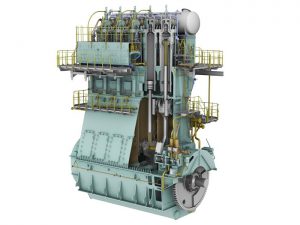
The low-pressure gas admission system used by WinGD on its X-DF engines draws on Wärtsilä’s long experience with what has become a well-proven industry standard technology on medium-speed dual-fuel engines. In contrast to high-pressure gas injection engines that operate on the Diesel cycle, WinGD’s low-pressure DF system works on the lean burn Otto cycle – i.e. ignition of a compressed lean air-gas mixture by injection of a small amount of liquid fuel.

Results from the X-DF technology demonstrator engine that WinGD operates jointly with licensee Diesel United at its Aioi, Japan, factory show that the WinGD low-pressure gas admission is characterized by stable combustion, inherently low NOx emissions and high overall system efficiencies. In terms of NOx, WinGD X-DF engines undercut IMO Tier III limits for Emission Control Areas (ECAs) by considerable margins without any additional measures, such as EGR or SCR.

With low-pressure gas admission the gas fueling system on X-DF engines does not require a high-pressure electrically-driven compressor, reducing equipment costs, onboard energy consumption and maintenance.

“With the imminent implementation of the IMO Tier III regulations in Emission Control Areas for new vessels, we are registering an increasing interest in our X-DF series from markets worldwide, especially for the propulsion of LNG carriers,” says Rolf Stiefel, Vice President Sales and Marketing at WinGD.

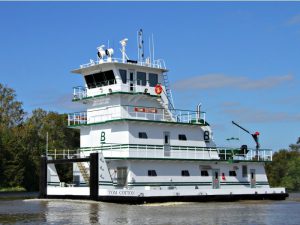
Blessey Marine adds new 1,320 hp towboat

DECEMBER 3, 2015—Privately held Blessey Marine, Harahan, LA, moves liquid bulk cargoes on the U.S. inland waterways using a fleet of 10,000 to 30,000 double-hull tank barges. It transports everything from residual

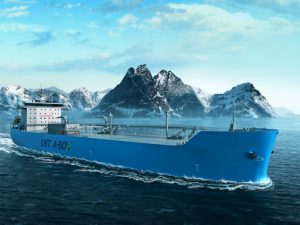
Wartsila solutions chosen for first LNT A-BOX LNG carrier

The vessel is being built for Saga LNG Shipping Pte. Ltd., a new LNG player backed by Shanghai based Landmark Capital, at China Merchants Heavy Industry’s Haimen based shipyard in China’s Eastern Jiangsu province.

Originally, plans were to build the ship at Xiamen Shipbuilding Industry, but, for undisclosed reasons, the project was delayed and to meet strict deadlines with potential end-users, the project was moved to another shipyard.

Now set to be delivered in early 2018, the vessel will be the to utilize the LNT A-BOX containment system (see earlier story), licensed and designed by another company backed by Landmark Capital, LNG New Technologies (LNT).
Wärtsilä has been contracted to supply the complete cargo handling system including the fuel system, as well as the main propulsion system.

The Wärtsilä cargo handling system for LNG carriers has an integrated fuel system utilizing both compressors and forced vaporizing. The automation and safety control systems are state-of-the-art, while the Wärtsilä cargo pumps include the EFP pump series, the latest development for LNG fuel and spray.

The total solution package comprising the cargo and propulsion systems is designed to attain maximum overall efficiency for the vessel, thereby producing notable savings in operating costs. Furthermore, the total solution concept minimizes interfacing and system design risk during the vessel building process.

“This will be a very modern and highly efficient LNG Carrier and we were selected because our technologies in both the propulsion equipment and cargo handling are world leading,” says Timo Koponen, Vice President, Flow and Gas Solutions, Wärtsilä. “The new ship has been designed for worldwide trade of LNG, but with special consideration given to the reloading of cargoes and local and regional trading. Therefore, the cargo handling system and the fuel efficiency of the engine have to be the most efficient possible. Our unmatched track record with proven LNG technologies and dual-fuel solutions was a key factor in the award of this valuable contract.”

Wärtsilä’s scope of supply includes a comprehensive propulsion package comprising a 12-cylinder Wärtsilä 50DF dual-fuel main engine, 6-cylinder and 8-cylinder Wärtsilä 20DF dual-fuel generating sets, a Wärtsilä controllable pitch propeller (CPP), a Wärtsilä Energopac efficiency rudder, a Wärtsilä gearbox, and a Wärtsilä tunnel thruster.

Delivery of the Wärtsilä equipment to the shipyard will commence in late 2016.

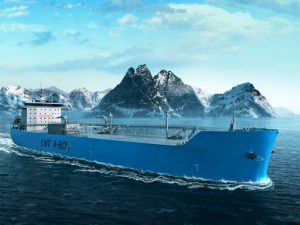
Wartsila solutions chosen for first LNT A-BOX LNG carrier

Wärtsilä has been contracted to supply the complete cargo handling system including the fuel system, as well as the main propulsion system.

The vessel is being built for Saga LNG Shipping Pte. Ltd., a new LNG player backed by Shanghai based Landmark Capital, at China Merchants Heavy Industry’s Haimen based shipyard in China’s Eastern Jiangsu province.

Originally, plans were to build the ship at Xiamen Shipbuilding Industry, but, for undisclosed reasons, the project was delayed and to meet strict deadlines with potential end-users, the project was moved to another shipyard.

lntabox300Now set to be delivered in early 2018, the vessel will be the to utilize the LNT A-BOX containment system (see earlier story), licensed and designed by another company backed by Landmark Capital, LNG New Technologies (LNT).

The Wärtsilä cargo handling system for LNG carriers has an integrated fuel system utilizing both compressors and forced vaporizing. The automation and safety control systems are state-of-the-art, while the Wärtsilä cargo pumps include the EFP pump series, the latest development for LNG fuel and spray.

The total solution package comprising the cargo and propulsion systems is designed to attain maximum overall efficiency for the vessel, thereby producing notable savings in operating costs. Furthermore, the total solution concept minimizes interfacing and system design risk during the vessel building process.

“This will be a very modern and highly efficient LNG Carrier and we were selected because our technologies in both the propulsion equipment and cargo handling are world leading,” says Timo Koponen, Vice President, Flow and Gas Solutions, Wärtsilä. “The new ship has been designed for worldwide trade of LNG, but with special consideration given to the reloading of cargoes and local and regional trading. Therefore, the cargo handling system and the fuel efficiency of the engine have to be the most efficient possible. Our unmatched track record with proven LNG technologies and dual-fuel solutions was a key factor in the award of this valuable contract.”

Wärtsilä’s scope of supply includes a comprehensive propulsion package comprising a 12-cylinder Wärtsilä 50DF dual-fuel main engine, 6-cylinder and 8-cylinder Wärtsilä 20DF dual-fuel generating sets, a Wärtsilä controllable pitch propeller (CPP), a Wärtsilä Energopac efficiency rudder, a Wärtsilä gearbox, and a Wärtsilä tunnel thruster.

Delivery of the Wärtsilä equipment to the shipyard will commence in late 2016.

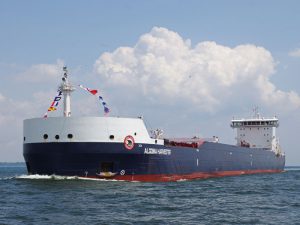
Algoma adds more Equinox newbuilds to order book

Today, Algoma said that contracts for two ships had been made effective with the delivery of refund guarantees by the shipyard, China’s Jiangsu Yangzijiang Shipbuilding Co. Ltd.

“Our search for a shipyard in China to replace the now-bankrupt Nantong Mingde Heavy Industries (“Mingde”) led us to Yangzijiang,” said Ken Bloch Soerensen, President and CEO of Algoma. “We have been pleased with the professionalism and enthusiasm the yard has shown for our project and the quality that they have shown on work done for other shipowners.”

The announcement of the two ship order at Yangzijiang follows a November 25 announcement that contracts for three Equinox newbuilds with Uljanik d.d. of Croatia had become effective with delivery by the yard of security for the contractually required construction installments.

Algoma now has five Equinox Class ships under construction at the Uljanik Group’s 3Maj shipyard in Rijeka.All the vessels will have an overall length of 225.55 metres (740 feet) and a beam of 23.77 metres (78 feet), qualifying as Seaway Max size ships. The vessels will carry 29,300 tonnes at maximum Seaway draft.

The two most recently ordered at Uljanik will feature a boom-forward configuration designed to provide greater flexibility in certain delivery situations. The others will feature a standard rear boom.

The new Equinox vessels will have all of the features of the existing Equinox design, including the exhaust gas scrubber technology pioneered by Algoma on the Great Lakes in its first Equinox Class gearless bulk carriers.

With seven ships now under construction, Algoma expects to invest approximately $450 million in this phase of its fleet renewal program. It is also reviewing its fleet plan and considering the retirement of certain older vessels.

Fincantieri Bay Shipbuilding delivers ATB

DECEMBER 1, 2015 — Fincantieri Bay Shipbuilding (FBS), Sturgeon Bay, WI, has delivered the Articulated Tug Barge Unit (ATB), tug Leigh Ann Moran and tank barge Mississippi, to Moran Towing Corporation. It

Torm returns to the newbuilding market

Today it entered into an agreement to purchase four fuel-efficient LR2 newbuildings from Chinese shipbuilder Guangzhou Shipyard International (GSI) with expected delivery in the period between the fourth quarter of 2017 and the second quarter of 2018. The agreement includes the option to purchase up to six additional vessels within the LR2, LR1 or MR segment with expected delivery in 2018 and 2019.

Torm expects to have a total CAPEX relating to the four firm vessels of approximately $200 million, including extra costs related to Torm’s design requirements and supervision. It says it is in advanced dialogue with potential lenders obtain financing for the newbuildings.

With today’s agreement, Torm has CAPEX commitments of $273 million, covering the remaining CAPEX on its remaining three MR newbuildings, one second-hand MR vessel and the four new LR2 vessels. Torm has a liquidity position of approximately $280 million including available debt facilities of $97 million.

Torm says it has utilized its long-term relationship with GSI and China State Shipbuilding Corporation to source today’s contract. Torm already has 16 GSI vessels in the current fleet and has good technical and commercial experience with them. The new vessels will be constructed according to Torm’s specifications in order to optimize trading.

World’s largest wind farm installer delivered

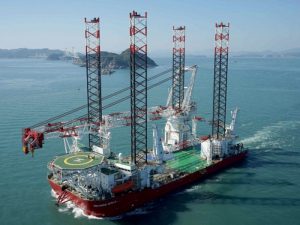
Built for Great Yarmouth, U.K., based Seajacks International, the jack-up vessel is based on the Gusto MSC NG14000X design and has more than 8,000 metric tons of available variable deck load. Equipped with a 1,540-metric-ton Huisman leg-encircling crane and a usable deck space in excess of 5,000 sq m the unit is outfitted with 105-m legs with the ability to install components in water depths to 65 m in North Sea conditions.

The rig is capable of meeting the installation needs of jumbo-monopiles, jackets, and turbines of future wind farms in deeper waters farther from shore.

“Industry growth depends on innovation and new designs,” says ABS Chairman, President and CEO Christopher J. Wiernicki. “As a technology leader, ABS is pleased to work with Seajacks as it develops and launches vessels with increasingly greater capabilities.”

Seajacks CEO Blair Ainslie credits the strong working relationship among the project participants for the successful delivery of this unit.

“The cooperation among Seajacks, ABS and SHI was vital to the success of this newbuild effort,” he says. “As we bring new designs to the market, we rely on partners who are willing to take on projects like this one that break new ground in the industry.”

Since 2009, Seajacks has invested in five self-propelled jackup units, all of which have been classed by ABS. The Seajacks Scylla is a milestone for the company as it is considered to be the most technically advanced installation vessel in the market.

The Seajacks Scylla complies with ABS classification requirements for self-propelled jack-up units, including DPS-2 for dynamic positioning capability; ACCU, which applies to automatic centralized control unmanned units; and CRC for crane register certificate.

In early December, Seajacks Scylla will begin her journey from South Korea to Europe on-board the heavy load carrier vessel, HLV Osprey, and is expected to arrive in Rotterdam around the end of January. Seajacks operations teams will then prepare the vessel for her first project next spring.

Wartsila solutions picked for world’s largest crane vessel


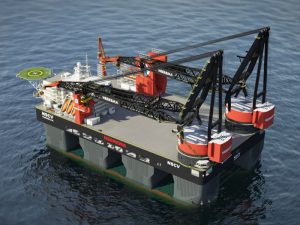
The vessel is being built on behalf of Netherlands based Heerema Offshore Services and when completed will be the largest of its type, and the third largest vessel overall, in the world. The contract with Wärtsilä was placed in October.

“We have a long standing relationship with Wärtsilä propulsion solutions on other vessels in our fleet and look forward to successfully continuing this relationship. We have every confidence that these state-of-the-art thrusters are the right choice for this vessel, which is destined for offshore projects worldwide,” says Sipke Schuurmans, Heerema Offshore Services.

Accurate positioning of the vessel will be ensured by eight 5,500kW Wärtsilä Underwater Mountable thrusters, four of which are also retractable.Wärtsilä has developed these four forward retractable thrusters specifically for this project, and given them the type indication WST-65RU. They feature a unique combination of retractable and underwater mountable functionality.

The thrusters installed at the aft of the vessel are WST-65U underwater mountable thrusters.

The outboard parts of both types are completely interchangeable.

The underwater demounting capability of all eight thrusters means that neither drydocking, nor the use of a habitat is necessary in order to exchange the thrusters.

The thrusters are equipped with Wärtsilä Oceanguard anti-pollution face type seals, which have been selected primarily because of the challenging environments in which these thrusters will operate.

In addition to the thrusters, the full scope of supply includes auxiliaries for steering and lubrication, the control units, and Wärtsilä’s Propulsion Condition Monitoring Service (PCMS).

Wärtsilä will also supply comprehensive centrifugal pump packages.

Delivery of the Wärtsilä equipment will commence at the end of next year.

“Once again, Wärtsilä’s unmatched offering to the marine sector is emphasised with this multi product contract to one of the largest vessels ever to be built. For a large vessel of this type involved in offshore construction work, efficient dynamic positioning is a major requirement. The eight degree tilted propeller shaft solution that is a feature of the Wärtsilä Underwater Mountable thrusters, significantly reduces the interaction between the thrusters and the hull, thereby notably enhancing the vessel’s dynamic positioning performance. This feature, together with the retractability of the thrusters, was extremely important in the award of this valuable contract,” says Arto Lehtinen, Vice President, Propulsion, Wärtsilä Marine Solutions.

The new vessel will be equipped with two cranes of 10,000 tonnes lifting capacity, which is beyond any heavy crane lifting that the marine contracting market currently offers.

The NSCV will be self-propelled with a transit speed of 10 knots.

LOAD MORE