Pioneering New Technologies

Soon, noon-day reporting from fallible human beings will be a thing of the past. From cradle to grave, a whole new approach to ship efficiency has been made possible by recent advances in IT and data processing. Now, a step change in “always-on” ship connectivity will allow maritime assets to be monitored and managed remotely right round the clock.

As we reported in “Shipping’s Space Age Future” (ML April 2016, p. 37), perhaps the most ambitious project on the go in Europe is the Rolls-Royce-led Advanced Autonomous Waterborne Applications Initiative (AAWAI) in which other maritime firms including DNV GL, Inmarsat, Deltamarin and NAPA are also involved. Other participants include top academics from various Finnish universities.

At a project update meeting recently in Helsinki, Rolls-Royce President – Marine, Mikael Makinen declared: “Autonomous shipping is the future of the maritime industry. As disruptive as the smart phone, the smart ship will revolutionize the landscape of ship design and operations.”

Delegates heard that the sensor technology is now sufficiently sound and commercially available so that algorithms required for robust decision-making—the vessel’s virtual captain—are not far away. Now the arrays of sensors are to be tested over the coming months on board Finferries’ 65-meter-long double-ended ferry, Stella.

“Some of the distinct goals of this project are to make a difference in marine safety and energy efficiency,” Päivi Haikkola, Manager, R&D, Deltamarin Ltd., told Marine Log. “We want to mitigate human error.”

Finferries and dry bulk shipping company ESL Shipping Oy are the first ship operators to join the project, which aims to explore ways in which to combine existing communication technologies as effectively as possible for autonomous ship control. Inmarsat’s involvement is key.

The London-listed communications company recently began the roll-out of its new Fleet Xpress service, seen by many as truly a light-bulb moment. Preparing the ground for rapid advances in smart ship operation and crew welfare, the new service now provides always-on high-speed broadband communication between maritime and offshore assets at sea, and shore-based managers. It is the first time that such a service has been available from a single operator.

Fleet Xpress will also facilitate cloud-based applications from third parties with smart systems to raise ship operating efficiency and improve the life-quality of seafarers. For the first time, big data can be used to improve asset management and maintenance.

IT advances have also facilitated a new approach to ship design. Model basins and testing tanks still have their place, of course, but thousands of relatively high-speed computational iterations can measure the relative benefits of small design changes in a way that has not been possible before.

Take the Finnish company Foreship, for example. Its capabilities in computational fluid dynamics (CFD) and the super-efficient hull forms which it has developed have propelled the company into a position as one of the top ship design consultants to global cruise lines, advising both on newbuilding plans, conversions and retrofits.

In a couple of months, the first of two 4,700 dwt “EcoCoaster” cargo ships is due for delivery to Finland’s Meriaura Group from the Royal Bodewes yard in the Netherlands. Foreship carried out extensive hull optimization work and, as a result, these vessels will burn only about half of the fuel compared to an existing vessel of similar size and class.

Foreship worked with both the owner and Aker Arctic Technology on the ships which will be able to run on biofuel or marine gasoil. Meriaura plans to have at least half of its fleet – currently about 20 ships – based on EcoCoaster designs by 2020. Since ordering the 4,700 dwt units, work has been carried out on larger designs.

Also hailing from Finland is progressive ship design firm Deltamarin. Now a subsidiary of Singapore-listed AVIC International Maritime Holdings Limited and ultimate Chinese ownership, the company’s range of super-efficient B.delta bulk carriers spanning a size range from 28,000 dwt to 210,000 dwt has caught the attention of long-established dry bulk owners including heavyweights such as Algoma, Canada Steamship, Cosco, Louis Dreyfus Armateurs and Oldendorff.

Of course the catalyst for taking a fresh look at the hull forms which had not changed for decades was the spike in bunker prices. But although the oil price collapse means today’s fuels cost only a fraction of prices two or three years ago, the search for improved economy has developed a momentum of its own, and nowhere is this more obvious than amongst leading propulsion companies, many of which are to be found in Europe.

While big low-speed diesel manufacturers like MAN Diesel & Turbo and Wärtsilä have made huge strides in raising the fuel efficiency of large engines, it is among some of the smaller niche machinery providers where true design innovation is to be found. Electrical power, energy storage and the growing popularity of azimuth thrusters are fiercely fought-after markets. ABB, Rolls-Royce, Steerprop, and Wärtsilä all feature in a market popular with operators of cruise ships, workboats, offshore support vessels and dynamically positioned offshore units of various types.

ABB, for example, recently won a European Marine Engineering Award for its Azipod D electric propulsion system with a power range from 1.6MW to 7MW. Launched last year, the latest Azipod was designed to allow its use on a wider range of ship types. It incorporates various innovative features including a new hybrid cooling system which contributes to a requirement for 25% less installed power and similar fuel savings.

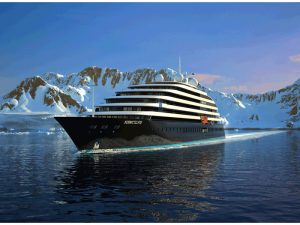
The first cruise ship with Azipod D will be the 16,800 gt Scenic Eclipse being built by Uljanik shipyard in Croatia. The Scenic Eclipse (pictured above) is being built to Polar Class 6 and will operate in the summer waters of the Polar regions when it is delivered in 2018. The 228-passenger ship will have two 3MW Azipods installed.

Meanwhile, ABB recently announced a deal to supply a new electrical power system based on its Onboard DC Grid system for a hybrid car ferry in Norway. Initially the vessel, for Torghatten Trafikkselskap will operate as a hybrid with two battery packs contributing to peak demand. However, the 60-car, 250-passenger vessel can be easily modified to become fully electric in due course by adding 16 battery packs and a shore connection.

For the cruise ship and offshore vessel markets, Wärtsilä recently unveiled the Wärtsilä WTT-40 transverse thruster, which features a 4,000 kW power level and a 3,400 mm diameter controllable pitch propeller. The thruster complies with the U.S. EPA’s latest VGP2013 regulations. It also features integrated hydraulics to save machinery room space and installation and commissioning time in the shipyard.

Meanwhile, last year Steerprop Ltd. landed orders for a total of ten SP25D units to serve as main propulsion for three inland towboats being built for SCF Marine at C&C Marine & Repair, Belle Chasse, LA. The propulsors will be delivered this summer to the shipyard by Karl Senner, LLC., Kenner, LA, the North American distributor for Steerprop. These will be the largest and highest horsepower inland towboats equipped with Z-drives built in North America to date, according to Chris Senner of Karl Senner, LLC.  He adds, “It is imperative to consider the harsh conditions of the inland waterways and select a unit suited for the environment, which is why we propose the equivalent of an ice-class rated unit.”

A new generation of much more fuel and operationally efficient newbuilds, however, does nothing for the tens of thousands of existing vessels built before the new wave of design innovation began. But there are a range of initiatives in progress focused on enhancing existing ship efficiency.

Becker Mewis DuctGermany’s Becker Marine Systems is a leading light in energy-efficient retrofits and appendages. The company recently signed a deal with Abu Dhabi’s Adnatco to fit some 20 vessels with Becker Mewis Ducts (pictured at right). Rudder modifications and Becker Twisted Fins are also generating a steady pipeline of sales.

Walter Bauer, Sales Director, concedes that sales volume has reduced. But he says that this is partly a result of the dire state of the bulk carrier market. Tanker business, he says, is holding up well.

But what to do with almost-obsolete panamax container ships? Owing to beam constraints, they are generally long and relatively thin, and were mostly built in an era of cheap fuel and fast sailing speeds. They are not particularly efficient from a box-carrying point of view, but are in dire straits today, competing with larger ships and lower slot costs. There are more than 800 such vessels in the world fleet today and well over half are less than 10 years old. They are likely to prove increasingly unpopular with charterers.

Cargo access specialist MacGregor is one of several companies which offers capacity increasing conversions for container ships. By slicing a vessel in half lengthways, a newly constructed midship section can be inserted and stack heights raised by lifting the navigation bridge.

In a similar project, the capacity of the 4,860 TEU MSC Geneva, owned by Reederei NSB, was increased to 6,300 TEU. The five-month widening project, undertaken in close cooperation with Hamburg’s Technology GmbH, was completed at Huaran Dadong Dockyard in China. Through its subsidiary NSB Marine Solutions, Reederei NSB is now offering to assist in similar projects for third parties.
 

America’s Cup race returns to New York

May 6, 2016 —The America’s Cup will return to New York City this weekend for the first time since 1920. Part of the Louis Vuitton America’s Cup World Series, the event is

Harley Marine orders two ATB tank barges from Gunderson

APRIL 28, 2016—Gunderson Marine, Portland, OR, has secured an order to build two 82,000 bbl, 430 foot-long Articulated oceangoing tank barges for Harley Marine Services, Inc., Seattle, WA.  Gunderson last built a

WWL adds new HERO Class vehicle carrier

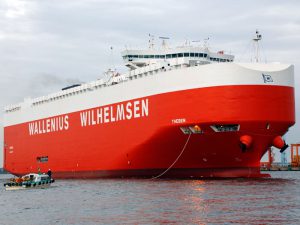
APRIL 21, 2016—Wallenius Wilhelmsen Logistics (WWL) has added to its latest generation of Roll-on/Roll-off vehicle carriers with the addition of the M/V Theben, the third in a series of eight High Efficiency

Twin Disc for new class of SEACOR Fast Supply Vessels

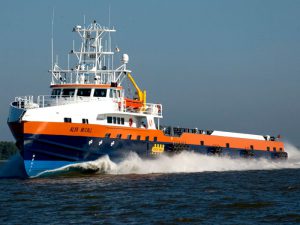
APRIL 21, 2016—Delivered last year by Gulf Craft, one of SEACOR Marine’s newest Fast Supply Vessels, 13,500 hp Alya McCall, relies on five high-performance Twin Disc MGX-61500SC QuickShift transmissions to provide the

Singapore controls high value fleet

APRIL 20, 2016—Singapore owners control one of the largest fleets, in terms of value, writes Craig Jallal, Senior Data Editor at VesselsValue. This week is Singapore Maritime Week 2016, when the city-state

Ballast Water: Early Feedback

As designers, builders, vendors, owners and operators seek direction on meeting new and forthcoming regulations, ABS’ goal is to provide practical solutions that meet the requirements in a safe manner.

Services are based on a strong foundation of research and real-world experience from engineers and surveyors. But one of the most important factors is feedback from members and clients. The information they provide is vital to the process of continually improving ABS Rules, Guides and technical advisories.

Recently, ABS brought together 15 shipping companies to discuss lessons learned as early adopters of ballast water management regulations. This forum was different from many other meetings hosted by ABS – our role was to serve as facilitator of a larger industry discussion on how to safely, effectively and efficiently meet these important environmental requirements.

Sharing technical lessons learned will prove invaluable in the long term. As regulators begin to enforce requirements and class societies deliver appropriate standards and technical advice, industry will be able to take the necessary steps to comply.

TECHNICAL SPECIFICATIONS
A key area throughout the discussion was the need to develop appropriate technical specifications during Ballast Water Management System (BWMS) selection.

Topics discussed included integrating the BWMS into overall ship’s automation systems, software modifications as this new technology matures, and the potential impact of a BWMS on the performance of a ship’s auxiliary systems.

In general, participants agreed shipowners need to ensure the technical specifications are thorough, must identify responsible parties, and should carry out some type of operational test to make sure the equipment, when delivered, is able to operate for an entire ballast cycle. A strong recommendation from all the owners was to think carefully about the degree of integration between the new and existing systems, with the prevailing wisdom being that simpler is better.

DESIGNING, INSTALLING AND COMMISSIONING
During the course of the forum, several case studies were discussed to review lessons learned from recent projects. These case studies covered various types of vessel for retrofit and new construction projects, delivering key lessons learned to help inform future efforts.

While each experience was unique to individual vessels and system types, common problems included prefabricated piping errors, software issues and insufficient electrical power for auxiliary systems. Participants commented that 3D scanning and the use of experienced pipe fitters would reduce installation delays.

OPERATION, IN-SERVICE SUPPORT, AND MAINTENANCE CHALLENGES
Important operational concerns also were discussed during the forum. Adequate system testing during commissioning often was prevented due to delivery schedules, which in turn impacted post-delivery operations. Participants reported piping leakage issues, sensor and instrument failures, frequent software modifications and irregular vendor service as opportunities for improvement in the process. Many of the issues discussed could be addressed through diligent installation planning and a solid post-installation operating/troubleshooting strategy.

Participants focused on the importance of an agreement with the shipyard or installation contractor that includes sufficient testing to indicate the BWMS will achieve the discharge standards during the first year of operation.

Modification of computer-based controls software was also a significant concern because changes could invalidate the type approval certificates. ABS Steel Vessel Rules also cover requirements for software modifications. Concerns were also raised that the systems, particularly on tankers, precluded load and discharge of ballast by gravity and frequent filter backflushing, both of which increase operational cycle times.

LOOKING TO THE FUTURE
Forum participants agreed that the lessons learned should be shared with industry peers and regulators. It is imperative to bring together knowledge and experience to develop sustainable technologies and practices.

Looking to the future, ABS will host follow-on discussions to continue our efforts to aide industry and serve as the nexus for information sharing.

In our role as a trusted advisor to industry on environmental, operational and efficiency issues, ABS strives not only better inform our own standards but also to aid industry in closing the gap between compliance with new regulations and the sustainable use of technology.


Shipping’s space age future


Looking like a teaser for an upcoming Star Trek movie, a six-minute video posted by Rolls-Royce last month lays out its high-tech vision of unmanned cargo ships and the future of shipping.

At the heart of that vision is a sophisticated, cutting-edge, land-based control center with interactive smart screens, voice recognition systems, and 3D holographic images of the ship and its equipment. An officer sits in a command chair before the “OX global wall,” which provides a worldwide overview of shipping traffic. Flying drones launched from the unmanned ship are the operator’s eyes in the sky to monitor navigation, security, weather and inspect the ship itself.

In the video, Rolls-Royce envisions a small crew of 7 to 14 people that will monitor and control the operation of a fleet of vessels across the world.

Last year, Rolls-Royce announced it would lead the Advanced Autonomous Waterborne Applications Initiative—a new EURO6.6 million project to explore, develop and design autonomous ships.


Tekes, the Finnish Funding Agency for Technology and Innovation, is providing the funding for the project, which will run until the end of 2017.


The Advanced Autonomous Waterborne Applications Initiative (AAWAI) brings together expertise from academia and industry. The participants include Finnish academic researchers from Tampere University of Technology, VTT Technical Research Centre of Finland Ltd, Åbo Akademi University, Aalto University, and the University of Turku. Besides Rolls-Royce, industry participants include NAPA, Deltamarin, DNV GL and Inmarsat.

Iiro Lindborg, Rolls-Royce’s General Manager, Remote & Autonomous Operations, Ship Intelligence, says, “unmanned and remote-controlled transportation systems will become a common feature of human life. They offer unprecedented flexibility and operational efficiency.” Lindborg says the research “aims to understand the human factors involved in monitoring and operating ships remotely. It identifies ways crews ashore can use tools to get a realistic feel for what is happening at sea.”

The video is the final stage of research that will inform the design and construction of a project demonstrator before the end of this decade.

An effective remote operations center is essential to the company’s plans to develop autonomous and remote controlled vessels.

Eija Kaasinen, Principal Scientist at VTT Technical Research Center of Finland Ltd., points out that unmanned ships doesn’t take humans out of the picture totally. “Unmanned ships need to be monitored and controlled and this will require entirely new kinds of work roles, tasks, tools and environments. The future shore control center concept has been designed by emphasizing the user experience of the human operators. By focusing on the operators’ point of view, it is possible to introduce meaningful, pleasurable and engaging new roles for the ships’ shore control center professionals.”

The research was undertaken by VTT and University of Tampere research centre TAUCHI (Tampere Unit for Computer Human Interaction) in collaboration with Rolls-Royce. It explored the lessons learned from other industries where remote operation is commonplace, such as aviation, energy, defense, and space exploration.

It uses the InnoLeap approach, a VTT and Rolls-Royce-developed initiative for concept design and presentation of academic studies in a graphic format that is based on trend and user studies, co-innovation, scenario stories and visualizations.

On April 5, in Helsinki, Finland, Rolls-Royce will reveal separate research findings, which it believes will set the direction for the development of remote and autonomous shipping.

Remote and autonomous ships are one of three elements of the company’s Ship Intelligence strategy, a portfolio of products and services – comprising health management solutions, optimization and decision support, and remote and autonomous operations – which intended to enable customers to transform their operations by harnessing the power of big data.

Rauli Hulkkonen, Tekes, Chief Advisor, thinks the project is a “fantastic opportunity to establish the Finnish maritime cluster as the world leader in maritime remote control technology.”


Esa Jokioinen, Head of Rolls-Royce’s Blue Ocean Team, says, “We are excited to be taking the first concrete steps towards making remote controlled and autonomous ship applications a reality.”


The Rolls-Royce Blue Ocean team is responsible for R&D of future maritime technologies.

Rolls-Royce is not alone in investigating the feasibility of unmanned ships. The European Commission has just completed work on project MUNIN (Maritime Unmanned Navigation through Intelligence in Networks) to develop concepts for unmanned ships. The EURO3.8 million MUNIN project focused on a dry bulk carrier concept, which typically carry cargo point-to-point on long, uninterrupted deep-sea voyages.

The goal of the projects is to reduce crew costs, lower environmental impact, and reduce the number of collisions. Human error plays a role in about 80 percent of maritime accidents.

MUNIN says that the issues of cyber attacks and pirates are a cause for concern. “However, software systems as well as ships can be designed and built providing a very high resilience against digital and physical attacks.”

HUNTING SUBS BY DRONE SHIP
Drones have been used effectively on the military side for years for surveillance, reconnaissance, and military strikes. Last month, the Defense Advanced Research Project Agency (DARPA) reported that its Anti-Submarine Warfare (ASW) Continuous Trail Unmanned Vessel (ACTUV) program has designed, developed and constructed an entirely new class of ocean-going vessel—one intended to traverse thousands of kilometers over the open seas for months at a time, all without a single crew member aboard.

The ACTUV technology demonstration vessel was recently transferred to water at shipbuilder Vigor Industrial, Portland, OR, and conducted speed tests in which it reached a top speed of 27 knots (31 mph/50 kph).

The ACTUV would be used to track quiet diesel-electric submarines.

The vessel is scheduled to be christened on April 7, 2016, with open-water testing planned to begin in summer 2016 off the California coast.


Getting into the Swing of Things


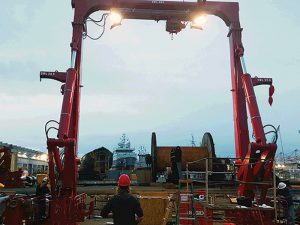
With the goal of improving the safety and capability of the marine research industry, Allied Marine Crane, a division of Allied Systems Company, has developed the A-Stern A-Frame. Hydraulically powered, the A-Frame is used to launch and recover trawls, dredges, and ROVs. Its crossbeam rotates freely as it deploys, ensuring that the load—the unit has a 30,000 to 40,000 lb dynamic load capacity—and lighting are properly oriented throughout the entire range of motion.

Last year, the innovative unit was successfully fitted onto the R/V Sikuliaq. The vessel, owned by the National Science Foundation and operated by the University of Alaska Fairbanks School of Fisheries and Ocean Sciences, conducts oceanographic and fisheries related research in polar and sub-polar regions.

Allied says, the A-30 Stern A-Frame’s maintenance position allows crew to access the crossbeam from the deck at a standing height furthering safety during setup and rigging.

The provider also supplied the U.S. Navy’s Office of Naval Research vessels the 238 ft Neil Armstrong and Sally Ride with two sets of crane components. The Neil Armstrong is being operated by the Woods Hole Oceanographic Institution, while the Sally Ride is currently operating for the Scripps Institution of Oceanography at the University of California San Diego.

Under the contract, the company designed and manufactured an identical set of handling equipment for each vessel. The units consisted of a davit; the Stern A-frame; a telescoping knuckle-boom crane; a starboard side handling system and a CTD handling system—both of which extend all the way to the waterline for more stability when loading; a portable telescoping knuckle-boom crane—among the first of its kind in the industry, the unit can be bolted down to a standard UNOLS mounting pattern anywhere on deck and can be removed when its not needed; and two hydraulic power units.

RappBREAKING INTO A NEW NICHE
Rapp Marine U.S. has taken a huge innovative step forward, developing, what its President Johann Sigurjonsson calls “an ideal tow winch for the market.” Having long been a developer and supplier of electric and hydraulic driven mooring winches, anchor windlasses, capstans, and cranes, Rapp Marine worked closely with Baydelta Navigation Ltd. to develop a towing winch that would be long lasting and dependable for the tug market.

Rapp Marine is supplying a unique, fully electric driven double drum tow winch for a new 110 ft x 40 ft tractor tug operated by Vessel Chartering LLC, a wholly owned division of Baydelta Navigation Ltd. The tug was designed by Seattle-based Jensen Maritime and will be built at JT Marine Shipyard, Vancouver, WA.

The winch, the first fully electric driven tow winch delivered by Rapp Marine, will be able to pull over 75 tons and use pneumatic cylinders in place of hydraulics—to keep fluid off the deck.

According to Rapp Marine, the winch will be driven by a single 100 hp electric motor with the ability to clutch in and out each winch drum. The clutches and brakes will be actuated remotely through either control panels or manually on the winch.

The winch will be primarily controlled in the wheelhouse using Rapp Marine’s Pentagon Tow Control System, which provides for a more efficient and safer operations for towing vessels. The system includes Auto Tensioning, automated haul-in and pay-out settings, in addition to touchscreen displays showing tension and wire length.

Rapp Marine says the winch can store up to 2,500 ft of 2.5 inches of Steel Wire Rope and 90 ft of 3 inch chain on the storage drum. The unit will also include a 10 HP electric “come home” drive. The drive can be used as a back up if the main motor should fail.

SELF-ALIGNING ESCORT WINCH
No stranger to innovation, the man behind the innovative training tug, the BRAtt, Captain Ron Burchett, and his company, Burchett Marine, recently delivered three new scale model tugs to Warsash Maritime Academy in Southampton, UK.

The 8,000 hp, 42m ASD tug models were equipped with the latest winch technology from JonRie InterTech—including a JonRie’s patented self-aligning escort winch.  

During testing of the winch at the Academy, the model was able to stop a 44 ft long containership model at a speed of 10 knots. Captain Burchett will return to the Academy later this summer for Round 3 of testing at the 12 to 15 knot range.

The winch, says JonRie, was redesigned to accommodate a new 3-speed Hagglunds motor—this would allow for faster retrieval speeds. The motor will have the capability to free wheel each individual cam ring which comes complete with JonRie’s Render Blocking enabling render speeds to exceed 120 m/min. The tug’s dynamic stability was further enhanced by the righting lever supplied by the winch.

The winch’s hydraulic braking system is rated for 300 tonnes.

Additionally, the winch, explains JonRie’s Brandon Durar, is bolted to its rotating foundation to help prevent distortion to the drive from welding. The winch also contains a load tension read out system and JonRie’s foot control for a hands-free operation.

MACGREGOR WINS CONTRACTS FOR ESL SHIPPING CARRIERS
MacGregor, part of Cargotec, recently won a contract to deliver hatch covers, cranes, deck machinery and steering gear to two 25,600 dwt dual-fueled handysize bulk carriers being built for Finland’s ESL Shipping at China’s Sinotrans & CSC Shipbuilding Industry Cooperation’s Quingshan shipyard.

As part of the deal, MacGregor will provide three K3030-4 mechanical grab cargo cranes with a safe working load of 30 tonnes at 30 m outreach. Additionally, the group will provide the design and key components package for multi folding-type hatch covers (6+6), electrically-driven Hatlapa deck machinery and Porsgrunn steering gear.


As Easy as Building ATBs

Nichols Brothers Boat Builders recently completed sea trials on the second of 10,000 hp oceangoing tugs for Kirby Offshore Marine, the coastal tug and barge arm of Kirby Corporation, Houston, TX. The 136 ft x 44 ft tug, Tina Pyne, will be connected to the 185,000 bbl ocean tank barge 185-02 built by Gunderson Marine, Portland, OR.

Kirby’s newbuild plan also includes two 155,000 bbl/6,000 hp Articulated Tug Barge (ATB) units under construction at Fincantieri Bay Shipbuilding in Sturgeon Bay, WI, as well as two 120 ft x 35 ft, 4,894 hp tugs being built by Nichols Brothers Boat Builders. Each tug will be powered by two Caterpillar 3516C engines, each rated at 2,447 hp at 1,600 rev/min, with Reintjes reduction gears turning two Nautican fixed-pitched propellers with fixed nozzles. The Reintjes gears were supplied by Karl Senner, LLC, Kenner, LA. The tugs will also have two C7.1 Caterpillar generators for electrical service. Selected deck machinery includes one TESD-34 Markey tow winch, one CEW-60 Markey electric capstan, and one Smith Berger Tow Pin.

Kirby Offshore Marine is the largest U.S. operator of coastal tank barges that provide regional distribution of refined petroleum products, black oil and crude oil. Kirby grew its coastal marine transportation business through the acquisition of K-Sea Transportation Partners L.P. back in 2011 in a transaction valued at about $604 million. At that time, Kirby acquired 58 tank barges (only 54 were double hull) with a capacity of 3.8 million barrels and 63 tugs.

Already the operator of the largest inland tank barges and towboats, Kirby Corporation will grow further with the purchase of Seacor Holdings Inc.’s inland tank barge fleet for about $88 million in cash.

Under the terms of the deal struck last month, Kirby will acquire 27 inland 30,000 bbl tank barges and 13 inland towboats, plus one 30,000 bbl tank barge and one towboat currently under construction. As part of the agreement, Kirby will transfer to Seacor the ownership of one Florida-based ship-docking tugboat.

Kirby Inland Marine currently has 898 active inland tank barges and 243 towboats, with a total carrying capacity of 17.9 million barrels. The primary cargoes transported by this fleet are chemicals, petrochemical feedstocks, gasoline additives, refined petroleum products, liquid fertilizer, black oil and pressurized products.

Kirby President and CEO David Grzebinski, says “Operating primarily in the refined products trade, these assets will be complementary to our existing fleet and will allow us to continue to enhance customer service.”

TRIPLE-SCREW BOATS FOR MID-RIVER
Over the years, Rodriguez Shipbuilding, Inc.’s triple-screw towboats have won a following operating in the shallow waters where the Mississippi River meets the Gulf of Mexico. These Lugger-type vessels are designed with a distinctive aft-cabin.

Mid-River Terminals of Osceola, AR, recently took delivery of a new design towboat from Rodriguez Shipbuilding, Coden, AL. With a conventional forward-house pusher configuration, the new 70 ft x 30 ft MV/ Dianna Lynn uses the same propulsion as the Lugger tugs. This is composed of three in-line six-cylinder Cummins QSK 19 engines, each delivering 660 hp. Each engine turns a 66-inch stainless steel propeller through ZF gears with 6:1 reduction ratio. The combination gives the 1,980 hp towboat an eight-foot operating draft. 

Fitted with large windows, the wheelhouse has a full 360-degree view and is set atop two accommodation decks and a half deck that also serves for bridge electronics support. This gives the towboat a 31-foot high eye-level, with full tanks, for working high barges.

Steering and flanking rudders are controlled by wheelhouse levers with mechanical shafts through the houses and connected to the hydraulic actuator valves in the upper engine room.

A set of push knees and deck winches with cheek blocks facilitates barge work. A pair of 55 kW gensets meets the boat’s electrical requirements.

Zero discharge tanks, built integral to the hull, provide storage for treated sewage and all drains. A separate tank handles waste oil.

The M/V Dianna Lynn is the fourth boat in the Mid-River Terminal fleet, all of which are Cummins powered. Owner Rick Ellis said, “We wanted the three engines for redundancy so that even if we loose an engine we still have over 1,200 horsepower.”

The new boat will be primarily involved in fleeting and harbor work, “Rodriguez did a great job and it is a great handling boat,” Ellis added.

BOUCHARD, MORAN EXPANDING FLEETS
As we highlighted last month, Bouchard Transportation’s multi-million-dollar newbuild program is winding down. The Melville, NY, owner is completing the construction of two new 6,000 hp, 310 ft x 38 ft Intercon tugs at VT Halter Marine, Pascagoula, MS. The tugs Morton S. Bouchard Jr. and Fredrick E. Bouchard will be connected to the B. No. 210 and B. No. 220. The two tank barges were the first double hull tank barges built by Bouchard,. Both were built as wire barges, but following their conversion and stretch at Bollinger Shipyards, Inc., both will be Intercon, flat deck double hulls capable of carrying 110,000 bbl of oil.

Moran Towing, New Canaan, CT, expects to take delivery shortly of a 5,300 hp/110,000 bbl ATB unit from Fincantieri Bay Shipbuilding. The Sturgeon Bay, WI, has another 8,000hp/155,000 bbl ATB unit under construction for Plains All American Pipeline, with an option for a second unit, and signed a hotly contested order for another 8,000 hp/185,000 for another earlier last month. That contract includes an option for another.

The new barge will have a capacity of 185,000-barrels with dimensions of 578 feet by 78 feet. The tug will be an 8.000-HP unit equipped with Tier 4 engines—believed to be GE Marine—to meet the latest EPA emission standards.

When complete, the ATB will operate on the U.S. East Coast and Gulf of Mexico.

“We are pleased to have this opportunity,” said Francesco Valente, FMG President and CEO. “This new contract marks an additional expansion of our product portfolio, confirms our ability to win business with new customers in a very competitive market and further consolidates our presence and reach in the U.S. market.”

“This award increases our pipeline of new construction to 10 vessels and provides additional stability to our business,” said FBS Vice-President and General Manager, Todd Thayse. “We are grateful for the confidence that our customers continue to place in our reputation for quality and the strong shipbuilding skills of our workforce.”

Conrad Shipyards, Morgan City, LA, meanwhile, is building the 80,000 bbl ATB unit for John W. Stone, as well as two ATB tugs for Harley Marine Services, Seattle, WA. Conrad Orange Shipyard in Orange, TX, recently delivered the 35,000 bbl Double Skin 315 to Vane Brothers Company. That barge was towed to New York by the Elizabeth Anne, the first in a series of eight 4,200 hp tugs being built by St. Johns Ship Building, Palatka, FL.

Designed by Frank Basile, P.E. of Entech Designs, LLC, the Elizabeth Anne Class tugboat is a close cousin to Vane’s Basile-designed Patapsco Class tugboats, 15 of which were produced between 2004 and 2009. Measuring 100 feet long and 34 feet wide, with a hull depth of 15 feet, the model-bow Elizabeth Anne utilizes two Caterpillar 3516 Tier 3 engines, each generating 2,100 hhp at 1,600 rev/min. Two John Deere PowerTech 4045, 99 kW generators deliver service power to the boat, while a third John Deere 4045 teamed with an Allison transmission drives the chain-driven INTERCON DD200 towing winch.

VectraROBERT ALLAN’S LATEST
Over the years, world renowned naval architectural and marine engineering firm Robert Allan Ltd. Has successfully teamed with shipyards around the world to bring new innovative tug designs to the market. Its latest is the VectRA 3000 Class Tug, a high performance VSP Tractor tug designed by Robert Allan Ltd in close collaboration with Turkish ship builder Sanmar and Voith Turbo Propulsion. The tug is designed for maximum efficiency in the performance of towing, harbor ship-handling and escorting of large ships. Performance has been verified with extensive model tests at the commencement of the design cycle. The unique propulsion arrangement features high-speed diesel engines connected to the Voith units via reduction gearboxes with integral clutches. With a bollard pull of 70 tonnes, the VectRA 3000 form can generate escort steering forces in excess of 100 tonnes. Additionally, the design has fire-fighting and oil recovery capabilities and is fully MLC compliant.

The VectRA 3000 has been designed exclusively for Sanmar to offer as one of its highly successful stable of progressive tugboats for the world market.

The first vessel in the series, the M/T Ares, built for Italian tugowner Tripmare SpA, was successfully launched at Sanmar’s new Altinova advanced shipbuilding facility this past February.

The tug has an overall length of 30.25 m, beam of 13m, depth of 5.1m, and design draft of 6.1m.

The vessels are built and classed to the following ABS notation: ✠ A1 Towing Vessel, Escort Vessel, ✠ AMS, Unrestricted Service, UWILD, HAB (WB), ABCU Fire-Fighting Vessel Class 1 Oil Spill Recovery – Capability Class 2 (>60° C) (OSR – C2).

Rather uniquely for a VSP installation, the propulsion drivetrain comprises two Cat 3516C high-speed diesel engines, each rated 2,525 kW at 1,800 rev/min, and driving Voith 32R5EC/265-2 cycloidal propellers. The engines are connected to the Voith drives through a pair of Reintjes WAF 863 gearboxes and Vulkan composite shafts, rather than using the more traditional turbo coupling. This combination is smaller, lighter and less costly than the traditional medium speed drive system. The electrical plant consists of two identical diesel gensets, each with a rated output of 86 ekW.

Crew accommodations are all located on the main deck level for optimal crew comfort. There are 4 single crew cabins plus 1 double crew cabin, each with an en-suite bathroom. A comfortable lounge/mess area and galley facilities are also in the deckhouse, with galley stores and laundry room located below the main deck forward.

All towing, ship handling, and escort work is performed using a double drum escort winch and escort rated staple fitted on the aft deck. One drum can store 710 meters of steel wire line, while the other stores 150 meters of synthetic towline. For increased operational flexibility radial type tow hooks are installed on the main deck forward and aft.

As in a traditional tractor configuration, the stern is the working end of the tug, and as such features heavy-duty cylindrical fendering with a course of ‘W’ fenders below. Hollow ‘D’ fenders protect the sheer lines and tie neatly into the ‘W’ fenders at the bow.

The wheelhouse is designed for excellent 360-degree visibility and includes overhead windows. The split type console is biased aft to ensure unobstructed visibility of the working deck (including the winch, staple, bulwarks and fenders) during operations.

CARGILL’s PUSHBOATS FOR THE AMAZON
In Brazil, the construction of a fleet of Robert Allan Ltd.-designed pushboats and barges for Cargill Transportation is nearing completion. To be used for transporting grain products on the Amazon River system, the fleet includes two shallow-draft RApide 2800-Z2 class pushboats built at INACE in Fortaleza, Brazil and 20 hopper barges built at Rio Maguari in Belem, Brazil.

Each of the two new RApide 2800-Z2 Class pushboats are 28m x 10.5m, with a minimum operating draft of 2.2m and normal operating draft of 2.5m. The two sister vessels, the Cargill Cachara and Cargill Tucunare, are designed to push barge convoys on the Amazon River system.

During the early phases of design, extensive CFD simulations were undertaken to optimize the pushboat’s hull shape to minimize total convoy resistance.

This work was completed in conjunction with extensive logistics modeling of the transportation system to optimize the selection of vessels for the desired route and to analyze operational drafts and cargo throughput at various river levels.

The pushboats were designed to ABS and Brazilian NORMAM-02 requirements and are outfitted to the highest standards.

The wheelhouse is designed for maximum all-round visibility with a split forward control station providing maximum visibility to the foredeck working area of the tug as well as to the convoy of barges ahead. Accommodation for up to 13 people is provided onboard and a large galley and mess is provided on the main deck.

The deckhouse extends aft over the main propulsion components, which comprise a pair of Caterpillar 3512B diesel engines, driving Schottel SRP 550 Z-drive units. The drives are fitted in tunnels designed to optimize flow while reducing draft. Two identical Caterpillar diesel gensets are provided in the vessel’s auxiliary machinery space located below the main deck.

The corresponding 61m x 15m box and rake barges were designed by Robert Allan Ltd. to ABS River Rule requirements. Additional extensive FEA analysis of the structure was performed in order to optimize the design for minimum steel weight while ensuring long service life during river operations. Sliding aluminum hatch covers have been supplied to ensure the cargo stays dry at all times.

LOAD MORE