Plenty of Work, Despite Oil’s Dip

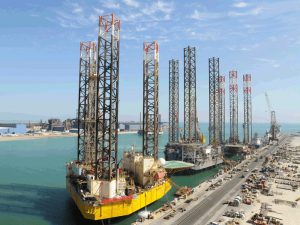
OPEC’s December decision to maintain oil output may not be doing any favors for U.S. shale producers, but continuing investment by national oil companies around the Arabian Gulf is underpinning a wide range of offshore-related projects and creating opportunities for regional shipyards.

There has, of course, been a sharp downturn in charter rates—the world’s largest energy firm Saudi Aramco, for example, told suppliers including Offshore Support Vessel (OSV) operators earlier in the year that it expected cuts in rates of 20-30%. Many regional OSV owners are under serious pressure.

But while shipyard prices are also sharply constrained, there is no shortage of work. Oil producing countries are geared to pumping as much oil as possible and making the most of the opportunity to grow their market share. Both Saudi Aramco and the Abu Dhabi National Oil Company (ADNOC) have revealed that they have no plans to cut back on exploration and production although, to be fair, the Saudi energy company has stopped exploring in the Red Sea for the moment.

Both oil companies have huge capex programs, however. ADNOC has plans to raise oil output by a quarter, to 3.5 million b/d by 2018. The company plans to spend close to $100 billion over the next four years, it revealed last May. More than $60 billion will be spend over the next two years. A significant proportion of the money will be channelled offshore in vast oil fields that lie in shallow water. The oil-rich Emirate is developing some of its offshore reserves by creating artificial islands that provide a cheaper means of production for long-life fields than chartering jack-ups.

With relatively low production costs, Middle East oil producers are less vulnerable to low prices than almost everyone else. The continuing drive to explore and develop more reserves has been a major catalyst in the drive by regional shipyards to target the offshore sector. Heavyweight repair yards including ASRY in Bahrain, Drydocks World Dubai and N-KOM in Qatar have all developed substantial revenue streams from the offshore sector in recent years.

Now, several new yards are targeting the offshore market. The family-owned Zamil Group officially commissioned a new shipyard built on reclaimed land last April. The 2.5 million ft2 facility has been designed not only to build and repair the group’s own vessels—it has a fleet of 76 vessels, mostly OSVs—but also to work on other ship- and offshore-building projects for third parties.

A few miles down the coast, Dammam Ship Repair Yard is also gearing up to take on more business in the offshore sector. The yard has already undergone a significant upgrading under ownership of the Al Blagha group, with two floating docks of 22,000 tonnes and 10,000 tonnes lifting capacity refurbished and brought back into class. Buildings, workshops and yard infrastructure has also been overhauled and upgraded.

Now though, yard management is targeting international offshore operators working in Saudi waters. Mobile repair teams from the shipyard have been deployed on rigs offshore, carrying out a range of projects. Meanwhile contractors including Ensco, Rowan, Noble and Seadrill all carried out jack-up rig repairs, upgrades and modifications during 2015.

Elsewhere in the Gulf, Damen Shipyards Sharjah is also eyeing the offshore sector. The new facility, which is a joint venture between the global shipyard group and locally owned Albwardy Marine Engineering, is a newbuilding and repair yard capable of handling offshore support vessels, tugs and workboats of various types. Its facilities include a Rolls-Royce ship lift capable of handling vessels up to 394 feet, 4,000 feet of quay for alongside repairs, and eight dry repair berths.

grandweld1BUSY AT GRANDWELD
This past year, Grandweld completed the construction of 17 vessels. The shipyard’s latest projects include advanced crew boats, dive maintenance and support vessels, and work crane boats for a who’s who of Middle East energy firms and offshore contractors.

Grandweld, which has been operating from its Dubai base since 1984, specializes in vessels custom built to conduct complex operations in the region’s challenging offshore environment.

These range from three recently delivered work crane boats for Kuwait Oil Company – optimized for duties such as heavy lifting, oil-pollution control, SPM hose handling, and supply to remote areas – to two modified 42-meter-long crew boats (FNSA-3 and FNSA-4) for Fujairah National Shipping Agency. The latter vessels are capable of speeds in excess of 30 knots and customized to execute operations such as security duties, fast transportation of offshore personal and cargo, and the rapid supply of fuel and freshwater.

“The Middle East is a unique environment, with unique challenges and opportunities,” says Jamal Abki, General Manager Grandweld Shipyards. “We have a history of producing vessels that excel here. We use that understanding to continually enhance our offering, while building new relationships with international clients who can benefit from our expertise when it comes to meeting their own exacting requirements.

“Our integrated proposition is efficient, flexible and modern, while our in-house engineers and project managers are world class. In addition, we invest heavily in research and development to enhance our own designs, as well as using respected external designers when desired. This ensures our vessels are leading the way in operational efficiency, reliability and performance – something the industry clearly appreciates.”

Further noteworthy deliveries over the last months include three 34.3m aluminum crew boats to Jana Marine Services, a 50m Dive Maintenance & Support Vessel to Abu Dhabi National Oil Company (ADNOC), and the 42m crew boats Stanford Volga and Stanford Niger, which are capable of carrying 83 people at speeds of 25 knots.

“It’s an exciting time for the business, and our customers,” concludes Jamal Abki. “As the offshore trend points towards more optimized, complex vessels, our knowledge and experience allows us to respond with advanced newbuilds that deliver added performance and competitiveness for our clients.

“We’re now looking forward to building on our leading market position over the space of the next 12 months, and beyond.”

Meanwhile, Gulf ship repairers are all cautiously optimistic on potential business from Iran. However, legal experts specializing in sanctions are urging the utmost caution. The latest diplomatic fall-out between Saudi Arabia and Iran will certainly not have helped.

NEW DESIGN FROM ROLLS-ROYCE TARGETS U.S., TOO
Offshore operators in the Gulf of Mexico are among those being targeted by Rolls-Royce as it introduces the first in a series of new mid-range offshore vessel designs specifically developed to meet the requirements of companies working in a low capex era. The UT 7217 is a DP2 anchor handling tug supply ship with a bollard pull of 100 tonnes which can be raised to 130 tonnes without any fundamental design changes.

Jan Emblemsvåg is Senior Vice President of Ship Design at Rolls-Royce. He says that the company’s analysis has revealed that there are already more than 600 vessels in this range which are more than 25 years old. This could be the first sector of the offshore market to generate new demand, he believes. There will inevitably be a replacement requirement at some point, he says, and the UT 7217 has been designed with operators’ likely future requirements specifically in mind.

Although the design has been developed to incorporate as much flexibility as possible and will be capable of worldwide deployment, specific offshore markets which Rolls-Royce has identified besides the Gulf of Mexico include the Middle East and the South China Sea. Vessel price will of course depend on region and shipyard, but Emblemsvåg reveals that initial indications from some Far Eastern yards lie in the $17 million to $18 million range.

The design has been developed to compete effectively with existing ships in the sector. Bollard pull is greater than the typical 70-80 tonnes, for example, and deck area – at 500 square meters – is more than the usual 450-460 square meters. There is more cargo capacity than is usual and the vessel has a launch and recovery system.

With cost constraints in mind, Rolls-Royce designers have chosen a diesel mechanical propulsion system which comprises two medium-speed C25:33L9P CD diesels of 3,000kW each, driving two US305 controllable pitch azimuth thrusters with 3.2 meter diameter propellers in nozzles. Each engine drives a shaft generator and fire pump for fire-fighting duties. There are two independent 400kW generating sets providing electrical power and two 590kW bow thrusters.  

Operating flexibility will be aided by the SPS notation which will enable the vessel to carry up to 12 additional personnel besides the crew. There are 29 cabins giving a maximum of 40 on board. This means that the ship can be deployed in a wide range of tasks, including cargo supply, anchor handling, ROV operations, safety standby and maintenance and repair.

The competitive price indications are based on a Rolls-Royce equipment package including the main two-drum hydraulic winch with 200-tonne heave and 250-tonne brake rating. They also assume the diesel mechanical propulsion system. However, Emblemsvåg is well aware that some OSV operators may wish to specify other equipment and possible alternative propulsion arrangements such as a diesel-electric set-up. These, he says, can be accommodated but will obviously have an impact on price.

Other mid-range offshore vessel designs are currently being worked on by Rolls-Royce naval architects. They include a larger 150-tonne anchor handler likely to be introduced later this year. A mid-range subsea construction vessel design is also on the drawing board, intended for waters where breakeven production costs are relatively low and where energy companies will be focusing whilst the oil price stays down.

Springer named President of Glosten

APRIL 8, 2016—Glosten, a Seattle-based naval architecture and marine engineering consultancy, announces the appointment of John Springer, PE, as President. As Glosten’s fifth President since its founding in 1958, Springer will have

Robert Allan to keynote Marine Log Tugs & Barges 2016

APRIL 6, 2016—Marine Log is proud to announce that renowned naval architect Robert G. Allan, PE, will provide the keynote address for the Marine Log Tugs & Barges 2016 Conference & Expo,

Rodriquez delivers towboat to Mid-River Terminals

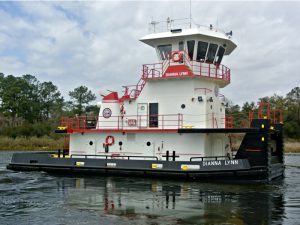
MARCH 26, 2016—Over the years, Rodriguez Shipbuilding, Inc.’s triple-screw towboats have won a following operating in the shallow waters where the Mississippi River meets the Gulf of Mexico. These Lugger-type vessels are

With sanctions lifted, IRISL resumes service to Hamburg

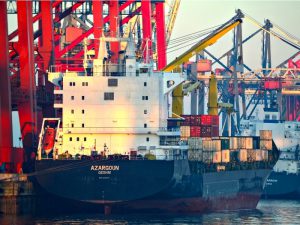
MARCH 18, 2016—The 2,500-TEU containership Azargoun called at the Port of Hamburg on March 17, signaling the reopening of Islamic Republic of Iran Shipping Lines’ “European Container Line” (ECL) between Northern Europe

Burger starts construction of explorer yacht

MARCH 17, 2016—Burger Boat Company, Manitowoc, WI, has begun the construction of a custom 103 ft 6 in x 26 ft 5 in full displacement steel and aluminum Explorer Motor Yacht designed

Hearing loss in crew on the rise


The well-being of crew has always been a priority for the UK P&I Club PEME scheme. When the PEME scheme was launched 20 years ago, in 1996, we noticed an increase in crew illness claims and a lack of accountability from clinics. We found huge inconsistencies in the standards used by clinics for pre-employment medical examinations; many clinics adhered only to the minimum standards required by their local authority and there was no liability to the ship owner. We also found that examinations of crew were not detailed enough to screen out pre-existing medical conditions that could impact on a ship owner’s obligation to compensation.

That is why the UK P&I Club developed the PEME Program, and since the launch, the Program has become one of the Club’s leading loss prevention initiatives. Clinics which are approved under the program are held accountable to both the Club and Members for their performance. The scheme is designed to protect ship owners from claims arising from medical conditions existing prior to employment, and to provide crew with a first rate health check before going to sea. The program has been appraised as the most extensive and inclusive system available in the industry. The PEME Program is a key element in the services provided by the Club’s Loss Prevention department.

The program aims to reduce the volume and value of crew illness claims which are caused by a pre-existing illnesses or disease. These underlying conditions often impact on the crew member’s fitness for service and can endanger not only the health of the seafarer, but also the on-board safety of other crew.

As part of the PEME examination an enhanced medical screening service is administered to all crew. The crew are screened on all the major body organs and functions. The confidential data collected from medical examinations is regularly analyzed and the results are used for identifying trends in crew health.

UK P&I Club has been reviewing findings and developments from screenings, with particular focus on the last decade.

The top 10 health issues found from UK P&I pre-employment medical examinations over the last 10 years are listed below, in order from most to least:

  1. Hepatitis B
  2. Hypertension
  3. Hearing defects
  4. Pulmonary Tuberculosis
  5. Diabetes
  6. Abnormal liver function
  7. Multiple illness
  8. Gallbladder disease
  9. Sight defects
  10. Kidney Disease

Worryingly, the decade long PEME study found that hearing defects are now the third main cause of pre-employment medical failure, with the incidence of hearing defects increasing by 40%. Put into perspective, 10 years ago hearing defects did not even make the top 10 list for pre-employment medical failure.

Audiometry exams are used to test crew’s ability to hear sounds within the UK P&I Club PEME medical. UK P&I Club found that the largest group of seafarers who were affected by abnormal audiometry results worked in engine rooms of ships. Typically, crew with poor audiometry results can also display signs of mild to moderate high frequency hearing loss.

Unsurprisingly, those seafarers working in engine rooms also had a higher tendency to experience hearing disabilities. This is especially true for crew who do not use precautionary measures. High levels of ambient noise, typically above 85 dBA cause noise-induced hearing loss. The negative effects of such levels of noise and higher, depend upon individual physiology and the duration of exposure.

Identifying hearing damage
Audiometric testing is the only reliable diagnostic evaluation relevant to indicate noise-induced hearing loss. The screening is performed by an audiometric testing machine , and receiver, located within a sound proof booth. The patient, wearing headphones, is subject to noises of various volumes and frequencies (pitches) and asked to respond by pressing a button when hearing each sound. Audiometry provides an accurate measure of any damage. Below are recommended measures Member’s should put in place for their crew:

  1. A baseline audiometry test to be performed within six months of exposure for all seafarers. The test should ideally be performed when the seafarer has not been exposed to hazardous noise for at least 14 hours.
  2. Seafarers exposed to higher noise levels may be required to attend training on the effects of loud noises on hearing, the purpose of audiometric testing and protective devices available to mitigate the effects of noise damage.
  3. As exposure to loud noises, such as in engine rooms, is unavoidable on ships, hearing protection within these areas is mandatory. Devices for hearing protection including earplugs or earmuffs can be easily sourced and used on-board. The most effective ear protection is the ear protector.
  4. Allow breaks for seafarers between each episode of exposure to loud noise (more than 85 dB) especially when sound levels are higher and prolonged.

Ensuring a robust hearing conservation program
The UK P&I Club PEME Program believes that if the above recommendations are implemented, they will help protect seafarers from hearing loss and thus safeguard ship owners/operators from facing claims resulting from hearing damage incurred while on-board.


Raising awareness and education of seafarers on hearing risks such as permanent hearing disability is required. Individual crew themselves also have a responsibility to safeguard their exposure to hearing risks. It is highly recommended shipping companies include, as part of their health and safety policy, hearing protection zones in machinery spaces and other working areas where levels of high noise are prevalent.


As a further measure, companies should allow breaks for seafarers between each episode of exposure to loud noise (levels in excess of more than 85 dB) especially when sound levels are excessive and prolonged. It is in the Members’ best interest to continually monitor the hearing of its seagoing employees and so to initiate schemes to carry out clinical examinations such as Otoscopy; Weber’s test; Rinne’s test (Tuning fork) every eight months. 


By implementing these recommendations the Club hopes its Members can improve the conditions of their sea-going staff and help to negate the dangers of hearing loss and prevent any future claim in this area.


CEO Spotlight: Q&A with Morton S. Bouchard III


Marine Log: Can you tell us about the founding of the company and how it has evolved over the years?

Morton S. Bouchard III: Bouchard Transportation Co., Inc. was founded and incorporated in 1918 by my Great Grandfather, Captain Fred Bouchard.

Capt. Fred Bouchard became a tugboat Captain at the young age of 14. In 1916, while on watch, the Black Tom explosion occurred on Staten Island, and Capt. Fred maneuvered his tug and pulled ammunition scows out to safety. He was blown out of the wheel house on two occasions, but continued to pull the scows to safety. For his heroic actions, he was awarded salvage money from the state and federal government; and with those funds he bought a coal scow, lived and worked the scow, and created his own company, Bouchard Transportation Company, which was incorporated in 1918.

In 1931, Capt. Fred acquired Bouchard’s first oil barge, a sunken 15,000-barrel vessel, which he purchased for $100. After raising this vessel in Jacksonville, FL, he towed it to a Norfolk, VA, shipyard where it was converted to a hot oil system, oil barge. From there it was towed up to NY Harbor, signifying Bouchard’s first of many vessel purchases and construction projects.

The company was passed on to my grandfather, Morton (“Buster”) S. Bouchard Sr., who continued to grow the company, then was passed on to my father, Morton S. Bouchard Jr., and then on to me. The philosophy has not changed for four generations: Work hard, do not take anything for granted, take care of your customers, and invest the profits into new more modern equipment, and maintain our existing equipment to the highest standards possible.

Sometimes I sit back and wonder about what all three of them (Capt. Fred Bouchard, Morton S. Bouchard Sr., and Morton S. Bouchard Jr.) would think, as the company has grown beyond their imaginations, and will hopefully continue to grow as the 5th generation, Brendan J. Bouchard, becomes more involved.

ML: When did you first begin working at the company?

MB: I began working at Bouchard when I was 19, a sophomore in college. I worked in the shipyards and our outside office. The following summer I worked on the vessels, and the summer after that I was a night dispatcher, filling in for the night staff vacations. When I graduated college, I was a dispatcher, but was also attached to my father’s hip. I was with him for every meeting and important phone call. I became President at the age of 32.

ML: One of the major regulatory challenges for petroleum marine transportation companies was the enactment of the Oil Pollution Act of 1990. Tell us how Bouchard addressed that challenge.

MB: OPA 90 changed our industry in every aspect. When OPA 90 was passed, my father and I had a meeting, and he had the entire bill with him. He asked me if I had read it, and I told him no – not the entire bill, but the most important segments. He was very upset, and felt that Bouchard should sell. After a lengthy discussion, which was mostly listening on my part, I finally got my father to realize that 1990 was the year that we would need to decide what our next business plan would be for the company. From this conversation, I finally convinced my father that we should build double hulls, and be the first company to invest in double hulls, which we did. Bouchard was the first to build double hulls (1992 & 1993), and continues to be the leader in double hulls. All of Bouchard barges are flat deck double hulls, we do not believe in trunk deck barges, and feel that the trunks should not be allowed to carry petroleum, for the trunks are not double hull.

OPA 90 also increased the awareness of safety for trained crew members, as well as shoreside personnel. I continuously tell all of our employees that we cannot be profitable unless we are safe, and we must give every employee the resources needed to be safe.

ML: One of your latest deliveries was the 10,000 hp/250,000 bbl Articulated Tug Barge Donna J. Bouchard and the B. No. 272. Those vessels are some of the last under a major investment in renewing and expanding your fleet. Tell me about your fleet expansion?

MB: Bouchard and Halter have enjoyed a relationship for over 40 years. The management of Halter has changed over those years, however Bouchard and Halter continue our relationship.

The latest expansion program involved two units, M/V Kim M. Bouchard & B. No. 270, and the M/V Donna J. Bouchard & B. No. 272. We felt that there was a market need for vessels of this size, and that ATBs are more economical than ships, and just as safe. We started studying various capacities. We were originally targeting 350,000 bbl and 15,000 hp tugs; however, after many meetings and discussions with our customers, and possible future customers, we decided to scale the size down to 250,000 BBLs & 10,000 HP, which proved to be a smart decision. These two new units bring Bouchard’s fleet to three units this size, all flat deck double hulls: M/V Danielle M. Bouchard & B. No. 245, M/V Kim M. Bouchard & B. No. 270, and M/V Donna J. Bouchard & B. No. 272.

BouchardATB

Bouchard also contracted to build two 6,000 hp Intercon Tugs with Halter; M/V Morton S. Bouchard Jr. & M/V Frederick E. Bouchard, and contracted with Bollinger to convert the B. No. 210 & B. No. 220 to Intercon barges with segregated ballast. The B. No. 210 & B. No. 220 were two of the first double hull barges Bouchard built, and were wire barges. Upon the completion of their conversion, I am very proud to say that Bouchard’s entire fleet above 60,000 BBL is flat deck, double hull, Intercon ATBs that range in capacity from 55,000 BBLs (B. No. 250 only 1), then 80,000 BBLs to 250,000 BBLs. No other company has such a modern and safe fleet.

ML: Quality, safety and the environment are clearly issues that are of primary concern to Bouchard. How are those issues addressed in the corporate culture and corporate policy?

MB: Quality, safety, environment, and crew safety are Bouchard’s highest priority. Every employee at Bouchard knows that safety is our highest priority. As I mentioned earlier, Bouchard cannot be profitable unless we are safe. This philosophy is practiced every day, 24 hours, 365 days a year – no exceptions. Every captain in Bouchard’s fleet knows that they have the authority to put the operation on hold if they feel the safety of the crew and vessel is being jeopardized. For example:

When it comes to the safety of the crew and fleet, Bouchard employees know all decisions will have my full support. Safety is the most important policy at Bouchard.

ML: Tell our readers about Bouchard’s work with SUNY Maritime. How did that relationship come about?

MB: Education is of vital importance at Bouchard. It is very simple, the more educated our employees are, the safer we as a company will be. A major aspect of education is simulator training.

New York Harbor was always the home of a simulator, and it was relocated to Houston. When I became aware of this, I was upset with myself for not being aware of it. After speaking with various other companies, I decided that a simulator was needed for ocean going tug & barges. I wanted a simulator that could be used by Bouchard employees, but also by the cadets to learn tug & barge operations while enrolled at school. After several meetings with my dear friends at SUNY Maritime, Bouchard made the proud decision to build the Morton S. Bouchard Jr. Tug & Barge Simulator, which can be used for cadets, Bouchard employees, as well as other companies.

Bouchard’s commitment to this simulator is not one and done, it entrails yearly upgrades to the software, and the simulator itself. We just recently upgraded the software to include tractor tugs, and ship docking, all funded by Bouchard.

This type of commitment just enforces our corporate philosophy that there is no budget for safety and proper training, and safety is our number 1 and top priority.

ML: What would you like the legacy of the Bouchard brand to be?

MB: Bouchard’s legacy should be recognized for the following:

Tank Cleaning: Seeking Common Ground


“Tank cleaning is where companies try to establish a competitive edge,” says Ajay Gour, INTERTANKO’s chemicals and vetting expert and Regional Manager for the Indian Sub-Continent, Middle East and Africa. “This is where they can claim to be better than the competition. But the majority of ship operators are all experienced, and the technology and methodology are pretty much the same across the board. Cleaning chemicals have seen some significant advances, but where we found the biggest change was not in cleaning, but in tank testing.”

Testing technology has improved immensely, Gour relates, but operators have not necessarily been the drivers behind improvements. “There are many different external influences, including scientific community, and testing today can measure levels of cleanliness far beyond the original requirements for the same cargoes.”

Ever more sensitive testing methods beg the question: Should tanks be as clean as possible? Or just sufficiently clean?

Lacking a working standard
INTERTANKO studied cases emanating from Houston, a major chemical tanker hub.
“We looked at over 250 different listings,” Ajay Gour recalls. “We found that there were various cleaning standards and varying results for the same cargo with the same end-use. There was evidence that resources were being wasted in over-cleaning, including manpower, energy, time, chemicals, and the resulting emissions were excessive.”

In response, INTERTANKO has proposed a simplified set of standards in order to bring the high-flying cleanliness requirements back down to sea level. “Product manufacturers realize that they have been pushing unduly stringent standards, and they understand that this is a cost driver. In a number of cases, small deviations will not push the cargo off-spec,” Gour maintains.

A working group of chemical tanker operators, owners, charterers, and manufacturers is in the early stages of reviewing existing standards, not for tank cleaning, but for tank cleanliness. “We are not telling anybody how to clean in order to achieve a certain standard,” Gour clarifies, “just advising on what standard they need to clean to.”

Nor do the proposed standards advise on how to test. “For example wall washing,” Gour relates. “It’s been around for a long time, but it has its weaknesses. It gives only a snapshot, not the status of the entire tank.” All the same, INTERTANKO is not singling out wall wash tests, or any other particular method.

“We are simply trying to refine cleanliness standards,” he says, “to make sure they are appropriate for today’s needs. High sensitivity testing is feeding anxiety in cargo owners and charterers, and our intention is to ensure quality while improving efficiency in the use of resources.”

Regarding the timeline for change, Ajay Gour’s advice to owners and operators: Watch this space. “The process is set in motion, and the first draft of new guidelines should be presented by the end of 2016,” he reports. “For this to happen, though, operators, shippers, and cargo buyers must all be on board. The drafting process will be used to quantify the overall benefits, but the end result should be that the goalposts are fixed for everybody.”

Taking the confusion out of tank cleaning
Understanding the required cleanliness standard for your vessels’ next cargo is one thing, but consistently achieving it can be a challenge. With decades of experience in the field, here are some words of wisdom from service leader Wilhelmsen Ships Service (WSS) on how not to go astray in the critical business of keeping tanks and cargoes up to spec.
Regardless of whether it is the result of poor preparation, lack of knowledge, time constraints or inadequate equipment, an unsatisfactory tank cleaning can become very costly, very quickly. Extra time in port, additional labour and chemicals, added surveyor charges, and in the worst cases demurrage claims, can turn what should be a routine exercise into a laborious and dreaded task.

To make matters worse for owners and operators, the issues affecting the tank cleaning process are amplified by the increasingly vigorous ad-hoc cleanliness standards currently being demanded by charterers and cargo owners. Often over-zealous and in many cases totally unnecessary, when it comes to the actual chemistry of contamination, there is unfortunately no officially-defined, universal set of cleanliness standards at present.
Instead, there are just two, very broad and de-facto criteria covering the various tank cleaning requirements currently demanded by charterers.

An inadequate pair
The first is the Water White Standard, which means the tank is visually clean, dry and odour-free. A suitable standard for CPP/vegetable oils, this standard does not involve a wall wash test.

The second, the High Purity Standard (HPE), is required for sensitive cargoes to be loaded such as products applied in food processing (Food Grade) or in pharmaceutical production (USP), where any contamination is unacceptable. All active solvents, such as chlorinated hydrocarbons, glycol ethers, light alcohols, for example, methanol, ketones such as acetone and many hydrocarbons like hexane also require the HPE.

In addition, many chemical companies require the HPE because the application of the product during processing is very sensitive to contamination.

Though there are guidelines on the procedures and typical level of cleanliness required by the High Purity Standard for each and every product available, many companies have additional, off-spec requirements. Creating unwanted confusion for cleaning crews and posing considerable problems when it comes to demurrage claims, these ad-hoc requirements are why bodies such as Intertanko are eager to establish a new, detailed set of cleaning standards. An ongoing initiative aimed at creating an industry wide set of rules, its acceptance is by no means guaranteed. So, for now we’re stuck with the existing pair of standards and the numerous company-by-company and cargo-by-cargo variations demanded by charterers.

In spite of this, with detailed planning, preparation and access to some basic information on the cargo’s properties and the conditions inside and outside the tanks, tank cleaning should actually become a matter of routine. Systematic, efficient and completed quickly to the required standard, whatever that may be. No rejections, hold-ups, incidents or accidents.

Chemistry 101
Knowing the properties of the products you’re discharging and loading, along with understanding how they interact with each other and with the surface of your tanks is obviously key. However, learning this from scratch can seem a daunting prospect, hence the ongoing success of Supercargo specialists. But in practice, the vast majority of commercially traded cargoes and their associated tank cleaning processes can comfortably be managed in-house with access to a specific cargo-handling database, such as Miracle or Milbros, and just a little basic knowledge on the major product groups, as outlined below.

Water-soluble or water-miscible
Water-Soluble substances and water-miscible substances are easy to clean with water. In addition, the solubility of such substances might increase at higher temperatures. While the use of a cleaning agent is not required, it can help reduce cleaning times.

High melting point
Such products should be washed at a temperature of 15-20C above melting point. During washing there should be no ballast water or cold cargoes adjacent to the tank to be cleaned. Special attention must also be given to liquid and vapor line systems to avoid freezing/solidification at cold line segments. Beginning the tank cleaning process as soon as possible after discharge is strongly recommended.

High viscosity
These products should be washed at higher temperatures. In general the viscosity is closely related to the temperature and will decrease at higher temperatures. During washing there should be no ballast water or cold cargoes adjacent to the tank to be cleaned. As with products with a high melting point, washing should begin as soon as possible after discharge.

High vapor pressure/boiling point
Products with a high vapor pressure (higher than some 50 mbar at 20 C) can actually be removed from the tank by evaporation. As always, during ventilation, special care must be taken to prevent the risk of explosion (flammable products) and emissions (toxic vapors).

Polymerization
The initial wash of products that tend to polymerize should be carried out with cold (ambient) water. Washing with hot water results in polimeric residues being left in tanks and lines, meaning an incredibly difficult clean-up job.

Evaporation of volatile substances
Cargoes consisting of mixtures with different vapor pressures should neither be cleaned by evaporation, nor prewashed hot. The evaporation of the light substances from a mixture could result in non-volatile residues, which are very difficult to remove.

Isocynates
Must never come into contact with water, not even the residues, because the reaction product and insoluble urethane (plus CO2) are very difficult to remove. Such products must be washed with a suitable solvent that does not contain any water.

Reaction with oxygen
Drying and semi-drying vegetable and animal oils react with oxygen to form a varnish-like polymeric film. This is very difficult to remove from bulkheads. Since heat increases the speed of the reaction the initial washing of these products must be done with water at ambient temperature, and as quickly as possible.

Reaction with hard water
Formed by the calcium and magnesium present, seawater, for example, has a very high water hardness. This poses no problem for most products, but fatty acids and vegetable oils with a high free fatty acid content will form white sticky residues if they are cleaned with a water of a high water hardness.

Smell
Minor residues of a smell-producing cargo left in lines, valves and pumps (including pump cofferdams) can contaminate a sensitive cargo. To neutralise the smell of some chemicals (e.g. Acrylate, Nitrobenzene or Pygas) the use of a smell killer may be recommended.

Understanding the conditions. Inside and out
Along with product knowledge, an understanding of just how the conditions in and outside tanks can affect a cleaning job is vital for consistently successful cleaning:

The neighboring areas
Temperature is one of the major parameters in any tank cleaning procedure and it must be monitored and managed carefully. The temperature in the cargo tank can be significantly influenced by the surrounding conditions, including outside temperature, seawater temperature, ballast conditions, and the temperature of adjacent cargoes.

Deviations from the desired operating temperature can affect the entire tank or just parts of the tank, typically around bulkheads, tank bottoms or tank walls. Two common results are freezing due to lower than allowed temperature, and polymerization/drying due to higher than allowed temperature.

The Tank Surface
Having managed the surrounding conditions, focus should turn to the surface of the tanks. Their composition and condition can have significant implications for the cleaning process.

Stainless steel
Corrosion can occur if there is surface contamination. Both pickling and passivation are chemical treatments applied to the surface of stainless steel to remove contaminants and assist the formation of a continuous, passive chromium oxide film. Pickling and passivation are both acid treatments and neither will remove grease or oil. If the steel is dirty, it may be necessary to use a detergent or alkaline cleaning before pickling or passivation.

Zinc silicate coating
An anti-corrosive paint system made from zinc dust, with certain additives and a binder. The high levels of zinc dust produce a zinc-zinc metal contact resulting in cathodic protection, similar to that obtained from galvanizing. However, zinc coatings are inherently porous, presenting a variety of cleaning problems. It is believed that the cargo migrates into the pores and capillaries, similar to fluid adsorption processes. Zinc coatings have a good resistance against solvents, but are not resistant to strong acids and bases.

Epoxy coatings
Pure epoxy, phenolic epoxy and isocyanate epoxy form cross linkages resulting in relatively good resistance to a greater range of cargoes. Epoxy systems are usually resistant to some weak acids and strong alkalis and do not absorb oil-like substances. Epoxy coatings are, however, prone to absorbing some solvent-like cargoes. This absorption is caused by swelling and subsequent softening of the coating. After transporting aggressive cargoes, the coated tank has to be ventilated until the cargo has been desorbed (released) from the coating film, which results in hardening and decreased swelling. This can take up to several days, depending on the type of cargo, type of coating and film thickness. Water may not be used for cleaning until this ventilation process is finalized. Otherwise the water can lead to blistering and subsequent serious damage of the coating. The more solvency power a cargo has, the more cargo residues could still be present in the coating. This could lead to either contamination of the next or subsequent cargoes, or breakdown of the coating film.

Subchapter M and the IRS


Countless Federal laws govern nearly every aspect of the inland waterways transportation industry, yet the convergence of the United States Coast Guard (USCG) Subchapter M impending Final Rule with Internal Revenue Services (IRS) Inland Waterways Excise Tax audit practices might have a more profound, far reaching impact then industry observers have as yet considered. Fortunately, it appears that taxpaying tow & barge operators may come out on top if they take full advantage of this unlikely Federal rulemaking interplay.

Background
The inland waterways constitute a 25,000 shallow-draft transportation system of which 12,000 miles are taxable Inland Waterways. This domestic waterborne transportation system is a prominent fixture in supporting key American industries such as: mining, agriculture, timber, petroleum and chemicals, cement, metal, and paper and allied products. Barging is a highly energy-efficient freighting solution that has historically been safe, congestion free, and creates a low impact land use and low pollution impact footprint. The movement of immense quantities of raw materials at low cost over long distances is the sustaining force of the waterways system. Stretching from Pennsylvania in the Northeast, to Texas in the Deep South, and Minnesota in the Heartland this “waterways highway” is a vital “import & export” network between states and an artery to foreign markets.

The economic impact in terms of product value transported between states on the inland waterways exceeds $100 billion annually. The 70,000 person inland waterways workforce underpins various industries of more than 800,000 workers. States along the inland waterways contribute 54 percent of the national population, 49 percent of GDP, 50 percent of Federal tax revenue, 56 percent of heavy manufacturing jobs, and 61 percent of agricultural jobs. Countless millions of payroll taxes are generated for Federal and State governments as a result of the inland waterways industry. The Inland Waterways Trust Fund has accrued in excess of $1.6 billion from fuel tax revenue since 1986 and is a catalyst for major construction and rehabilitation projects on the inland waterways.

Subchapter M is the result of the Coast Guard and Maritime Transportation Act of 2004 (CGMTA 2004) in which Congress authorized the Secretary of Homeland Security to create regulations for towing vessel safety management systems and hours of service for towing vessel personnel. The Towing Safety Advisory Committee (TSAC), a Federal Advisory committee to the United States Coast Guard comprised of a broad spectrum of interested parties in the inland waterways industry, established a working group to assist USCG in framing the rules required under CGTMA 2004. Over the course of six years TSAC conducted numerous public meetings that culminated in four TSAC reports submitted to USCG for review and revision. USCG published the Subchapter M Notice of Proposed Rulemaking (NPRM) in August 2011 and held four public hearings nationwide for public comment. Publication of the Sub Chapter M Final Rule is anticipated in 2016.

Objective Evidence
Objective evidence is best defined as documented statements of fact, other information or records, both quantitative and qualitative, related to the quality of an item or activity, based on observations, measurements, or verifiable tests.     

The 2011 NPRM publication set forth the U.S. Coast Guard’s intent to adopt “objective evidence” as a safety requirement through “…detailed processes, procedures, recordkeeping and auditing…” documented in “logbooks, non-conformity reports, and/or other reports of audits.”

The Internal Revenue Service applies accounting’s “Objective Evidence” standard when conducting audits of towing operators for compliance with the Inland Waterways Excise Tax as reported on IRS Form 720. A typical IRS Information Document Request (IDR) to an inland towing operator will include the vessel log, fuel purchases, maintenance records, machinery tech manuals, and fuel operating reports.

Workboat eLogs
Federal law details what entries must be made by watch officers in the vessel’s official logbook. TSAC, in a 2008 report to USCG, reinforced existing recordkeeping requirements for inland towing operators and expanded upon the increased recordkeeping burden Sub Chapter M rules will likely have from a watch officer perspective. Although Federal law does not require log entries related to geographic position, waterway conditions, or commercial activities, it does require the logging of pre-departure testing of steering & propulsion, safety items & drills, crew, and marine casualties. Log entries must be timely and are presumed accurate thus binding the vessel owner to those entries. Negating the binding effect in litigation is held to a rigorous test. The maintenance of a proper and accurate log cannot be over-emphasized as the consequences for poor onboard recordkeeping can be legally and financially catastrophic to a marine operator.

Appreciating the increased onboard recordkeeping burden Subchapter M posed, the U.S. Coast Guard provided for the automation of the onboard recordkeeping processes through definition of a towing vessel record, or workboat eLog, in Part A Section 136.110 of the NPRM. This definition allows any onboard recordkeeping or documentation of events required by Subchapter M to be “a book, notebook, or electronic record”. Thus, according to the NPRM, inland towing operators have the advantage of adopting workboat eLogs as a primary recordkeeping tool.

Workboat eLogs and Marine Enterprise Solutions
While the presence of an onboard workboat eLog offers considerable advantage to watch officers and onboard auditors, it is only through the integration of the eLog with a shoreside marine enterprise solution that its benefits can be fully realized. The ability to “push” onboard data shoreside for interrogation by various marine enterprise solution modules offers an unlimited variety of analytical models for decision makers to consider.

The two distinct audit report functions of safety (USCG) and accounting (IRS) are easily achievable within the framework of a mature, interfaced onboard/shoreside recordkeeping solution. Of course, affordability, scalability, ease of user interface, system stability, and system configurability play an irreversible role in the success of a mature marine enterprise solution. It should also be noted that the presence of Key Performance Indicator data pushed by eLogs to the marine enterprise solution and applied to an industry best practices regime can only improve asset utilization, workforce performance, and customer satisfaction.

Conclusion
The unintended opportunities facing inland waterway operators by opting into the Subchapter M onboard electronic recordkeeping options in lieu of manual recordkeeping are hard to contest. These options are greatly enhanced if the marine operator also elects to interface office accounting, safety, and personnel functions with the vessel as part of a shoreside marine enterprise solution.

Adopting a software architecture and infrastructure where the marine operator can satisfy the reporting requirements of a multitude of Federal agencies (USCG, USACOE, IRS, EPA) through a single electronic reporting system which also provides critical commercial data to the carrier, clients, vendors, and other interested third parties offers immeasurable value.

LOAD MORE