Linking Post-Panamax boxes to Heartland via river

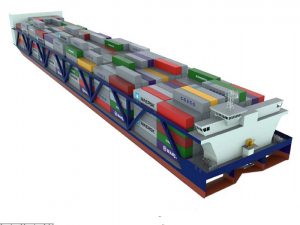
MARCH 30, 2017 — A new intermodal container terminal on the lower Mississippi River is being developed “from the ground up” that will accommodate both the largest Post-Panamax containerships and innovative new

POSH takes delivery of two Azistern 3270 tugs

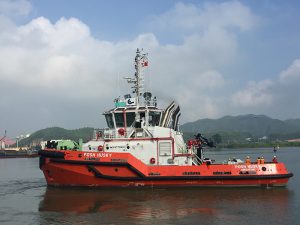
FEBRUARY 23, 2017 — Two Azistern 3270 tugs designed by IJmuiden, Netherlands, headquartered Offshore Ship Designers (OSD) have been delivered to PACC Offshore Services Holdings Limited (POSH Singapore). Posh Husky and Posh

ECO tugs to have Ulstein alarm and monitoring systems

FEBRUARY 10, 2017 — The 13 heavy duty Damen design mooring assistance and escort tugs that Edison Chouest Offshore is building in its five shipyards for two major contracts in Texas and

Marcon brokers sale of two McAllister tugs

DECEMBER 6, 2016 — Marcon International, Inc. of Coupeville, WA, has brokered its seventh and eighth tug sales of the year, with the deliveries of the 4,300 HP, tugs Colleen McAllister (ex-Ellena

Conrad holds keel laying for Young Brothers tugs

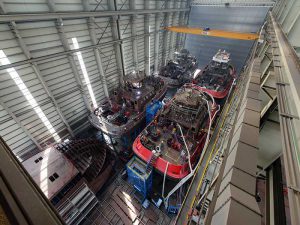
DECEMBER 1, 2016 — Conrad Shipyard (OTC Pink Sheets: CNRD.PK) has held a keel laying ceremony for the four Kāpena Class tugs now under construction for Young Brothers, Limited of Hawaii. The

Marcon brokers sale of icebreaking deck cargo barge

NOVEMBER 23, 2016 — Marcon International, Inc., Coupeville, WA, reports the sale of the 205.0′ x 90.0′ x 15.0′ depth former ice-strengthened, icebreaker/cargo barge Arctic Endeavor from Crowley Marine Services of Seattle,

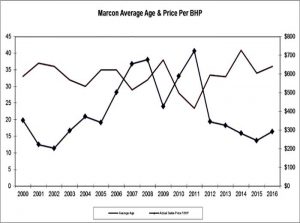
Tug sellers get close to asking prices

SEPTEMBER 29, 2016 — Sellers of tugs and barges are closer to getting their asking price than in previous years. That’s one of the many interesting facts to emerge in the most

The maritime industry and 9/11: Spirit of service & duty

Obligation, vigilance, and perseverance are among the professional qualities of the merchant mariner. Whether one attends a maritime academy, as I did, or comes up through the hawsepipe, in seagoing service mariners learn and practice the ethos of care to crew, ship, and the environment. Mariners are supposed to display those qualities in spite of cold, or rain, or discomfort–one of my strongest memories of the academy is being on lookout, freezing, wearing all my jackets. Mariners are supposed to be ready, to be watchful, to put together skills and equipment and to balance paradox and contradiction to make a successful voyage.

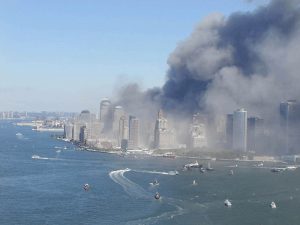
The New York Harbor community combined all these unique attributes on 9/11, evacuating hundreds of thousands of commuters and residents of Lower Manhattan to Staten Island, to New Jersey, and elsewhere in New York City in an improvised fleet of boats: tugs, dinner boats, tour boats, private vessels. Over the course of those hours, boats made trip after trip across the harbor. Then, as the number of evacuees from Manhattan tapered off, the boatlift shifted to transporting responders and supplies to the island, an operation that continued for several days. They accomplished the largest water evacuation in history without planning, without practice—and without accidents.

What made this possible? To find out, my coauthor Tricia Wachtendorf and I talked with boat operators and waterfront workers, piecing together their stories for our book American Dunkirk: The Waterborne Evacuation of Manhattan on 9/11. Foremost was a spirit of service and a duty to rescue that is characteristic of the maritime community. Law and tradition require a mariner to come to the aid of a person at sea in danger of being lost. On 9/11 mariners widened the compass of their obligation to include the people who were queuing up at the shoreline.

The participants in this evacuation saw themselves as part of an active maritime community. Everyone knew everyone else, they said. They knew each others’ boats, and personnel were always moving from company to company, creating a strong network of acquaintance. Even though the commercial setting could sometimes be highly competitive, there were also habits of cooperation: any company might need help from any other in an emergency. It’s almost a rule in the disaster field that the planning process is more important than the plan itself. Responders have to become familiar with each others’ capacities, resources, and limitations. The years of interaction and familiarity were actually a planning process for urban disaster management, though they didn’t know it.

Mariners lead lives of paradox. GPS provides fabulous accuracy, but the prudent mariner is still reminded to check it by other means. Some mariners have attended disciplined and hierarchical academies where they live a regimented lifestyle while also learning Bridge Team Management, to adopt proper communications skills that short-circuit the intimidation of hierarchy. They operate in a complex web of maneuvering rules, which also contain a rule that prescribes that the rules should be broken when they’re not working. Often their information is ambiguous, as with weather, so they are sensitive to margins of error. In this complex milieu, mariners are always making judgments about safety, speed, and efficiency. These judgments abounded on 9/11.

They carried passengers on boats not certified for that. In some cases, they exceeded boats’ passenger capacity. Boat operators said they didn’t do this recklessly, but looked at the boat’s performance, the distribution of additional weight, and the demands of the immediate crisis. Certainly the usual margin of safety was narrowed in this event both with respect to capacity and to navigation. In some areas around the harbor the dust was so thick that visibility was zero, but they continued on. “Radar, don’t fail me now!” recalled one captain thinking as he approached the entrance to North Cove. Sometimes, boat captains took on bystanders to assist in embarking evacuees or in handling lines. Boats used piers they were unaccustomed to, or that weren’t designed for passengers, and had to jury-rig gangways because of the different heights. The captains were careful, using their experience and judgment to know how much they could push the boundary of risk. Other rules were slackened. A Coast Guard officer authorized fueling without permits. Two harbor pilots took golf carts to move supplies. The main thing was that when they pushed the limits, they were thoughtful, weighing the risk as experience has taught them.

Sometimes older technologies are more adaptable than modern ones. A break-bulk ship can work cargo anywhere, but a container ship, not so much. Efficiency sometimes erases adaptability, but disasters remind us of the importance of older tools and technologies, such as radio. Certainly there are tools to help the modern disaster manager: satellite photography, robotics, drones. But a lot of disaster management is old-fashioned work: moving things and people, staging equipment, organizing activities, talking on the phone. Probably the exemplar of this principle during 9/11 was the John J. Harvey, a retired fireboat that had been bought and restored by a group of enthusiasts. On the morning of September 11, the group boarded the Harvey and got underway first just to see what was happening, then they moved some evacuees, but then the Harvey’s real talent became obvious: the capacity to pump a lot of water. That capacity, left over from now-ancient days of wooden piers and warehouses and stacked-up flammable cargoes, was just what was needed to charge the fire hoses now substituting for the destroyed infrastructure at Ground Zero. Even in normal times, the Harvey demonstrated the qualities of prudence and vigilance. One of her owners, a retired fireboat captain, insisted they always have some usable firehose on hand, just in case.

Of course, there were challenges. The era of deep-draft commercial maritime use of much of Lower Manhattan has long since past. The waterfront had few good locations for the boats to embark passengers and lacked critical shoreside infrastructure, such as bollards or cleats, to tie boats to. Meanwhile, the smooth stone surface of the Battery Park seawall threatened to damage boats that were coming alongside. The sailboat Ventura, for example, could not tie up there because of being buffeted against the wall. “We’re going to have a boat that’s full of matchsticks and it’s going to sink,” said the captain. Even the durable Harvey got “quite a battering.” Some boats tied up to trees to hold steady for taking on evacuees. In other instances there was too much infrastructure, some of it in the form of fences and ornamental ironwork. Several participants in the evacuation reported simply cutting down the fences to clear a path for the evacuees.

The boat operations demonstrate what we have seen in many disasters: the importance of improvised, unscripted activities, and the importance of new groups, organizations, and networks. In spite of a widespread desire to “command and control,” that is not possible in an unfolding community-wide disaster. Most people are rescued by bystanders, for example, often well before formal responders arrive, which shows that there is always a grassroots dimension to disaster management. 9/11 maritime activities took place all around New York Harbor. No one could have full “command” of these activities, where needs were being identified and handled in an organic way through a growing network. The Coast Guard took a coordinating but not a commanding role. They wisely made no effort to take over the entire operation, recognizing that they needed to let it unfold. And there would be no way to command activities that were happening at Liberty Landing, or at Weehawken, or at Highlands, a 17-mile transit from Manhattan, where they were all dealing with their own needs of sorting passengers, decontaminating people, and offering comfort and bottles of water.

The 9/11 boat operations offer some insights for urban disaster management and resilience, organizations, and communities. Key features of resilience are redundancy, substitutability, and mobility. Some vessels can operate even if others are out of service. Boats are a mobile resource, easily moved around as needed. If some facilities are damaged, others may be available or can be improvised on short notice. Some vessels of more rugged construction served as floating piers, so that other vessels of lighter design would not be damaged against the seawall. Vessels are connected by VHF radio—nearly always available– and vessel movements are organized not by a flowchart or a rigid command structure but rather by a nautical chart and the mariners’ operational knowledge of that area: its laws, regulations, and customs. Public officials in waterfront cities should look closely at the different transport modes available. In particular, emergency managers and urban planners and engineers should work much more closely together to identify needs and resources.

That’s the key. People, groups, and communities share what they know; identify what they need; and connect to others. The maritime operations on 9/11 are an example of principles that extend to other settings. In situations as diverse as U.S. wildfires to the Fukushima tsunami and nuclear plant catastrophe, people have built new networks and improvised with whatever is available. A resilient disaster response depends on deep knowledge of a place, memory, gathering resources, and finding substitutes. These are the pieces that people can assemble creatively and strategically to manage a disaster.

You can view a list of the vessels and operators that lent their support on 9/11 at www.fireboat.org/911_rescue_boats.php

James Kendra is a graduate of Massachusetts Maritime Academy and a former merchant marine officer. He is Director of the Disaster Research Center at the University of Delaware.

Propulsion: Group Think

Vessel operators are still very much focused on reducing fuel consumption and lowering emissions. Collaboration early on in the design of a new vessel and its construction between the vessel owner, naval architects, shipbuilders, and propulsion manufacturers can payoff in optimizing the vessel’s hull, reducing costs of construction, and lowering operational costs during a vessel’s lifetime.

“We work with naval architects early in the design process to help optimize the propulsion system, looking to meet all design requirements while minimizing the size and horsepower of the system,” says Elizabeth Boyd, PE, President, Nautican Research & Development Ltd. Boyd says collaboration early in the design phase “can result in significant savings because if the horsepower can be reduced due to efficiency gains, it can lead to size reductions in not just the horsepower and propellers, but also everything that goes along with it—shafts, bearings, etc.—sometimes it can even mean meeting the requirements with a smaller boat.  We can quickly show performance and full system configuration for different sizes, allowing the naval architect to explore options very quickly.”

Nautican’s foundation was built on efficiency. More than 40 years ago, company founder Josip Gruzling pioneered the use of hydrofoils to increase the efficiency of tugs and barges. Today, Nautican engineers and manufactures hydrodynamic solutions, including patented Integrated Propulsion Units, High efficiency nozzles and propellers, high aspect ratio triple rudders, pre-swirl stators, and also hydralift skegs for barges. It says independent tests show that its propulsion system solutions increase power and maneuverability, while significantly reducing fuel use and maintenance needs.

One of the Nautican’s latest projects is fabricating the first two sets of 104-inch nozzle units for the 120 ft Kirby Offshore Marine line haul tugs under construction at Nichols Brothers Boat Builders, Whidbey Island, WA.

According to Boyd, initially nozzle development was done using both Computational Fluid Dynamics (CFD) and physical testing in a cavitation tunnel and towing tank. “However,” she says, “our CFD efforts now are focused more on integration with the hull form. For these boats, CFD was not used as the design was already well developed and fairly straight-forward as far as placing the nozzles.” 

The designer of the ABS Class tugs is Jensen Maritime, Crowley Maritime Corp.’s Seattle-based naval architecture and marine engineering company.

Each of the two tugboats will be equipped with two Caterpillar 3516C main engines, rated at 2,447 hp at 1,600 rev/min. Reintjes reduction gears, supplied by Karl Senner, LLC, Kenner, LA, will turn two Nautican fixed-pitch propellers with fixed nozzles. Other equipment onboard the tugs will include two C7.1 Caterpillar generators for electrical service, one TESD-34 Markey tow winch, one CEW-60 Markey electric capstan and one Smith Berger Town Pin.

“Kirby owns many boats with Nautican systems, but most of these have been ATBs (Articulated Tug Barge units) to date,” says Boyd. “We worked recently with Nichols on a pair of Kirby 10,000 hp ATB tugs—this project went very well and these vessels are performing exceptionally well in service.”    

Nautican designed larger 120 inch nozzle units for another tug for Dunlap Towing. “Dunlap is a Nautican repeat customer,” says Boyd. The new tug, says Boyd is a new design, based on the Phyllis Dunlap, but “fully rethought and redesigned by Hockema Whalen.”

The 5,000 hp, twin-screw tug Phyllis Dunlap was built in 2001 by Hansen Boat Company, Everett, WA.

“Dunlap has been a great customer to work with—they are very involved in all aspects of the design and equipment selection and are very knowledgeable, providing some really useful feedback about performance over the years in their very demanding runs to Hawaii and Alaska.”

Wärtsilä Transverse Thruster
Earlier this year, Wärtsilä expanded its transverse thruster series with the addition of the Wärtsilä WTT-40, with a 4,000 kW power level and a 3,400 mm diameter controllable pitch propeller. While Wärtsilä has designed and built customized transverse thrusters as powerful as 5,500 kW, the WTT-40 and others in the WTT range address customer needs for high power transverse thrusters for bow and stern applications.

Development work on the Wärtsilä WTT-40 began in 2015 with an eye on targeting cruise ships, large OSVs and offshore construction vessels. The high power level is particularly important for the harbor maneuvering and docking of large ships, and for dynamic positioning of offshore vessels working in heavy sea conditions.

Because of its maximum power of 4,000 kW, shipyards and cruise vessel designers have the option of using three WTT-40 thrusters instead of four smaller ones. This translates into a more efficient vessel design with less space required for the transverse thrusters. It also allows thrusters to be installed closer to the bow where they are more effective.

Wärtsilä’s extensive experience with propeller design and tunnel optimizations using CFD analysis, ensures an optimal solution when it comes to propulsion performance, efficiency, and the minimization of noise and vibration.

Another benefit of the Wärtsilä WTT-40 is its integrated hydraulics, which save machinery room space and installation and commissioning time at the shipyard.

Innovative ship propulsion systems made by RENK
Military vessels such as patrol boats, corvettes, and frigates looking for “silent running” might well be interested in the Renk Advanced Electric Drive AED. The new drive from the Augsburg, Germany, plant offers a number of special advantages for shipbuilders, says Renk. The propulsion system is a real alternative to the heavy, space consuming electric motors that are rotating at propeller speed.

Modern power electronics allow the use of high-speed motors in combination with an efficient gearbox. The Renk AED combines electric motor and gearbox on one joint frame. Built on soft elastic mounts and equipped with a highly elastic propulsion coupling an incomparably silent operation is possible. The water-jacket of the water-cooled electric motor as well as the double helical reduction gear add to extremely low noise operation.

A modularized lightweight
Thanks to the compact design as well as the low height the preassembled unit is quickly installed with minimum space requirements. Additionally there is a considerable weight advantage. The drive weights around 40% less than a conventional direct drive motor. By comparison, the Renk AED weighs only 23 tons instead of the 35 tons of a direct drive motor of the same power.

Suitable for fixed pitch propellers as well as controllable pitch propellers the drive speed can be flexibly adjusted to the respective propeller requirements. The propulsion systems is built modularly and can be delivered in four sizes from 1.4 to 6 MW. For uses where the requirements are between sizes RENK simply adjusts the capacity of the bigger engine. In this way the complete range of capacities can be covered individually and economically. The motors work with low or mid ranged voltage and are designed –depending on size- for propeller revolutions of 190-450 rev/min.

Investing in new production & testing facilities
Besides pouring millions of dollars into research and development, marine propulsion manufacturers are also investing in new production and testing facilities. Earlier this year, Renk opened one of the largest and most modern test facilities in Europe for gear units at its headquarters in Augsburg. Whether for the shipbuilding, automobile or industrial sector: The multifunctional test facility is especially suitable for the testing of prototypes or special equipment. Renk will not only test its own special gearboxes and propulsion systems, but also those of other propulsion systems or propulsion component manufacturers. The test facility allows for a power capacity of up to 12 MW at 10 revolutions per minute and can take a torque of up to 11 million Nm.

RollsJust this past June, Rolls-Royce Marine unveiled plans for a EURO 57 million plan to upgrade its azimuth thruster plant in Rauma, Finland, and consolidate its thruster assembly and testing to one site.

Rauma produces a wide range of mechanical azimuth thrusters for use on a wide range of applications including semi-submersible drilling rigs and drillships, tugs and offshore vessels. Rauma also produces thrusters for specialist vessels such as icebreakers and polar research ships.

Mikael Makinen, Rolls-Royce, President – Marine, says, “Our azimuth thrusters are one of our most important products, providing mission critical power and propulsion for some of the largest floating objects on the planet. To be able to make this significant investment in Rauma not only prepares us for future growth in this market, but is a vote of confidence in the capability and expertise of our people.””

Azimuthing thrusters rotate through 360 degrees, providing propulsion and maneuverability without the need for a rudder. The largest and most powerful thrusters from Rauma are the ARC type which power icebreakers including the Finnish vessel Fennica. They are among the largest products produced by Rolls-Royce and can each weigh up to 190 tonnes, providing 7.5Mw of power.

Two of the world’s largest floating structures are powered by another range of thrusters produced in Rauma, UUC underwater mountable thrusters:

The heavylift vessel Pioneering Spirit, owned by Allseas, which is used for decommissioning oil platforms, has13 UUC thrusters; and Shell’s Prelude, the world’s first floating LNG production facility, will feature three large UUC thrusters, for position keeping. The thrusters are installed in a novel arrangement that allows them to be removed and maintained within the ship.

The work to transform Rauma will begin immediately and is due for completion in 2020. The investment will include installation of a crane capable of lifting 200 tons, and at least six factory acceptance test rigs. Offices and IT systems will also be refurbished.
Sanmar set to deliver 150th Robert Allan Ltd. design tug

JULY 28, 2016 — Robert Allan Ltd. and Turkish shipbuilder Sanmar Denizcilik A.S. are about to mark a major milestone in their relationship. Scheduled to be launched later this year, a RAstar

LOAD MORE